May 29th, 2026 | 09:25 CEST
BP, American Atomics, NextEra Energy: Iran Conflict Highlights the Importance of a Diversified Energy Mix for the Future
Oil prices fluctuate in step with the threats in the Middle East, and a full-scale conflict with Iran would be the ultimate stress test for our energy supply. But the real turning point is happening elsewhere. Artificial intelligence consumes electricity like a small town—every large language model, every mining data center. Electric vehicles and robotic factories are further multiplying demand. The result: an unprecedented need for baseload-capable, clean energy. Wind and solar alone cannot meet this demand. That is why nuclear power is experiencing a renaissance—and presenting savvy investors with a historic opportunity. Three companies embody this trend in radically different ways: BP, a beneficiary of the Iran war; American Atomics, a pure-play uranium explorer; and NextEra Energy, a green giant.
time to read: 5 minutes | Author: Armin Schulz
ISIN: AMERICAN ATOMICS INC | CA0240301089 | CSE: NUKE , BP PLC DL-_25 | GB0007980591 , NEXTERA ENERGY INC.DL-_01 | US65339F1012
Table of contents:
Author

Armin Schulz
Born in Mönchengladbach, he studied business administration in the Netherlands. In the course of his studies he came into contact with the stock exchange for the first time. He has more than 25 years of experience in stock market business.
Tag cloud
Shares cloud
BP: Between Record Profits and Internal Turmoil
BP is, of course, benefiting from the war in Iran and the resulting rise in oil and gas prices. In the first quarter of 2026, the group doubled its adjusted profit to USD 3.2 billion. Refineries operated at 96% capacity, a level not seen in years, and oil trading delivered exceptional results. Operating cash flow came in at USD 5.2 billion, even as the debt pile grew to USD 25.3 billion. The figures show that the operating business is booming. However, analysts warned that production is expected to decline in the second quarter due to maintenance work in the Gulf of Mexico and disruptions in the Middle East.
Under new CEO Meg O'Neill, BP is now making major changes. The green strategy of the past is history; the focus is shifting back to oil and gas. By 2027, the company aims to cut costs by USD 5.5 to USD 6.5 billion, and to sell parts of the portfolio for USD 20 billion, including 65% of the lubricants subsidiary Castrol. The organization is also being streamlined, returning to the traditional upstream and downstream pillars. Added to this are exploration successes from 2025, led by the mega-discovery "Bumerangue" off the coast of Brazil, estimated at 8 billion barrels. Such reserves secure the future.
BP is exploring the sale of gas fields in Egypt and is nearing an agreement with the union at the Whiting refinery. That would alleviate additional pressure. For shareholders, the outlook is mixed. The dividend is rising by 4% to USD 0.0832. However, share buybacks remain suspended because debt reduction takes priority. The goal is USD 14–18 billion net by the end of 2027. A warning sign came with the abrupt ouster of Supervisory Board Chairman Albert Manifold in May due to a questionable leadership style. This creates uncertainty in the boardroom, even if day-to-day operations are unaffected. The stock is currently trading at around EUR 5.911.
American Atomics: Benefiting from the Nuclear Turnaround
The US nuclear power industry faces a quiet but massive problem. Domestic production covers only a fraction of demand. Approximately 2 million pounds of yellowcake per year are produced, while consumption exceeds 30 million pounds. A large portion of imports comes from Russia, and even the conversion capacity relies on a single, aging facility from the 1960s. Added to this is the new generation of reactors. Small modular reactors (SMRs) require special HALEU fuel, which hardly anyone outside of Russia produces on a large scale. This is precisely where supply becomes a strategic Achilles' heel.
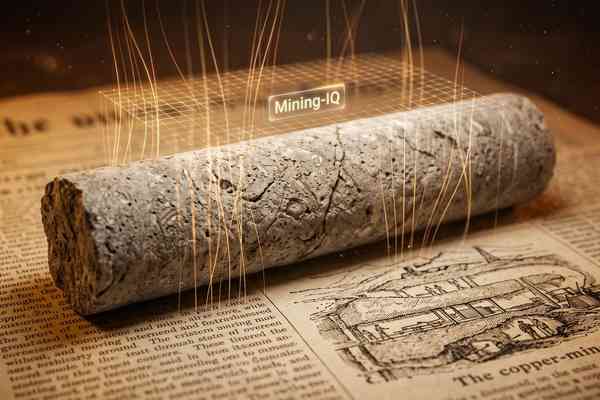
American Atomics is tackling the problem at its root. The company secured an 80% stake in the historic Big Indian Claims in the Lisbon Valley, Utah, through an option. This deposit yielded 78 million pounds of uranium in the 1950s. The eastern flank of the valley has remained untested to date, but gamma measurements from oil wells indicate significant mineralization. In parallel, American Atomics acquired a 100% stake in a Colorado project and is pursuing technology licenses for fuel processing. A recently closed financing round of just under CAD 2 million provides the necessary working capital for the planned summer drilling.
In the short term, it is precisely these drilling results that could spark the decisive breakthrough. Geologists have long suspected that the Big Indian project could be a mirror image of the Lisbon Valley deposit. If this assumption is correct, Big Indian would be one of the largest undeveloped deposits in the US. In the long term, the company is banking on perfect political tailwinds. The Defence Production Act Consortium is investing in domestic fuel chains, while the AI boom is causing demand for reliable baseload power to skyrocket. Anyone who believes in the nuclear renaissance cannot ignore the supply chain bottleneck. American Atomics could resolve the bottleneck in US nuclear power. The stock is currently trading at CAD 0.28.
NextEra Energy: Making a Mega Deal in the Electricity Market
Renewable energy is also part of a good energy mix, but the current mega-merger in the US utility sector shows that investors are primarily betting on regulated monopolies and demand from AI data centers. NextEra Energy is acquiring Dominion Energy in an all-stock swap. Shareholders of the target company will receive 0.8138 NextEra shares. The transaction creates the largest regulated electric utility in the country. In one fell swoop, the combined company serves approximately 10 million customers in Florida, Virginia, North Carolina, and South Carolina. Dominion's grid in Northern Virginia supplies one of the world's largest data center clusters. Access to this booming demand is the real strategic value, not short-term cost synergies.
From a regulatory perspective, the deal is strategically sound. According to ratings by Regulatory Research Associates, the states involved are considered above-average in terms of investor friendliness. Florida, North Carolina, and Virginia score well, while South Carolina is at least average. This is further compounded by the fact that electricity prices are below the national average, which reduces political pressure. Although approvals at both the federal and state levels are still pending, and the announced USD 2.25 billion in credits for Dominion customers likely represent only the opening round of negotiations, the regulatory environment offers little indication that the deal will fail.
NextEra Energy's credit rating is better than that of its acquired competitor, which lowers the cost of capital in the long term. Analysts at Jeffries expect annual earnings growth of over 9%. While the massive investments in new capacity are expensive, the demand driven by the data center boom is real. For patient NextEra shareholders, this could pay off, even if the stock price may come under pressure from the capital increase in the short term. The stock currently trades at around USD 87.65.
The Iran conflict highlights the risks of a one-sided energy supply. A healthy energy mix rests on three pillars. BP is benefiting in the short term from high oil prices, but is struggling internally with debt and a strategic shift. As a uranium explorer, American Atomics addresses the critical gap in the domestic fuel chain of the nuclear renaissance. NextEra Energy, as a green giant, secures access to the booming AI demand via regulated grids with the Dominion deal. The historic opportunity lies in the combination of all three.
Conflict of interest
Pursuant to §85 of the German Securities Trading Act (WpHG), we point out that Apaton Finance GmbH as well as partners, authors or employees of Apaton Finance GmbH (hereinafter referred to as "Relevant Persons") currently hold or hold shares or other financial instruments of the aforementioned companies and speculate on their price developments. In this respect, they intend to sell or acquire shares or other financial instruments of the companies (hereinafter each referred to as a "Transaction"). Transactions may thereby influence the respective price of the shares or other financial instruments of the Company.
In this respect, there is a concrete conflict of interest in the reporting on the companies.
In addition, Apaton Finance GmbH is active in the context of the preparation and publication of the reporting in paid contractual relationships.
For this reason, there is also a concrete conflict of interest.
The above information on existing conflicts of interest applies to all types and forms of publication used by Apaton Finance GmbH for publications on companies.
Risk notice
Apaton Finance GmbH offers editors, agencies and companies the opportunity to publish commentaries, interviews, summaries, news and the like on news.financial. These contents are exclusively for the information of the readers and do not represent any call to action or recommendations, neither explicitly nor implicitly they are to be understood as an assurance of possible price developments. The contents do not replace individual expert investment advice and do not constitute an offer to sell the discussed share(s) or other financial instruments, nor an invitation to buy or sell such.
The content is expressly not a financial analysis, but a journalistic or advertising text. Readers or users who make investment decisions or carry out transactions on the basis of the information provided here do so entirely at their own risk. No contractual relationship is established between Apaton Finance GmbH and its readers or the users of its offers, as our information only refers to the company and not to the investment decision of the reader or user.
The acquisition of financial instruments involves high risks, which can lead to the total loss of the invested capital. The information published by Apaton Finance GmbH and its authors is based on careful research. Nevertheless, no liability is assumed for financial losses or a content-related guarantee for the topicality, correctness, appropriateness and completeness of the content provided here. Please also note our Terms of use.