March 1st, 2022 | 10:32 CET
Between war profits and peace dividends: ThyssenKrupp, Memiontec, BP
Since last weekend, the world has been a different place: Germany is pumping EUR 100 billion into a special fund for the German armed forces. In addition, more than the 2% of economic output demanded by the USA for years is to flow into the defense budget in the future. After years of neglecting its own defense, Germany is now back to deterrence. Given the threatening election of Donald Trump as the next US president, such self-help is also urgently needed. We highlight three stocks that are either affected by the Ukraine war or offer a peaceful alternative.
time to read: 3 minutes | Author: Nico Popp
ISIN: THYSSENKRUPP AG O.N. | DE0007500001 , Memiontec Holdings Limited | SGXE56008290 , BP PLC DZ/1 DL-_25 | DE0008618737
Table of contents:
Author

Nico Popp
At home in Southern Germany, the passionate stock exchange expert has been accompanying the capital markets for about twenty years. With a soft spot for smaller companies, he is constantly on the lookout for exciting investment stories.
Tag cloud
Shares cloud
ThyssenKrupp: Profiting from rising defense spending?
ThyssenKrupp's stock shot straight up on Monday morning. The reason: The German government wants to invest massively in defense. The past few days have shown that diplomacy is quickly at an end when dealing with uncompromising and, at the same time, powerful despots. While the arms deliveries to Ukraine can hardly be more than emergency aid and a warm gesture, a powerful army under the protective mantle of NATO would possibly curb further aggression by Russia. But to what extent do ThyssenKrupp shares benefit at all from rising defense budgets?
ThyssenKrupp is no longer the arms manufacturer of days gone by. However, the steel group does produce important basic materials for weapons construction. Every tank, every gun barrel - all of these are made of steel. Often special alloys are needed for this. In this respect, ThyssenKrupp can look forward to more business in the long term. However, in the short term, the steel group is likely to suffer from rising energy prices. Hopes of an upturn in business may therefore be premature. Although EUR 100 billion is to flow into the defense budget in 2022, it is not yet clear how the funds will be used. The market is, therefore, rightly cautious on ThyssenKrupp.
Memiontec: Grab the peace dividend here
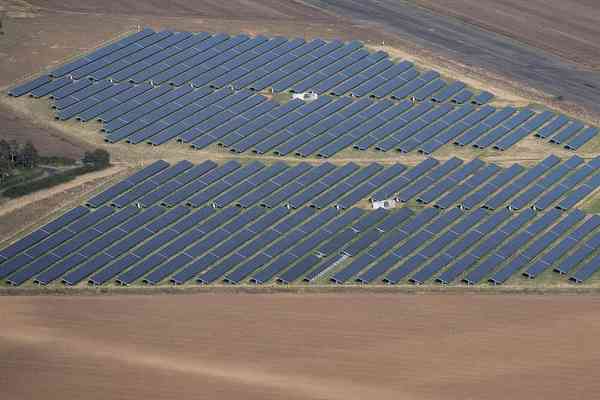
One share that has nothing to do with the war in Ukraine and its consequences, even indirectly, is that of the Asian water utility Memiontec. The Company takes care of drinking water, industrial water and wastewater and provides municipalities with all-round solutions, including long-term support. In addition to its home market, the Singapore-based Company is particularly well-positioned in Indonesia. The figures for the past fiscal year show that business is booming. The Company recently reported record sales of SGD 45.6 million, which corresponds to an increase of 17.7%. As part of the improved figures, Memiontec wants to increase the dividend and pay out a dividend of SGD 0.209 per share.
The full order books also support that things are continuing positively around Memiontec. The Company had orders with a total volume of SGD 78 million on its books at the end of 2021. "With the increasing demand for water in Asia, we look forward to future opportunities in our core markets as we continue our multi-pronged growth strategy through our synergistic business model," said Tay Kiat Seng, Executive Director and CEO of Memiontec. Given the ongoing urbanization in Asia, the growing importance of clean water and the awareness to prevent epidemics, Memiontec can be considered a defensive value with growth potential. The share is in a stable upward trend, and the business model appears coherent. Unlike many "war stocks", Memiontec is already sitting on tangible orders.
BP: Speculation upon speculation
The BP share demonstrates that war can accelerate and suddenly reverse many processes. Over the weekend, it became known that the British oil company had been urged by the government to sell its stake in the Russian energy company Rosneft. As the flow of capital to Russia is likely to be restricted at the same time due to the sanctions, this transaction is ill-starred - the possible group of buyers is likely to be very small, and BP will certainly suffer drastic losses. BP is already expecting write-downs in the billions. And the share price? It is holding comparatively steady despite some losses. Observers see the exit from Rosneft as a catalyst for BP's climate-neutral orientation, which is planned anyway. Some market participants also hope that the state could compensate BP for the losses - after all, the exit followed pressure from London. Even though this is rather unlikely, BP is the subject of much fantasy. What will become of it, however, is uncertain.
Armaments shares are on the rise, as are steel stocks. What will happen to BP, in the end, remains unclear. It seems like shares connected with the Ukraine war are pawns in the turbulent events. For investors, it is like roulette. What will happen in the end is uncertain. The only clear thing is that anything is possible - especially in this constellation. The Memiontec share is staying out of the turmoil of war and instead benefits from the increasing demand for water in Asia. It is a solid business that promises growth and substance simultaneously. Those who find war stocks too hectic will find Memiontec a possible alternative.
Conflict of interest
Pursuant to §85 of the German Securities Trading Act (WpHG), we point out that Apaton Finance GmbH as well as partners, authors or employees of Apaton Finance GmbH (hereinafter referred to as "Relevant Persons") may hold shares or other financial instruments of the aforementioned companies in the future or may bet on rising or falling prices and thus a conflict of interest may arise in the future. The Relevant Persons reserve the right to buy or sell shares or other financial instruments of the Company at any time (hereinafter each a "Transaction"). Transactions may, under certain circumstances, influence the respective price of the shares or other financial instruments of the Company.
In addition, Apaton Finance GmbH is active in the context of the preparation and publication of the reporting in paid contractual relationships.
For this reason, there is a concrete conflict of interest.
The above information on existing conflicts of interest applies to all types and forms of publication used by Apaton Finance GmbH for publications on companies.
Risk notice
Apaton Finance GmbH offers editors, agencies and companies the opportunity to publish commentaries, interviews, summaries, news and the like on news.financial. These contents are exclusively for the information of the readers and do not represent any call to action or recommendations, neither explicitly nor implicitly they are to be understood as an assurance of possible price developments. The contents do not replace individual expert investment advice and do not constitute an offer to sell the discussed share(s) or other financial instruments, nor an invitation to buy or sell such.
The content is expressly not a financial analysis, but a journalistic or advertising text. Readers or users who make investment decisions or carry out transactions on the basis of the information provided here do so entirely at their own risk. No contractual relationship is established between Apaton Finance GmbH and its readers or the users of its offers, as our information only refers to the company and not to the investment decision of the reader or user.
The acquisition of financial instruments involves high risks, which can lead to the total loss of the invested capital. The information published by Apaton Finance GmbH and its authors is based on careful research. Nevertheless, no liability is assumed for financial losses or a content-related guarantee for the topicality, correctness, appropriateness and completeness of the content provided here. Please also note our Terms of use.