February 7th, 2023 | 16:16 CET
Are E-cars facing the end? Mercedes-Benz, dynaCERT, NEL
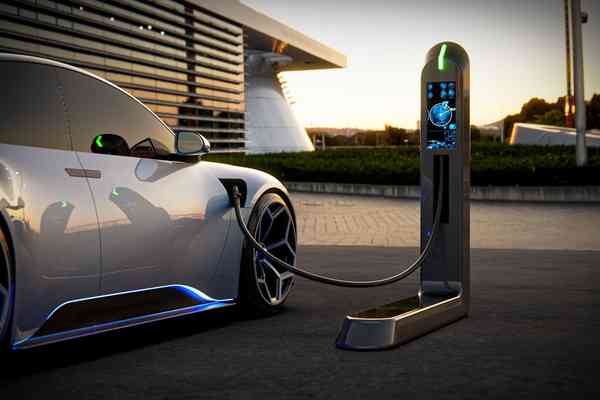
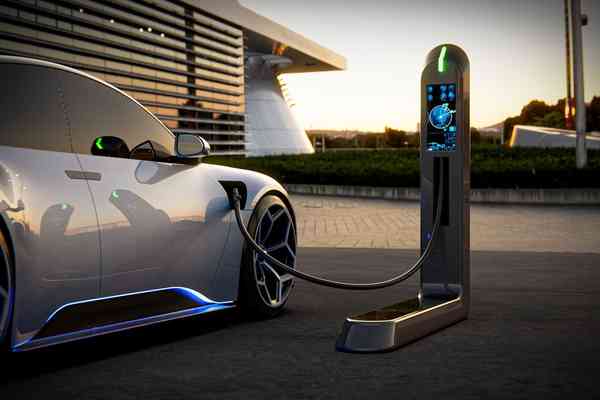
What constitutes mobility is changing. There are also many mobility terms. It is increasingly difficult for automakers to position themselves. Except for BMW, all major manufacturers are now focusing exclusively on battery-powered e-cars. The trend is even so intact for decision-makers at major corporate headquarters that type designations introduced for e-cars are facing extinction. But not all automakers are convinced that e-cars are the way to go.
time to read: 3 minutes | Author: Nico Popp
ISIN: MERCEDES-BENZ GROUP AG | DE0007100000 , DYNACERT INC. | CA26780A1084 , NEL ASA NK-_20 | NO0010081235
Table of contents:
Author

Nico Popp
At home in Southern Germany, the passionate stock exchange expert has been accompanying the capital markets for about twenty years. With a soft spot for smaller companies, he is constantly on the lookout for exciting investment stories.
Tag cloud
Shares cloud
Mercedes-Benz: Is this strategy correct?
French startup Hopium is planning a hydrogen car called "Machina" for 2025 that will repeat what Tesla succeeded in doing years ago: pushing new technology into the market through quality and that certain hipness factor. The French assume they know exactly what customers want. One unique selling point is that the planned luxury car can be refueled within three minutes for distances of around 1,000 km - with hydrogen. Hopium also believes that what matters most to customers is speed. The "Machina" is supposed to reach speeds of 230 km/h without any problems - Machina drivers will only see power savers jogging between trucks to the next charging station in their rearview mirrors. But is Hopium's assumption correct? Do car drivers really want to go far and fast, first and foremost?
At Mercedes-Benz, e-mobility is already seen as the standard. This can be seen, among other things, in the fact that the Swabian company wants to gradually creep out the type designations with "EQ," which stands for "Electric Intelligence," for e-vehicles. Mercedes introduced the additional designation in 2016 to draw attention to its e-fleet. In the meantime, this is no longer necessary, according to Mercedes. In the future, the electric G-Class will no longer be called EQG but as before. The market does not currently believe that Mercedes could be wrong with its focus on electric cars - the stock started the year well and is even on its way to a new five-year high.
dynaCERT: Technology well received by customers
The dynaCERT share is currently further away from a new five-year high than Mercedes is from a hydrogen car. Yet the Company achieved a sales breakthrough in the fourth quarter: In just three months, dynaCERT reported 137 orders for its patented HydraGEN technology. Put simply, HydraGEN makes heavy-duty diesel engines, in particular, greener. In order to do this, a small amount of hydrogen is added to the combustion process in the engine. The HydraGEN units themselves produce the hydrogen. This is expected to save up to 19% fuel and, ultimately, CO2. Since dynaCERT also offers extensive options for documenting saved CO2, dynaCERT customers can receive CO2 certificates when using the technology.
As CO2 emissions become more and more expensive over the years, such certificates can prove to be useful instruments for limiting the avoidance of emissions. Recently, Verra, a non-governmental organization that sets standards in the field of CO2 rights, came under criticism from the media, claiming that the certificates do not always achieve their intended benefits. Verra itself rejects the accusations and accuses the journalists, for their part, of methodological shortcomings. At the same time, Verra announced that it would improve its approach to rainforest management and present certain projects to the public. Verra will likely retain its role as the most important provider of CO2 certificates, and an open discussion will likely strengthen its position. dynaCERT is in good company with Disney, Gucci and Shell. The current share price weakness is likely due to recent media reports and could already prove to be an opportunity in the medium term. CEO Jim Payne will present at the upcoming 6th International Investment Forum.

NEL: What is next for the cyclical stock?
Many investors currently see the NEL share as an opportunity - but the stock is likely to have exhausted its potential in the short term. The share has been oscillating sideways for more than a year, frequently posting gains of 60%. On Monday, NEL received another order for electrolysis equipment with a volume of 40 MW. What would have made the market cheer as recently as 2020 is now almost falling on deaf ears. One reason for this is that more and more companies are now "investing in hydrogen". The pressure on top dogs like NEL is growing. Prominent players from the industry usually have good opportunities to push new projects. NEL remains exciting as a hydrogen visionary, but the stock is likely to have little potential in the short term.
Mercedes-Benz is the only one of the three stocks mentioned that is doing well - and the Swabian company has no hydrogen fantasy at all. But the pendulum could quickly swing back in the other direction. While NEL first has to shake off its image as a cyclical company, dynaCERT has had comeback potential in the air for months. Moreover, the sales breakthrough was achieved at the end of 2022. The recent critical reporting around CO2 certificates should trigger positive changes in the long term.
Conflict of interest
Pursuant to §85 of the German Securities Trading Act (WpHG), we point out that Apaton Finance GmbH as well as partners, authors or employees of Apaton Finance GmbH (hereinafter referred to as "Relevant Persons") may hold shares or other financial instruments of the aforementioned companies in the future or may bet on rising or falling prices and thus a conflict of interest may arise in the future. The Relevant Persons reserve the right to buy or sell shares or other financial instruments of the Company at any time (hereinafter each a "Transaction"). Transactions may, under certain circumstances, influence the respective price of the shares or other financial instruments of the Company.
In addition, Apaton Finance GmbH is active in the context of the preparation and publication of the reporting in paid contractual relationships.
For this reason, there is a concrete conflict of interest.
The above information on existing conflicts of interest applies to all types and forms of publication used by Apaton Finance GmbH for publications on companies.
Risk notice
Apaton Finance GmbH offers editors, agencies and companies the opportunity to publish commentaries, interviews, summaries, news and the like on news.financial. These contents are exclusively for the information of the readers and do not represent any call to action or recommendations, neither explicitly nor implicitly they are to be understood as an assurance of possible price developments. The contents do not replace individual expert investment advice and do not constitute an offer to sell the discussed share(s) or other financial instruments, nor an invitation to buy or sell such.
The content is expressly not a financial analysis, but a journalistic or advertising text. Readers or users who make investment decisions or carry out transactions on the basis of the information provided here do so entirely at their own risk. No contractual relationship is established between Apaton Finance GmbH and its readers or the users of its offers, as our information only refers to the company and not to the investment decision of the reader or user.
The acquisition of financial instruments involves high risks, which can lead to the total loss of the invested capital. The information published by Apaton Finance GmbH and its authors is based on careful research. Nevertheless, no liability is assumed for financial losses or a content-related guarantee for the topicality, correctness, appropriateness and completeness of the content provided here. Please also note our Terms of use.