March 27th, 2026 | 07:35 CET
Almonty Industries: The Tungsten Dominator of the West
Whether in golf clubs, X-ray machines, saw blades, or Abrams tanks, tungsten is ubiquitous—and virtually irreplaceable. As a result, this strategic metal sits at the intersection of industrial demand and geopolitics. China controls around 80% of global supply; together with Russia and North Korea, this dominance rises to around 95%. In an increasingly polarized world, tungsten has effectively become a strategic asset. Almonty Industries is positioning itself as a key supplier for the Western alliance, having recently ramped up production at its flagship mine in South Korea while pursuing an ambitious global expansion strategy. The recent pullback in the stock may offer a compelling entry point for strategic investors.
time to read: 4 minutes | Author: Tarik Dede
ISIN: ALMONTY INDUSTRIES INC. | CA0203987072 | TSX: AII , NASDAQ: ALM , ASX: AII
Table of contents:
Author

Tarik Dede
Even as a high school student in northern Germany, he developed a strong interest in the “Neuer Markt” and the dynamics of the equity markets. Small- and mid-cap companies were at the center of his focus from the very beginning. After completing his training as a certified bank clerk, he deepened his economic expertise through formal studies in economics as well as through various positions within Frankfurt’s financial sector. Today, he has been actively involved in the capital markets for more than 25 years, both professionally and as a private investor.
Tag cloud
Shares cloud
China dominates a wide range of metals in both mining and processing. However, the situation is particularly critical when it comes to tungsten. Together with Russia and North Korea, Beijing controls 95% of the global market. In the wake of the war in the Gulf and Ukraine, tungsten has come even more into the spotlight of the markets. It has the highest melting point of any metal (3422 °C) and an extremely high density, nearly matching that of gold. These properties make it extremely scratch-resistant and hard, but brittle. That is why it is so highly valued in the tool and metal industries, in armaments, in medicine, and even in the head of a golf club.
Almonty Industries: The Tungsten Dominator
Almonty Industries has now succeeded in establishing a dominant position in tungsten production for the Western world. The Canadian company has brought the historic Sangdong mine in South Korea back online. Until the 1990s, this was one of the largest tungsten mines in the world, but it was closed due to extreme price competition with China and its lack of profitability. Now, however, the conflict between the superpowers has not only catapulted prices upward but has also turned tungsten into a valuable asset. Sangdong has now completed the first construction phase and begun producing concentrates, and work on expansion is already underway. Almonty CEO Lewis Black expects this second phase to be completed in 2027. Processing capacity is then expected to rise to up to 1.2 million tons per year, enabling Sangdong to potentially produce over 460,000 MTUs of tungsten concentrate annually. According to the company, Almonty could then meet about 40% of global tungsten demand outside of China.
Active Across Three Continents
But the expansion goes even further. Almonty acquired the Panasqueira mine in Portugal in 2016. This mine has been producing high-grade tungsten almost continuously for nearly 130 years. Although it is significantly smaller than Sangdong, Almonty is already planning expansion here and sees considerable upside potential for production. Last but not least, Almonty has now also made its move into the US. The company acquired the Gentung Browns Lake Tungsten project at the end of 2025 for USD 10 million and aims to start production as early as the second half of 2026. The goal is to supply the US defense industry directly. Achieving such rapid production is entirely feasible, as the deposit is located in a historic tungsten district in Beaverhead County, Montana. Even during World War II and the Korean War, the United States' national reserve was supplied from there. The well-known Browns Lake Mine was one of the most productive sites before it closed in 1966. Gentung is considered a brownfield project, which accelerates the restart. The resource is estimated at approximately 7.5 million tons of ore with a grade of 0.315% tungsten trioxide (WO3). As a byproduct, garnet can also be extracted there, which is used in industry as an abrasive. Furthermore, due to the site's history, the necessary infrastructure, including roads, water, and power, already exists.
Following its Nasdaq listing, Almonty Industries is now taking the next operational step into the United States. The company is also planning to relocate its headquarters there, reflecting the strategic importance of the US market. The US Department of Defense has mandated that, from 2027 onward, no raw materials sourced from Chinese supply chains may be used in military applications. This creates a structural supply gap for the US defense industry, which is increasingly seeking reliable Western alternatives. With production set to begin in Montana, Almonty would thus be in pole position here as well and would then be represented on three continents.
Bullish Analysts
For investors, establishing supply chains outside the Sino-Russian sphere of influence offers the chance for stable and secure returns in the future. Almonty could thus rise to become the most important Western tungsten supplier in less than two years. Analysts are correspondingly bullish. Bank of America (BofA) views Almonty Industries as positioned as the "leading Western vehicle" for tungsten and, in a new study from March 2026, has issued a price target of USD 20 and recommends buying. The arguments cited include the structural supply deficit in the market and the higher tungsten price. The latter has risen by more than 250% over the past year. BofA analysts expect the high price level to become permanently established due to Chinese export restrictions and declining ore grades in China. The firm sees Almonty in a strong negotiating position for further long-term supply contracts.
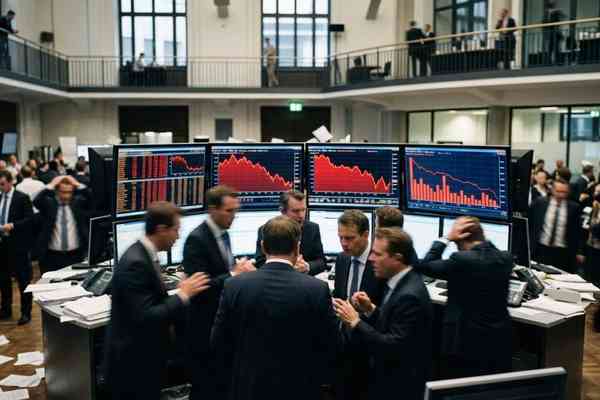
The current situation offers an attractive entry opportunity for investors. The stock has lost about a quarter of its value in the wake of the war in the Persian Gulf. Panic, in particular, likely served as a poor guide. During such liquidity events on the stock markets, profits on stocks are quickly taken. Since Almonty Industries' shares had roughly quadrupled within five months, they fell victim to market participants' need for cash. However, this presents opportunities for all those who still want to jump on the bandwagon.
Conflict of interest
Pursuant to §85 of the German Securities Trading Act (WpHG), we point out that Apaton Finance GmbH as well as partners, authors or employees of Apaton Finance GmbH (hereinafter referred to as "Relevant Persons") may hold shares or other financial instruments of the aforementioned companies in the future or may bet on rising or falling prices and thus a conflict of interest may arise in the future. The Relevant Persons reserve the right to buy or sell shares or other financial instruments of the Company at any time (hereinafter each a "Transaction"). Transactions may, under certain circumstances, influence the respective price of the shares or other financial instruments of the Company.
In addition, Apaton Finance GmbH is active in the context of the preparation and publication of the reporting in paid contractual relationships.
For this reason, there is a concrete conflict of interest.
The above information on existing conflicts of interest applies to all types and forms of publication used by Apaton Finance GmbH for publications on companies.
Risk notice
Apaton Finance GmbH offers editors, agencies and companies the opportunity to publish commentaries, interviews, summaries, news and the like on news.financial. These contents are exclusively for the information of the readers and do not represent any call to action or recommendations, neither explicitly nor implicitly they are to be understood as an assurance of possible price developments. The contents do not replace individual expert investment advice and do not constitute an offer to sell the discussed share(s) or other financial instruments, nor an invitation to buy or sell such.
The content is expressly not a financial analysis, but a journalistic or advertising text. Readers or users who make investment decisions or carry out transactions on the basis of the information provided here do so entirely at their own risk. No contractual relationship is established between Apaton Finance GmbH and its readers or the users of its offers, as our information only refers to the company and not to the investment decision of the reader or user.
The acquisition of financial instruments involves high risks, which can lead to the total loss of the invested capital. The information published by Apaton Finance GmbH and its authors is based on careful research. Nevertheless, no liability is assumed for financial losses or a content-related guarantee for the topicality, correctness, appropriateness and completeness of the content provided here. Please also note our Terms of use.