June 15th, 2026 | 07:15 CEST
Zefiro Methane vs. BP & Shell: One Industry, Two Business Models—Only One Is Unaffected by Oil Prices
Despite tensions in the Middle East, oil and gas prices are falling—a seeming paradox. The reasons are a weakening global economy and overflowing storage facilities, which currently more than offset any geopolitical risk premium. While traditional energy giants like BP and Shell are suffering from the price decline as their production profits shrink, a specialized provider is operating in a completely different way. Zefiro Methane earns revenue by eliminating methane emissions from orphaned wells. This is a business driven by climate protection laws, not oil prices. It is precisely this contrast between Zefiro Methane, on the one hand, and the oil multinationals BP and Shell, on the other, that opens up exciting prospects for investors.
time to read: 5 minutes | Author: Armin Schulz
ISIN: ZEFIRO METHANE CORP | CA98926D1069 | NEO: ZEFI , BP PLC DL-_25 | GB0007980591 , Shell PLC | GB00BP6MXD84
Table of contents:
Author

Armin Schulz
Born in Mönchengladbach, he studied business administration in the Netherlands. In the course of his studies he came into contact with the stock exchange for the first time. He has more than 25 years of experience in stock market business.
Tag cloud
Shares cloud
Zefiro Methane: Tapping Into a Multi-Billion-Dollar Legacy Contamination Market
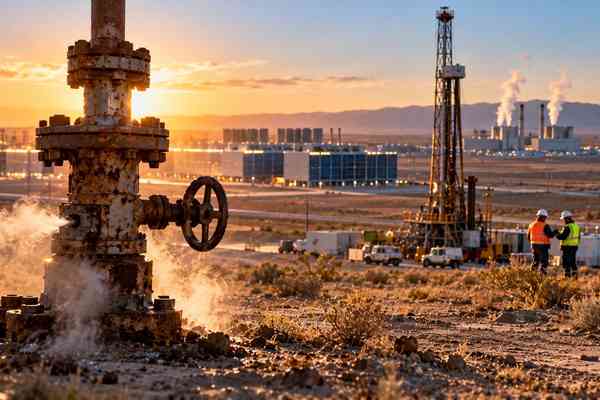
The energy transition has a blind spot. While everyone talks about hydrogen and solar, a multibillion-dollar problem is literally lying idle. Millions of abandoned oil wells in the United States are leaking methane uncontrollably. A greenhouse gas that is around eighty times more harmful than CO₂ in the short term. Politicians have recognized this, and in the US, Democrats and Republicans are even acting together. The Infrastructure Investment and Jobs Act allocated USD 4.7 billion. The current administration is not only keeping the funds flowing but has also cleared away bureaucratic hurdles. Zefiro Methane plugs these leaks and turns a decades-old environmental problem into a predictable revenue stream, backed by government tailwinds, without exposure to volatile oil prices.
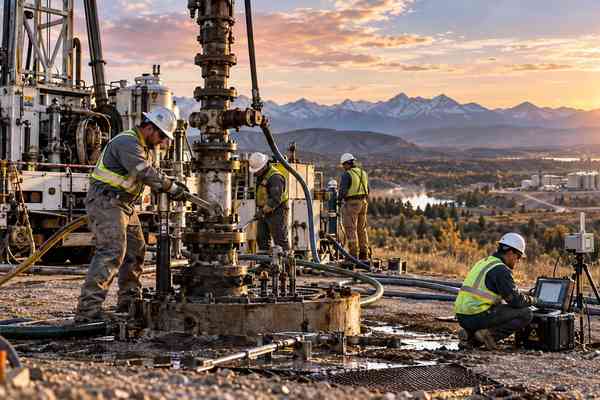
In May, the service provider acquired the Viking Well Service equipment fleet for USD 4.3 million and is already putting the new capacity to profitable use. A long-standing natural gas client, which has placed annual orders since 2017, is ramping up its 2026 campaign. Instead of one unit, there are now three operating across Pennsylvania, New York, West Virginia, and Kentucky. Management expects the fleet expansion to generate an additional USD 10 million in annual revenue. At the same time, the subsidiary Plants & Goodwin added four new corporate clients, including three publicly traded energy giants with a combined market capitalization of over USD 140 billion.
The latest financing round raised just under CAD 3.3 million. It was fully subscribed and incurred no underwriting fees. The funds will be used for additional equipment, expansion into the first international market, and general working capital. Previously, the company had already posted three consecutive profitable quarters, reduced debt from USD 12.3 million to USD 8.2 million, and increased revenue by 58% year-over-year. With the new CFO Correne Loeffler, who previously gained experience at Callon Petroleum among others, management is strengthening its team for the next growth phase. In addition to plugging wells, the company also generates revenue from methane measurement services and the sale of carbon credits. The stock is currently trading at around CAD 0.72.
BP: Reorganizing
Under new CEO Meg O'Neill, who has been in office since April, BP is returning to oil and gas as its core business. The green ambitions of earlier years are being scaled back. The operating business is delivering strong results, driven by higher oil prices and robust refining margins. In the first quarter of 2026, adjusted profit surged to USD 3.2 billion, nearly doubling from the previous year. This creates breathing room for the upcoming transition. At the same time, however, write-downs in the low-carbon sector amounting to billions are on the horizon. A strategic reboot that activist investor Elliott Capital Management, with a stake of just under 5%, has strongly driven.
Management is slashing annual spending on climate and transition technologies from over USD 6 billion to just USD 1.5–2 billion. In return, around USD 10 billion per year is flowing into traditional production. By 2030, BP aims to ramp up production to up to 2.5 million barrels of oil equivalent per day. This will be accompanied by a massive divestment program. By the end of 2027, assets worth USD 20 billion are to be sold off, including the majority stake in the lubricants business Castrol and the Gelsenkirchen refinery. The debt mountain is expected to shrink from USD 25.3 billion to USD 14–18 billion.
In the future, only two divisions will remain: Upstream (production) and Downstream (refining, distribution). Renewable energy sources such as solar and offshore wind will be moved into a lean technology unit without significant capital commitment. Specifically, this means the major British hydrogen projects in Teesside have been scrapped because they are too expensive and face weak demand. Instead, BP will continue drilling in the Gulf of Mexico and the North Sea. Analysts are divided. Management must now deliver. The dividend of USD 0.0832 remains in place for now, but share buybacks have been put on hold. The priority now is debt reduction. The share is currently trading at around EUR 6.177.
Shell: Oil Price Rally Expected to Continue Even After the War Ends
Oil prices are expected to continue rising even after the conflict in the Middle East ends. Shell CEO Wael Sawan made this statement last week, outlining a clear outlook for the coming years. Prices in the USD 60–70 range are seen as stabilizing, but the overall trend is clearly upward. The reason is persistently strong global demand combined with a shrinking availability of low-cost production. The easy oil has been extracted, and future projects will become more expensive. Sawan therefore sees the industry facing growing challenges while simultaneously needing to serve the global economy.
In the first quarter, adjusted profit jumped to just under USD 6.9 billion, a significant increase over the previous year. This was achieved despite a 4% decline in production, partly due to damage to a Qatari gas facility from Iranian attacks. Repairs could take time, but the trading business and higher energy prices offset the losses. Operating cash flow before working capital stood at a solid USD 17.2 billion, even though high price volatility tied up liquidity in the short term.
Shell is refocusing more strongly on high-yield fossil fuel businesses. The sale of offshore wind farms in Europe and the acquisition of Canadian gas producer ARC Resources for USD 16.4 billion therefore fit into this strategy. The latter produces in the Montney Basin at lower costs than the industry average. A USD 3 billion share buyback program is on hold until mid-July due to regulatory requirements related to the ARC transaction. However, the recent 5% dividend increase shows that shareholder returns remain a priority. Meanwhile, the Dutch Supreme Court is set to issue a landmark ruling on binding CO₂ reduction targets. Currently, a share costs EUR 36.905.
Even the short-term decline in oil prices is not proving to be a serious problem for any of the three companies. Zefiro Methane is completely immune to price fluctuations thanks to its emissions-based business model. BP is using the pressure to strategically realign itself toward profitable core areas while simultaneously reducing its debt. Shell firmly expects rising oil prices after the war ends and is able to weather the storm thanks to its strong trading business and focus on dividends. The temporary price drop may weigh on traditional producers, but it forces them to become more efficient.
Conflict of interest
Pursuant to §85 of the German Securities Trading Act (WpHG), we point out that Apaton Finance GmbH as well as partners, authors or employees of Apaton Finance GmbH (hereinafter referred to as "Relevant Persons") currently hold or hold shares or other financial instruments of the aforementioned companies and speculate on their price developments. In this respect, they intend to sell or acquire shares or other financial instruments of the companies (hereinafter each referred to as a "Transaction"). Transactions may thereby influence the respective price of the shares or other financial instruments of the Company.
In this respect, there is a concrete conflict of interest in the reporting on the companies.
In addition, Apaton Finance GmbH is active in the context of the preparation and publication of the reporting in paid contractual relationships.
For this reason, there is also a concrete conflict of interest.
The above information on existing conflicts of interest applies to all types and forms of publication used by Apaton Finance GmbH for publications on companies.
Risk notice
Apaton Finance GmbH offers editors, agencies and companies the opportunity to publish commentaries, interviews, summaries, news and the like on news.financial. These contents are exclusively for the information of the readers and do not represent any call to action or recommendations, neither explicitly nor implicitly they are to be understood as an assurance of possible price developments. The contents do not replace individual expert investment advice and do not constitute an offer to sell the discussed share(s) or other financial instruments, nor an invitation to buy or sell such.
The content is expressly not a financial analysis, but a journalistic or advertising text. Readers or users who make investment decisions or carry out transactions on the basis of the information provided here do so entirely at their own risk. No contractual relationship is established between Apaton Finance GmbH and its readers or the users of its offers, as our information only refers to the company and not to the investment decision of the reader or user.
The acquisition of financial instruments involves high risks, which can lead to the total loss of the invested capital. The information published by Apaton Finance GmbH and its authors is based on careful research. Nevertheless, no liability is assumed for financial losses or a content-related guarantee for the topicality, correctness, appropriateness and completeness of the content provided here. Please also note our Terms of use.