February 22nd, 2023 | 13:16 CET
Which stocks to get into now? Alphabet, Amazon, Aspermont and Alibaba under the magnifying glass!
Well, things turned out differently than expected! In the fall of 2022, the spectre of crisis made the rounds again several times. The forecasters overlapped in their assessment of the economic downturn. The reason was the strong inflation and the associated loss of purchasing power. But now: Where is inflation heading in 2023? In order to answer this question, it is helpful to look back to the period after the oil crisis in 1973. As was the case then, an energy price correction is to be expected today. Gas, meanwhile, has already fallen almost unnoticed to a 17-month low. Unfortunately, the Berlin traffic lights have already covered Germany's energy needs at peak prices, which is now blowing up people's utility bills. However, falling inflation also leads to lower interest rates, boosting growth stocks in particular. We take a look at important protagonists.
time to read: 4 minutes | Author: André Will-Laudien
ISIN: ALPHABET INC.CL C DL-_001 | US02079K1079 , AMAZON.COM INC. DL-_01 | US0231351067 , ASPERMONT LTD | AU000000ASP3 , ALIBABA GR.HLDG SP.ADR 8 | US01609W1027
Table of contents:
Author

André Will-Laudien
Born in Munich, he first studied economics and graduated in business administration at the Ludwig-Maximilians-University in 1995. As he was involved with the stock market at a very early stage, he now has more than 30 years of experience in the capital markets.
Tag cloud
Shares cloud
Alibaba - Noticeable US-buying in Jack Ma stock
The recovery rally in the Alibaba share has cooled somewhat in the past 3 weeks, but the general uptrend remains intact after a 70% increase in 3 months. Currently, the first US funds are again adding to their China investments after the lockdown. Looking at the latest 13F filings, the large US hedge funds are currently scrambling for the papers of the Chinese tech giant - and with good reason, as Alibaba is the leading Chinese online marketplace. In addition to its core business in e-commerce, the Group is building up other pillars along the lines of US competitor Amazon, especially in the area of cloud computing.
Recently, it became known that activist investor and GameStop boss Ryan Cohen had joined Alibaba with a nine-figure sum. As it turns out, this was not an isolated incident: further SEC filings reveal that several prominent hedge funds have recently made large bets on China's Amazon. Among them is none other than "Big Short" investor Micheal Burry, who became famous for shorting the US housing market in 2008. According to a Bank of America analysis, the reopening of China's borders has recently led to record inflows into emerging market stocks.
The mystery surrounding the whereabouts of company founder Jack Ma also appears to be out. Social media users recently spotted the e-commerce giant's billionaire founder at a Melbourne hotel. Chinese news agency Yicai then confirmed that Ma is now in Australia. After the recent 15% correction, the stock can be had again below EUR 100. The share is very interesting, with a 2023 P/E ratio of 13, as Alibaba's business is consistently growing at double-digit rates.
Aspermont Ltd. - Worldwide networking of mining and media
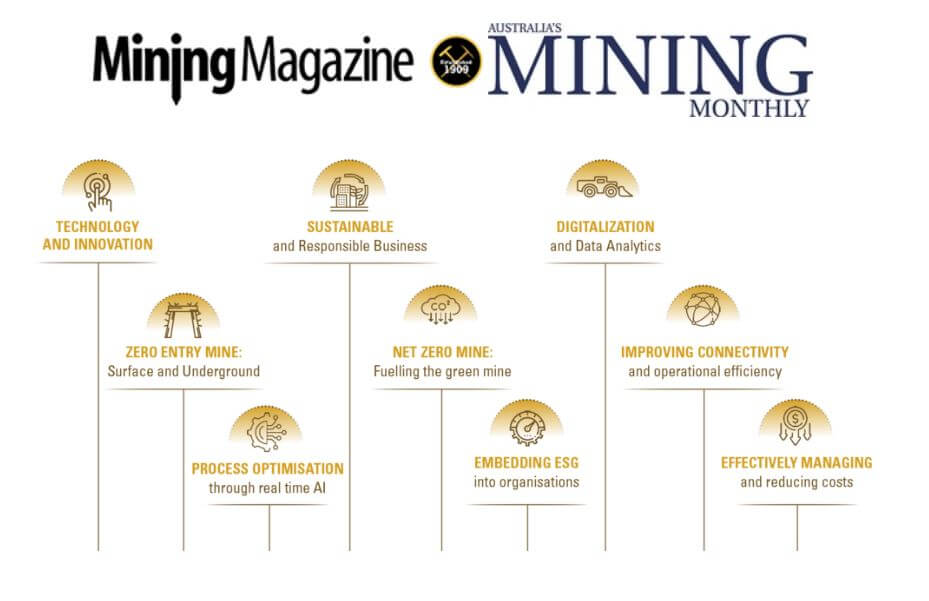
Australian media specialist Aspermont has 26 uninterrupted quarters of growth. Aspermont's successful transformation could have come out of a textbook. In just a few years, the Australians transformed from a venerable publishing house to a modern XaaS provider with a database of over 8 million high-level contacts in business and finance. The digital services and B2B media in the mining, energy and agriculture sectors help participants in the network view significant information and formulate financing needs simultaneously.
For the first quarter of 2023, the Australians reported total revenue of AUD 4.4 million, up 5% from the same quarter last year. New contracts grew particularly strongly, up 25% to AUD 2.5 million. Despite a challenging environment, Aspermont again demonstrated its growing strength. The debt-free company has more than AUD 7 million in cash and cash equivalents thanks to consistently positive cash flow.
The focus is now on the live Australian events that were cancelled due to the COVID pandemic from 2020 to 2022. Here, important representatives from the business world meet with investors and political leaders. At this year's "Future of Mining" conference in Sydney, the Australian Minister for Mining, Hon Madeleine King (MP), was also in attendance. Currently, the liquid share is trading at a low AUD 0.02, with a market capitalization of AUD 48 million. Research house GBC sees opportunities for a substantial rise to AUD 0.11 in the next 12 to 24 months. The rapid growth should continue in the current year due to the multiple positioning.
Amazon versus Alphabet - Who will convince after the numbers?
After the sharp correction of the NASDAQ in 2022, the growth markets are gradually recovering in the current year. Amazon and Alphabet, two prominent FAANG representatives, have corrected sharply in the past year despite the stock split. The stock market reaction to the latest quarterly figures for 2022 was also not convincing.
Amazon increased its revenues by 9% to USD 149.2 billion, but operating profit fell from USD 3.5 billion to USD 2.7 billion due to rising costs. Amazon had to spend a lot of money because of the closure of unprofitable stores and a large wave of layoffs. Chief Financial Officer Brian Olsavsky said severance payments had a negative impact of about USD 640 million. In early January, Group CEO Andy Jassy announced further cuts of at least 18,000 jobs. Net income fell to a low USD 278 million in the fourth quarter, mainly due to the write-down of the investment in the ailing electric car manufacturer Rivian. In the outlook for the current quarter, Amazon disappointed with a revenue forecast of only USD 121 to 126 billion, as growth in the important cloud business is also lower than hoped. Nevertheless, the now-initiated cost-cutting measures should take effect in the coming quarters.
Internet company Alphabet is currently busy with its ChatGPT rival and is investing large sums. Microsoft has already started with its AI application and is reaping respectable success. In the last quarter, Google felt the slump in the online advertising market considerably. Revenues in the advertising business and on the YouTube video platform fell by around 3.6% YOY to USD 59 billion. However, growth in new cloud services and international exchange rate diversification helped close the gap. As a result, parent company Alphabet reported a 1% increase in revenue to about USD 76 billion, but bottom-line profits fell by a good 1/3 YOY to USD 13.6 billion. The number of employees rose from 156,600 to more than 190,000 within 12 months, but due to the decline in business, the Group recently announced that it would cut around 12,000 jobs, with severance payments in the current quarter expected to total between USD 1.9 billion and USD 2.3 billion. The US investment bank Goldman Sachs has slightly lowered the price target from USD 130 to USD 128 but left the rating on "Buy". After the recent correction, both Amazon and Alphabet are again worth a look.
Stock markets are off to a strong start in the new year. While the Chinese Alibaba takes new momentum after 60% plus, Amazon and Alphabet correct near their 12-month lows again in double digits. On the other hand, the Australian Aspermont continues to improve quarter after quarter.
Conflict of interest
Pursuant to §85 of the German Securities Trading Act (WpHG), we point out that Apaton Finance GmbH as well as partners, authors or employees of Apaton Finance GmbH (hereinafter referred to as "Relevant Persons") currently hold or hold shares or other financial instruments of the aforementioned companies and speculate on their price developments. In this respect, they intend to sell or acquire shares or other financial instruments of the companies (hereinafter each referred to as a "Transaction"). Transactions may thereby influence the respective price of the shares or other financial instruments of the Company.
In this respect, there is a concrete conflict of interest in the reporting on the companies.
In addition, Apaton Finance GmbH is active in the context of the preparation and publication of the reporting in paid contractual relationships.
For this reason, there is also a concrete conflict of interest.
The above information on existing conflicts of interest applies to all types and forms of publication used by Apaton Finance GmbH for publications on companies.
Risk notice
Apaton Finance GmbH offers editors, agencies and companies the opportunity to publish commentaries, interviews, summaries, news and the like on news.financial. These contents are exclusively for the information of the readers and do not represent any call to action or recommendations, neither explicitly nor implicitly they are to be understood as an assurance of possible price developments. The contents do not replace individual expert investment advice and do not constitute an offer to sell the discussed share(s) or other financial instruments, nor an invitation to buy or sell such.
The content is expressly not a financial analysis, but a journalistic or advertising text. Readers or users who make investment decisions or carry out transactions on the basis of the information provided here do so entirely at their own risk. No contractual relationship is established between Apaton Finance GmbH and its readers or the users of its offers, as our information only refers to the company and not to the investment decision of the reader or user.
The acquisition of financial instruments involves high risks, which can lead to the total loss of the invested capital. The information published by Apaton Finance GmbH and its authors is based on careful research. Nevertheless, no liability is assumed for financial losses or a content-related guarantee for the topicality, correctness, appropriateness and completeness of the content provided here. Please also note our Terms of use.