June 2nd, 2021 | 09:59 CEST
Volkswagen, Nevada Copper, Geely - Things are heating up!
The fear is going around. The new enemy of the economy is no longer the pandemic but the consequences due to the easing. In May, growth in Chinese industrial activity reached its highest level for 2021 due to rising demand from domestic and global markets. Commodity prices are skyrocketing due to supply shortages, and supply chains are broken, affecting the economy. Due to the green revolution, the trend of expensive metal prices will continue. The losers will be the end consumers, while the winners will be the producers of the scarce goods.
time to read: 3 minutes | Author: Stefan Feulner
ISIN: DE0007664039 , CA64128F1099 , KYG3777B1032
Table of contents:
Author

Stefan Feulner
The native Franconian has more than 20 years of stock exchange experience and a broadly diversified network.
He is passionate about analyzing a wide variety of business models and investigating new trends.
Tag cloud
Shares cloud
Metals the winners of the energy revolution
Supercycle or not. The fact is that a CO² reduction in the economy and transport will require a radical change in the raw materials sector. Coal, crude oil and gas are losing importance. At the same time, metals such as cobalt, lithium, and copper will be in even greater demand than at present to expand capacities for generating and storing renewable energies. Copper is and will remain irreplaceable in the electrification of the global economy due to its chemical properties.
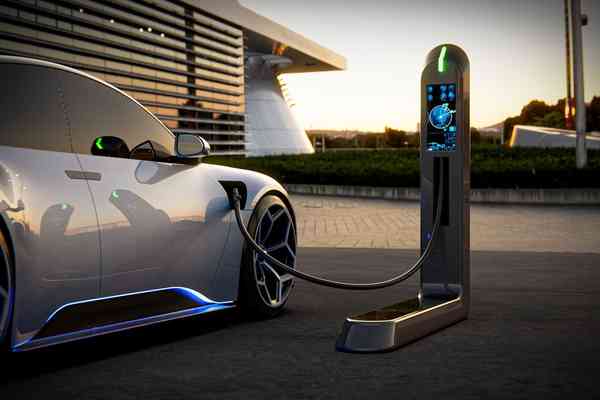
An electric car contains an average of around 83 kilograms of copper, four times as much as a car with an internal combustion engine. Inventories of the red metal are currently at a multi-year low, and at the same time, some copper mines were shut down last year. As the development of new mines takes several years, the copper price recently almost reached its all-time high since 2011 again.
In 2019, the market was short 383,000 tons. In 2020, the supply deficit rose to 559,000 tons, the highest value in more than a decade. If we now go by the statistics, the share of electric cars (BEVs and PHEVs) in the passenger car population in Germany alone was only around 1.2%. According to forecasts, the share will grow to 24.4% by 2030. That would correspond to an absolute number of about 11.55 million vehicles. As a result, a further surplus in demand is preprogrammed for the light metal in the coming years.
Profitability due to rising prices
As already described above, investments in exploration and the development of new copper deposits have failed to materialize in recent years due to low prices. Global demand is currently saturated by 10 larger mines and about 20 smaller ones. Thus, Goldman Sachs analysts stated, "The copper market is unprepared for this critical role!" The winners of this phenomenon are undoubtedly the large producers and smaller mining companies that have already secured promising mining projects.
One of the favorites is Nevada Copper, a mining company operating since 2007 and has a promising copper project at Pumpkin Hollow in Nevada, not far from the headquarters of Google and Tesla. Major players such as Blackrock and Pala Investments are already involved in the high-grade project, which contains gold, silver and copper. The Company's two fully-permitted projects include the high-grade underground mine and processing plant, which are now in production, and a large open pit project that has progressed toward feasibility.
Plant running at full speed
With postponements and shutdowns still occurring in recent months, the share price has been slowed and has not yet benefited from the rising copper price. Only at the end of April, Nevada Copper's target of processing 5,000 tons of ore per day was confirmed with the completion of the production shaft in the main area. The latest forecasts recently announced by the management clearly show the potential of the project. For the underground mine, annual production of copper equivalent to 77 million pounds is planned; for the open pit mine, Nevada Copper even assumes output of 200 million pounds. The stock market value is currently around EUR 323 million. If the forecasts come true, there is still a lot of room for improvement!
Outsourcing of the battery business
Volkswagen continues to upgrade and brace itself against solid competition from Tesla, BYD, Nio, Geely & Co. By 2030, the group plans to build six factories in Europe alone together with partners for a double-digit billion sum to produce battery cells. A Europe-wide network of fast-charging stations for electric cars is also to be created. In total, the gigafactories planned by the end of the decade are to have a total capacity of 240 gigawatt hours per year. In addition to Salzgitter, which will be operated without an external partner, a site is also to be built in northern Sweden.
To finance the overall project, Wolfsburg is considering an IPO of the entire battery business. "We are not ruling anything out for the time being - at least for the cell business." "The construction of cell plants is costly," said the VW Group Board of Management, explaining the considerations. In addition, the stock market players honored another plan of the VW headquarters. Thus, speculation arose again, according to which an IPO of Porsche AG is being considered. In the meantime, the Volkswagen share was clearly in the plus with 3%.
Conflict of interest
Pursuant to §85 of the German Securities Trading Act (WpHG), we point out that Apaton Finance GmbH as well as partners, authors or employees of Apaton Finance GmbH (hereinafter referred to as "Relevant Persons") may in the future hold shares or other financial instruments of the mentioned companies or will bet on rising or falling on rising or falling prices and therefore a conflict of interest may arise in the future. conflict of interest may arise in the future. The Relevant Persons reserve the shares or other financial instruments of the company at any time (hereinafter referred to as the company at any time (hereinafter referred to as a "Transaction"). "Transaction"). Transactions may under certain circumstances influence the respective price of the shares or other financial instruments of the of the Company.
Furthermore, Apaton Finance GmbH reserves the right to enter into future relationships with the company or with third parties in relation to reports on the company. with regard to reports on the company, which are published within the scope of the Apaton Finance GmbH as well as in the social media, on partner sites or in e-mails, on partner sites or in e-mails. The above references to existing conflicts of interest apply apply to all types and forms of publication used by Apaton Finance GmbH uses for publications on companies.
Risk notice
Apaton Finance GmbH offers editors, agencies and companies the opportunity to publish commentaries, interviews, summaries, news and etc. on news.financial. These contents serve information for readers and does not constitute a call to action or recommendations, neither explicitly nor implicitly. implicitly, they are to be understood as an assurance of possible price be understood. The contents do not replace individual professional investment advice and do not constitute an offer to sell the share(s) offer to sell the share(s) or other financial instrument(s) in question, nor is it an nor an invitation to buy or sell such.
The content is expressly not a financial analysis, but rather financial analysis, but rather journalistic or advertising texts. Readers or users who make investment decisions or carry out transactions on the basis decisions or transactions on the basis of the information provided here act completely at their own risk. There is no contractual relationship between between Apaton Finance GmbH and its readers or the users of its offers. users of its offers, as our information only refers to the company and not to the company, but not to the investment decision of the reader or user. or user.
The acquisition of financial instruments entails high risks that can lead to the total loss of the capital invested. The information published by Apaton Finance GmbH and its authors are based on careful research on careful research, nevertheless no liability for financial losses financial losses or a content guarantee for topicality, correctness, adequacy and completeness of the contents offered here. contents offered here. Please also note our Terms of use.