January 5th, 2026 | 07:00 CET
Turbo profits with the energy transition! Net zero or 100% with E.ON, Oklo, American Atomics, and D-Wave
To kick off the year, a look at EU energy policy reveals a clear shift: nuclear power is regaining strategic relevance. Governments across Europe are increasingly focusing on small modular reactors (SMRs). Countries including Poland, Romania, the Czech Republic, Sweden, Estonia, Finland, France, and Italy are currently planning or developing concrete SMR plans in order to better combine nationwide security of supply with overarching climate targets. New reactor concepts for electricity and heat generation are a major focus here. While the first plants are still in the planning stage, the initial rollout of SMRs in Europe is expected to take place primarily in the 2030s. Investors need to think ahead because nuclear energy is no longer a taboo subject but part of the strategic energy future. The US and China are likely to take a leading role in this, because their hunger for energy is huge! Where should investors put their money now?
time to read: 5 minutes | Author: André Will-Laudien
ISIN: E.ON SE NA O.N. | DE000ENAG999 , OKLO INC | US02156V1098 , AMERICAN ATOMICS INC | CA0240301089 , D-WAVE QUANTUM INC | US26740W1099
Table of contents:
Author

André Will-Laudien
Born in Munich, he first studied economics and graduated in business administration at the Ludwig-Maximilians-University in 1995. As he was involved with the stock market at a very early stage, he now has more than 30 years of experience in the capital markets.
Tag cloud
Shares cloud
E.ON – Nuclear power no longer plays an operational role
German energy service provider E.ON is clearly positioning itself as an infrastructure and network operator that wants to enable the energy transition primarily through the expansion and efficiency of its networks. Nuclear power no longer plays an active role in its operational business; instead, E.ON is focusing on a system that will be strongly influenced by renewable energy in the long term. At the same time, management emphasizes that the restructuring of the energy system will incur considerable costs and must therefore be designed to be efficient and market-oriented.
E.ON CEO Leonhard Birnbaum expects electricity and gas prices to initially fall for many customers in 2026. Reasons for this include government relief on grid fees and the aftermath of the 2022 energy crisis. For a typical three-person household, electricity costs in 2026 could be around EUR 150 lower than in 2025, and gas costs around EUR 200 lower. As Europe's largest network operator with around 1.6 million km of lines, E.ON has a central role to play in the restructuring process.
Birnbaum urges that the energy transition be more closely aligned with real infrastructure and demand needs in the future. At the same time, he calls for fewer subsidies, in particular an end to subsidies for rooftop photovoltaic systems.
For investors, E.ON stands for stable network revenues, high investment activity, and a clear focus on long-term infrastructure returns rather than volatile generation models. Analysts on the LSEG platform see a steady upward trend. With a 2027 P/E ratio of 13 and a dividend yield of just under 4%, a 12-month average target of approximately EUR 17 is calculated.
American Atomics – What the new Western fuel supply could look like
Those investing in the energy sector today are betting on fundamental trends such as AI, population growth, and increasing energy demand. Electricity is scarce and expensive in many places, but extremely easy to generate in some regions. One example is Canada, with its endless possibilities and resources. American Atomics Inc. is a Vancouver-based energy company that aims to fill a strategic gap in Western uranium supply. Under the motto "From Rock to Reactor," the Canadians are pursuing the establishment of a fully integrated, US-controlled supply chain from mining to fuel production. At the heart of this is the vision of overcoming the US's existing dependence on Russia, Kazakhstan, and China and establishing North America's long-term energy sovereignty.
Unlike traditional explorers, American Atomics is therefore focusing on vertical integration, including future HALEU production for new reactor generations.
The necessary raw material base is secured through projects in politically stable regions of North America, most notably the "Big Indian Project" in the historic Lisbon Valley in Utah. This area is one of the most important uranium basins in the US, although the eastern flank of the geological structure has hardly been systematically explored to date. American Atomics has entered into an option agreement that will enable it to acquire a majority stake in the project by the end of 2030, provided that defined annual exploration investments are made. The pipeline is supplemented by further projects in Colorado and Ontario, which are expected to secure additional resources in the future. American Atomics is very well-positioned.
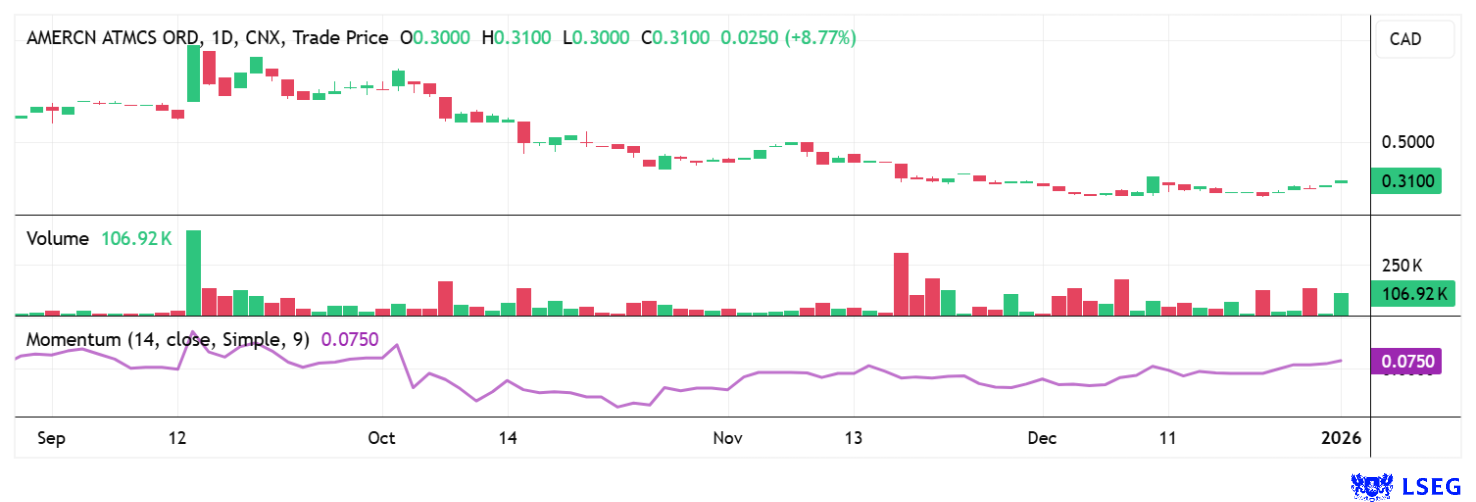
At the same time, the Company is working with refining specialist CVMR and other partners on processing capacities to cover as many steps of the value chain as possible itself in the future. Particularly noteworthy is the cooperation with DISA Technologies, which recovers uranium from contaminated sites and thus remediates former mining areas. In a world where AI infrastructure and data centers are significantly increasing electricity demand, American Atomics sees nuclear energy as an indispensable CO₂-free base load source. With this approach, American Atomics is positioning itself as a potential key player in a new North American-controlled nuclear fuel era. Only CAD 17 million market capitalization for a massive package of energy for the future!
IIF moderator Lyndsay Malchuk interviewed co-founder Connor Lynch about American Atomics' strategic direction.
Oklo – At the forefront of the SMR movement
The rising star in nuclear power in the US is SMR technology developer Oklo. The Company focuses on compact, sodium-cooled fast reactors, also known as "fast breeders." The modular design aggregates several 15 MW units, which can be installed flexibly and are designed for remote use. Oklo is in the pre-application process for its first Aurora plant, which is dependent on government support, well-capitalized tech investors, and its own NRC license. Together with Los Alamos National Laboratory, Oklo has conducted successful tests on a fast plutonium reactor, achieving an important technical milestone in the DOE reactor pilot program. Oklo is not yet generating any revenue, but the first plants are expected to lead to contracts with electricity customers starting in 2028. The stock rose by 1,000% at times in 2025 to just under USD 200, but consolidated by 65% to USD 71 by the end of December. Nevertheless, 12 out of 19 analysts on the LSEG platform are still giving it the thumbs up. The average price target is calculated at USD 116, a good 50% above the last price. That is a lot of imagination for a rapidly developing sector.
D-Wave – Energy hunger is growing
AI and quantum technology also consume a lot of energy. Modern data centers today require 5 to 10 times more electricity than a decade ago, and demand continues to grow. In this environment, the shares of quantum computing expert D-Wave are also in the spotlight. Although quantum computers require less power to operate, they only function in a specific environment. Currently, the energy requirements for cooling and the entire infrastructure dominate, as quantum computers such as those from D-Wave rely on extremely low temperatures close to absolute zero, which significantly increases power consumption to the order of several 10 KW. D-Wave's stock reached prices of around USD 47 in October, before plummeting to USD 20 six weeks later in November. D-Wave is investing hundreds of millions of dollars in research and development, financed by capital increases. Real revenue is still a minor issue at this stage. Analysts estimate that the Company, valued at around USD 9 billion, will not generate significant revenue in the hundreds of millions until 2028. Anyone investing at this level is betting on a bright quantum future. Conventional valuation standards fail when assessing such business models.
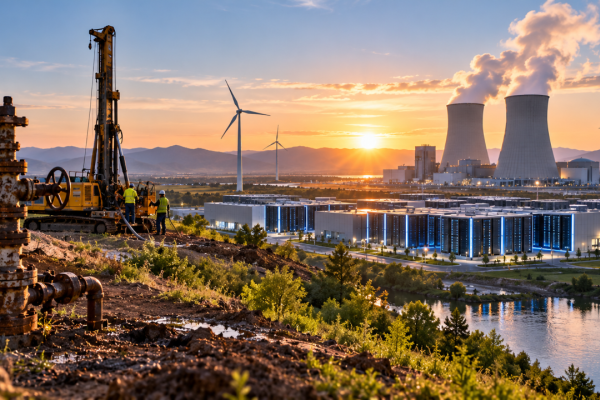
**The global energy transition is proceeding with significantly different priorities in the US and Europe. In Washington, under President Trump's "Drill Baby Drill" credo, the strategy is dominated by aggressively mobilizing domestic oil and gas resources and accelerating fossil fuel infrastructure. Although the EU is dynamically promoting the expansion of renewable energy and grid infrastructure, it continues to struggle to integrate security of supply, climate targets, and competitive energy prices into a stable overall concept. One conclusion is becoming increasingly clear: nuclear energy is back on the agenda – putting companies such as American Atomics more firmly into focus.
Conflict of interest
Pursuant to §85 of the German Securities Trading Act (WpHG), we point out that Apaton Finance GmbH as well as partners, authors or employees of Apaton Finance GmbH (hereinafter referred to as "Relevant Persons") currently hold or hold shares or other financial instruments of the aforementioned companies and speculate on their price developments. In this respect, they intend to sell or acquire shares or other financial instruments of the companies (hereinafter each referred to as a "Transaction"). Transactions may thereby influence the respective price of the shares or other financial instruments of the Company.
In this respect, there is a concrete conflict of interest in the reporting on the companies.
In addition, Apaton Finance GmbH is active in the context of the preparation and publication of the reporting in paid contractual relationships.
For this reason, there is also a concrete conflict of interest.
The above information on existing conflicts of interest applies to all types and forms of publication used by Apaton Finance GmbH for publications on companies.
Risk notice
Apaton Finance GmbH offers editors, agencies and companies the opportunity to publish commentaries, interviews, summaries, news and the like on news.financial. These contents are exclusively for the information of the readers and do not represent any call to action or recommendations, neither explicitly nor implicitly they are to be understood as an assurance of possible price developments. The contents do not replace individual expert investment advice and do not constitute an offer to sell the discussed share(s) or other financial instruments, nor an invitation to buy or sell such.
The content is expressly not a financial analysis, but a journalistic or advertising text. Readers or users who make investment decisions or carry out transactions on the basis of the information provided here do so entirely at their own risk. No contractual relationship is established between Apaton Finance GmbH and its readers or the users of its offers, as our information only refers to the company and not to the investment decision of the reader or user.
The acquisition of financial instruments involves high risks, which can lead to the total loss of the invested capital. The information published by Apaton Finance GmbH and its authors is based on careful research. Nevertheless, no liability is assumed for financial losses or a content-related guarantee for the topicality, correctness, appropriateness and completeness of the content provided here. Please also note our Terms of use.