April 15th, 2025 | 10:20 CEST
Tungsten supply remains challenging: Almonty Industries strategically well-positioned
For years, observers have been calling for Europe to develop its own dedicated raw materials strategy. It has been clear for more than a decade that Germany's industry, in particular, needs security of supply. However, instead of securing tangible ownership or at least reliable partnerships, the focus has long been on fair-weather diplomacy and the "principle of hope". With the Critical Raw Materials Act (CRMA), the EU aims to mine at least 10% of its required strategic raw materials domestically by 2030. Furthermore, 40% of this is to be processed within the community. For Lewis Black, CEO of tungsten and molybdenum producer Almonty Industries, these are steps in the right direction. But are they coming too late?
time to read: 3 minutes | Author: Nico Popp
ISIN: ALMONTY INDUSTRIES INC. | CA0203981034
Table of contents:
Author

Nico Popp
At home in Southern Germany, the passionate stock exchange expert has been accompanying the capital markets for about twenty years. With a soft spot for smaller companies, he is constantly on the lookout for exciting investment stories.
Tag cloud
Shares cloud
Production shortfalls due to tungsten shortage?
Starting in 2030, the EU aims to reduce dependency on individual third countries for critical raw materials to a maximum of 65%. In addition, the EU decision-makers have also come up with a recycling rate of 25%. However, when talking to experts in the raw materials market, it is clear that achieving these goals will be difficult. In the case of tungsten, a raw material essential for armaments, battery technology, and the chip industry, around 90% of global supply is currently in the hands of China, North Korea, and Russia. China imposed export restrictions on tungsten at the beginning of February this year. Almonty CEO Lewis Black sees the Western world as engaged in a dangerous gamble – currently, tungsten reserves could last for another three to six months, then a serious supply crisis would loom. Recycling alone cannot prevent this crisis, as it can, at best, meet only 50% of demand and also relies on primary materials. So, how can this tense situation be resolved?
Security of supply is everything – Supply contracts make the cash registers ring
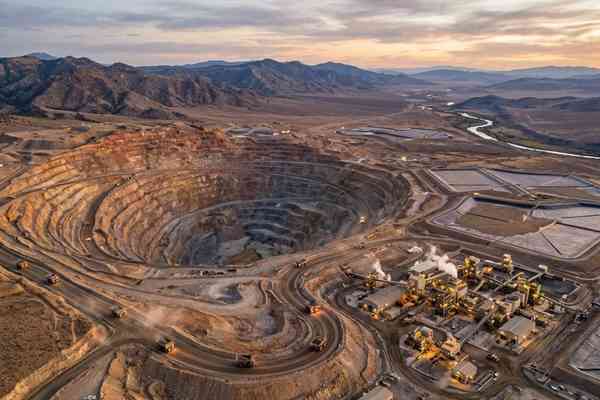
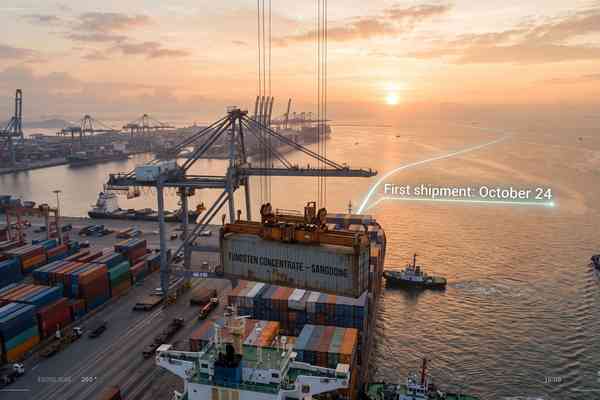
Almonty Industries is providing a promising solution with its Sangdong mine, which is scheduled to start production this summer and will cover up to 10% of global tungsten demand in the long term. The timing could hardly be better for the Company. Tungsten is scarce, and companies are increasingly focusing on security of supply instead of haggling over prices. Just a few years ago, industrial buyers preferred low-cost solutions for fungible goods, such as raw materials. Here, China, in particular, emerged as a low-cost producer, which displaced foreign competition for decades and was thus able to secure its current market position. However, the events of recent months have led to a change in thinking: security of supply is so important to buyers of tungsten and other refractory metals today that they are willing to sign very long-term supply contracts. In the case of Almonty, the Korean group SAeH Holdings has secured molybdenum for up to sixty years. Particularly interesting: although such contracts today include a price floor, they do not include a price ceiling. This allows companies like Almonty Industries to reliably cover their costs and benefit from price increases even with long-term contracts.
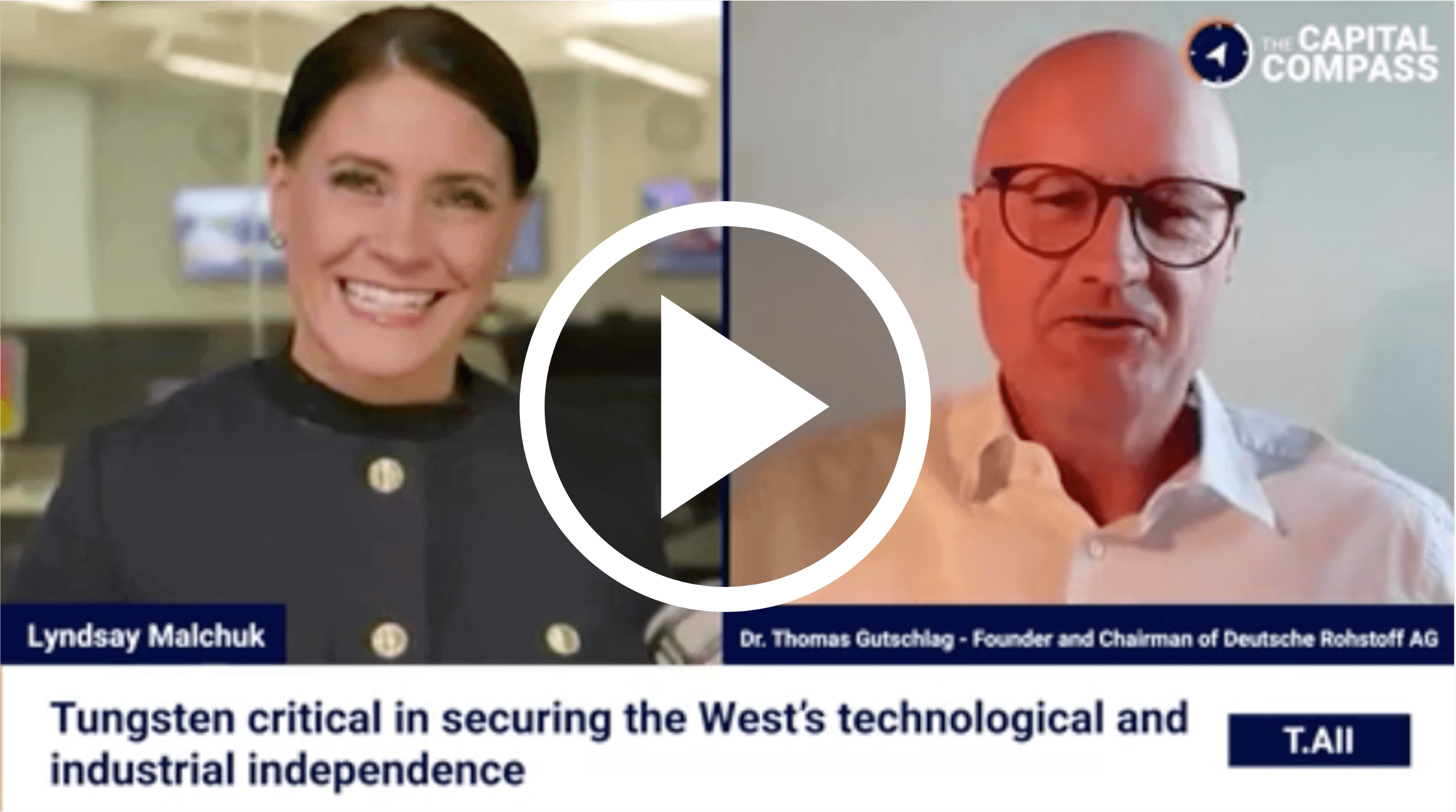
At Almonty Industries, anchor shareholders such as the Austrian Plansee Group have already secured tungsten supplies from the Sangdong project. According to current plans, these products will be processed in plants in the United States. For tungsten, the EU primarily relies on production in Spain and Portugal, where Almonty Industries also has projects, as well as in Austria. While the EU wants to rely on partnerships with Brazil or African countries for rare earths such as niobium or tantalum, the long-term supply of tungsten is also considered challenging beyond 2030. In this context, an interview conducted by Lyndsay Malchuk with Dr. Thomas Gutschlag, founder of Almonty anchor shareholder Deutsche Rohstoff AG, is also interesting.
Almonty relies on strong partners – Analysts see 100% upside potential
When asked about his current strategy amid trade wars and geopolitical tensions, Lewis Black, CEO of Almonty Industries, remains calm. He believes it is necessary to maintain a neutral stance and be ready for negotiations in all directions. So far, Almonty seems to be doing well with this strategy: Germany's development bank KfW is financing the Sangdong mine, anchor shareholders from Germany and Austria are benefiting, and relations with the US are growing stronger. In addition to a molybdenum offtake agreement with a SpaceX supplier, Almonty is also putting out feelers to the US military. A few weeks ago, the Company hired a consulting firm specializing in such relationships and brought US General Gustave F. Perna on board.
Almonty Industries' stock has been one of the bright spots for weeks – currently showing gains across all timeframes. Over the past six months, the stock rose by around 130%. Yet analysts still see further upside potential. Just yesterday, GBC published an analysis with a target price of CAD 4.20, corresponding to an upside potential of around 100%. Given the changing geopolitical conditions and the perceived weakness of NATO, the importance of critical raw materials is likely to increase. Almonty appears to be perfectly positioned to benefit from this trend. Although risks can never be ruled out given the volatile overall situation, the Almonty story sounds promising.
The full interview with Stockhouse presenter Lyndsay Malchuk and Dr. Thomas Gutschlag can be found here:
Conflict of interest
Pursuant to §85 of the German Securities Trading Act (WpHG), we point out that Apaton Finance GmbH as well as partners, authors or employees of Apaton Finance GmbH (hereinafter referred to as "Relevant Persons") may hold shares or other financial instruments of the aforementioned companies in the future or may bet on rising or falling prices and thus a conflict of interest may arise in the future. The Relevant Persons reserve the right to buy or sell shares or other financial instruments of the Company at any time (hereinafter each a "Transaction"). Transactions may, under certain circumstances, influence the respective price of the shares or other financial instruments of the Company.
In addition, Apaton Finance GmbH is active in the context of the preparation and publication of the reporting in paid contractual relationships.
For this reason, there is a concrete conflict of interest.
The above information on existing conflicts of interest applies to all types and forms of publication used by Apaton Finance GmbH for publications on companies.
Risk notice
Apaton Finance GmbH offers editors, agencies and companies the opportunity to publish commentaries, interviews, summaries, news and the like on news.financial. These contents are exclusively for the information of the readers and do not represent any call to action or recommendations, neither explicitly nor implicitly they are to be understood as an assurance of possible price developments. The contents do not replace individual expert investment advice and do not constitute an offer to sell the discussed share(s) or other financial instruments, nor an invitation to buy or sell such.
The content is expressly not a financial analysis, but a journalistic or advertising text. Readers or users who make investment decisions or carry out transactions on the basis of the information provided here do so entirely at their own risk. No contractual relationship is established between Apaton Finance GmbH and its readers or the users of its offers, as our information only refers to the company and not to the investment decision of the reader or user.
The acquisition of financial instruments involves high risks, which can lead to the total loss of the invested capital. The information published by Apaton Finance GmbH and its authors is based on careful research. Nevertheless, no liability is assumed for financial losses or a content-related guarantee for the topicality, correctness, appropriateness and completeness of the content provided here. Please also note our Terms of use.