June 3rd, 2022 | 11:46 CEST
TUI, Nevada Copper, Nordex - Winners and losers
The Ukraine crisis and the effects of the Corona pandemic are causing companies to adjust their profit forecasts. Interrupted supply chains, difficulties in procurement and staff shortages are causing disruptions in everyday work. Only at the beginning of the supply chain is stability emerging, like at Nevada Copper, a copper miner from Canada with an operation in the USA.
time to read: 4 minutes
|
Author:
Juliane Zielonka
ISIN:
TUI AG NA O.N. | DE000TUAG000 , NEVADA COPPER CORP. | CA64128F7039 , NORDEX SE O.N. | DE000A0D6554
Table of contents:
Author

Juliane Zielonka
Born in Bielefeld, she studied German, English and psychology. The emergence of the Internet in the early '90s led her from university to training in graphic design and marketing communications. After years of agency work in corporate branding, she switched to publishing and learned her editorial craft at Hubert Burda Media.
Tag cloud
Shares cloud
TUI AG - New shares to pay off debt
The COVID-19 pandemic has thrown various personnel plans into disarray. On the one hand, there are short-term cancellations in shifts due to corona outbreaks; on the other hand, the result of staff shortages is well-tempered chaos. In aviation, passengers are currently feeling the effects in particular. At Schiphol Airport in Amsterdam, passengers missed their flights standing in endless lines outside the terminals.
There are also unpleasant waiting times on the plane. Guests on TUI vacation flights in Manchester waited three hours on board their aircraft without leaving the runway. There was a lack of staff to load the luggage, so more time was needed to stow the suitcases. Only one drink was available on board during this time. The pilots spoke of how Swissport had let them down. With police escort, the annoyed TUI vacationers were at least able to leave the plane. However, they could not fly to their vacation destination that day.
TUI AG has officially apologized for the resulting chaos. As before, the industry is poorly positioned to handle the onslaught of vacation-hungry people. TUI almost plunged into insolvency. State aid saved the group from ruin for the time being. The Company now wants to repay the state aid and ask private investors for support. The Company is putting 162.3 million new shares into circulation at a price of EUR 2.62 per share. With the freshly gained money of EUR 425 million, TUI intends to repay the state financial injections. The move is met with annoyance among shareholders, as earnings per share are diluted by the new issues. The share price fell to EUR 2.17 per share.
Nevada Copper - On the way to more environmentally friendly copper
Copper is a metal with excellent electrical conductivity. In 2020, about 57% of copper applications flowed into the electrical sector, followed by the construction sector with 15%. The automotive sector is 9% in mechanical and plant engineering 8%, according to the General Association of the German Non-ferrous Metal Industry eV (GDB). In 2021, a total of 820,000 tons of copper were produced in mines in Russia, making Russia one of the largest copper producers in the world. Now, the EU has begun to boycott Russia economically with an oil and gas embargo. It is not yet clear to what extent this will also affect trade in copper. Alternatives in copper procurement are offered by countries such as Canada and the USA.
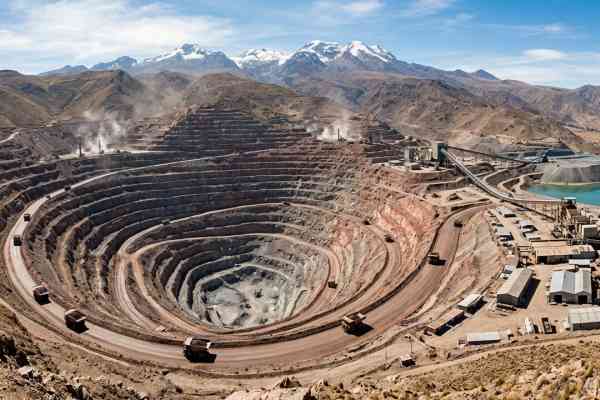
Nevada Copper is a Vancouver-based company. In Nevada, USA, it operates an underground copper mine with large-scale open pit mining. Nevada Copper is the 100% owner of the mine. Exploration of the site is revealing further lucrative copper deposits in local resource mineralization. The mine benefits from several key low-risk advantages. These include the experienced team of mine operators and the support of local residents thanks to the creation of new jobs. Also, the dry desert climate and ground conditions are advantageous for carrying out stripping operations without spending a lot of time.
Randy Buffington has been managing the Company for nine months. Buffington has extensive experience in underground and open pit mining operations in Nevada and internationally. Most recently, he served as President and Chief Executive Officer at Hycroft Mining, where he was responsible for operational reforms, the successful execution of a project turnaround and the creation of significant shareholder value. Prior to that, Buffington held various senior positions at Barrick from 2003 to 2012, overseeing North American and Zambian operations. Buffington is a new CEO at the helm of Nevada Copper, working together with his team to achieve the goal of producing greener copper for a sustainable future.
Nordex - Earnings forecast adjusted
Hamburg-based wind turbine manufacturer Nordex has adjusted its profit forecast. The Company now expects consolidated sales of EUR 5.2 to 5.7 billion and an operating (EBITDA) margin of minus 4% to 0%. The direct impact of the war in Ukraine on the Nordex Group's business is now more foreseeable:
The Company expects a loss of sales of around EUR 200 million and corresponding margins in Ukraine. In addition, further write-downs on working capital are to be expected as a result of projects which have been stopped or not carried out. The total direct effect of this could be up to 1 percentage point on the EBITDA margin in FY2022.
The high volatility and ongoing disruptions in the supply chain and logistics are causing disruptions in production. Be it in the delivery of steel or other components for the production of wind turbines. Nordex AG expects these factors to negatively impact the EBITDA margin by approximately 2.0% to 2.5% in FY2022.
The high volatility in the markets is now having a strong impact on the earnings forecasts of companies such as Nordex AG. Steel deliveries are at risk due to the crisis in Ukraine. The after-effects of the Corona pandemic are also causing problems for companies. Staff shortages are causing delays so that the brand image in terms of customer satisfaction is suffering. To repay the government Corona aid, TUI promptly distributes more stock. In doing so, it upsets existing shareholders, as the increased number of shares in circulation dilutes earnings per share. Only at the beginning of the supply chain can stability be expected, such as in the day-to-day operations of Nevada Copper's copper mine.
Conflict of interest
Pursuant to §85 of the German Securities Trading Act (WpHG), we point out that Apaton Finance GmbH as well as partners, authors or employees of Apaton Finance GmbH (hereinafter referred to as "Relevant Persons") may hold shares or other financial instruments of the aforementioned companies in the future or may bet on rising or falling prices and thus a conflict of interest may arise in the future. The Relevant Persons reserve the right to buy or sell shares or other financial instruments of the Company at any time (hereinafter each a "Transaction"). Transactions may, under certain circumstances, influence the respective price of the shares or other financial instruments of the Company.
In addition, Apaton Finance GmbH is active in the context of the preparation and publication of the reporting in paid contractual relationships.
For this reason, there is a concrete conflict of interest.
The above information on existing conflicts of interest applies to all types and forms of publication used by Apaton Finance GmbH for publications on companies.
Risk notice
Apaton Finance GmbH offers editors, agencies and companies the opportunity to publish commentaries, interviews, summaries, news and the like on news.financial. These contents are exclusively for the information of the readers and do not represent any call to action or recommendations, neither explicitly nor implicitly they are to be understood as an assurance of possible price developments. The contents do not replace individual expert investment advice and do not constitute an offer to sell the discussed share(s) or other financial instruments, nor an invitation to buy or sell such.
The content is expressly not a financial analysis, but a journalistic or advertising text. Readers or users who make investment decisions or carry out transactions on the basis of the information provided here do so entirely at their own risk. No contractual relationship is established between Apaton Finance GmbH and its readers or the users of its offers, as our information only refers to the company and not to the investment decision of the reader or user.
The acquisition of financial instruments involves high risks, which can lead to the total loss of the invested capital. The information published by Apaton Finance GmbH and its authors is based on careful research. Nevertheless, no liability is assumed for financial losses or a content-related guarantee for the topicality, correctness, appropriateness and completeness of the content provided here. Please also note our Terms of use.