May 28th, 2026 | 07:20 CEST
TKMS, Strategic Resources, and Lockheed Martin: The Largest Post-War Rearmament Program Is Stalling!
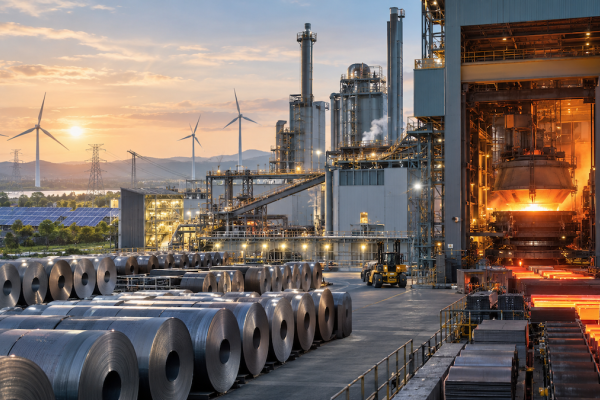
For the first time since the Cold War, NATO is pouring record sums into defence—EUR 108 billion for Germany alone. But modern frigates, battle tanks, and jets consume critical metals such as vanadium, germanium, and rare earth elements. Without these raw materials, even high-tech weapons become useless. China dominates the supply chains, creating a dangerous bottleneck. Yet although the outlook for companies in this sector could hardly be better, few stocks are trading at their all-time highs. Today, with TKMS, Strategic Resources, and Lockheed Martin, we have three interesting companies that have the potential to reach new highs.
time to read: 5 minutes | Author: Armin Schulz
ISIN: STRATEGIC RESOURCES INC | CA86277X4093 | TSXV: SR , LOCKHEED MARTIN DL 1 | US5398301094 , TKMS AG & CO KGAA | DE000TKMS001
Table of contents:
Author

Armin Schulz
Born in Mönchengladbach, he studied business administration in the Netherlands. In the course of his studies he came into contact with the stock exchange for the first time. He has more than 25 years of experience in stock market business.
Tag cloud
Shares cloud
TKMS - Record Orders and Operational Turnaround
At first glance, the latest half-year figures from marine specialist TKMS appear contradictory. On one hand, the group boasts a record order backlog of EUR 20.6 billion. Revenue and adjusted EBIT rose by 10% and 14%, respectively. On the other hand, the negative free cash flow of EUR 72 million was a cause for concern. However, this is due to technical timing effects related to advance payments, not operational weakness. Crucially, the submarine division is finally returning to profitability and operating with double-digit margins. The electronics subsidiary Atlas also grew strongly. Management confidently confirmed the full-year forecast with a margin of over 6%.
Several landmark decisions are expected in the second quarter. Management anticipates contracts totalling more than EUR 60 billion by the end of June. The focus is on the final financing commitment for the German F127 frigate on June 24, as well as the award of the EUR 37 billion contract for 12 submarines to Canada. TKMS is one of the two finalists here. These projects alone could secure shipyard capacity for the next decade. In addition, the conclusion of the Indian submarine deal worth over EUR 7 billion is imminent, and a letter of intent has already been signed for four additional frigates in Brazil. A modernization program for four Class 214 submarines is also underway with Greece. This is another, albeit smaller, building block.
To handle the flood of orders, TKMS has taken precautions. A partnership with Spain's Navantia is exploring the outsourcing of submarine manufacturing capacity. At the same time, a new COO is joining the management team to boost project efficiency. The acquisition of Kiel-based German Naval Yards remains under discussion, but is not essential given the Navantia option. Analysts see the potential. Deutsche Bank raised its price target to EUR 110, and Citi also upgraded to "Buy". If the upcoming major orders go to Kiel as expected, the stock is likely to quickly set its sights on its previous highs again. The operational foundation for this is in place, and the market is just waiting for the contracts to be signed. The stock is currently trading at around EUR 85.80.
Strategic Resources: Quietly Benefiting from the Defence Industry
High-purity iron may sound unspectacular at first, but it is the secret foundation of modern weapon systems. Whether it is armour, radar technology, or electronics, without these high-purity raw materials, specialty steels remain imprecise. Strategic Resources from Quebec supplies precisely this market, albeit indirectly.
The fully approved pelletizing plant in Port Saguenay is expected to produce 4 million tons of high-purity iron pellets annually. This is exactly what defence contractors need for reliable components. The latest update from May 26 brings more good news. All responses to the authorities' environmental inquiries have been submitted. The decision on the capacity expansion will be made within the next 2–3 months. Those who invest now can still buy in before this likely price driver.
The company has more than just one permit in its pocket. The Port of Saguenay offers ice-free, deep-water access, energy from Quebec's affordable hydroelectric power, and a gas pipeline right on site. As a result, the estimated operating costs for pellet production are just over CAD 16 per ton. This is a real advantage compared to the old Canadian pellet plants, which mostly run on expensive heavy fuel oil. In addition, there is a ten-year off-take agreement with Javelin Global Commodities, including USD 150 million in working capital financing. The Quebec government, which also holds a significant stake in the company, is also expected to participate in the project.
But the real highlight is still up its sleeve. In addition to iron, the ore deposit contains vanadium and titanium—both critical raw materials for the energy transition and defence. A current partnership with Tyfast Energy is exploring the supply of vanadium for high-performance batteries, such as for military electrification. Later expansion phases are intended to directly process titanium and vanadium as well. Added to this is the second pillar in Finland, the former Mustavaara mine. With the fresh listing in Frankfurt and an ongoing financing round at CAD 0.25 per unit, the timing is right to take a closer look at this explorer. The stock is currently trading at around CAD 0.28, above the financing price—a positive sign.
Lockheed Martin: Temporary Dip or Genuine Buying Opportunity?
In the first quarter, production delays for the F-16 and C-130, as well as a negative free cash flow of USD 291 million, weighed on sentiment. The operating margin in the largest segment, Aeronautics, fell to 8.9%. At first glance, this looks concerning, but it is largely due to timing shifts. The orders remain in place; the profits are due later. A new head for the division, an experienced former fighter pilot from Skunk Works, is also set to address the issues.
While one division struggles, the other delivers. The Missiles & Fire Control (MFC) segment saw double-digit growth, with PAC-3 orders alone totalling over USD 7 billion in April. Added to this is a USD 4.7 billion framework agreement to triple production by 2030, as well as modernization orders for F-35 fighter jets worth nearly USD 1 billion. The role as integrator for Australia's submarine fleet under AUKUS also underscores its strategic importance.
The order backlog stands at USD 186 billion, a third of which is due within a year. Management is sticking to its annual forecast, including an expected free cash flow of up to USD 6.8 billion. The valuation, with a forward price-to-earnings (P/E) ratio below 20, indicates that Lockheed Martin is the most undervalued among the major defence contractors. Once the supply chain issues with the aircraft are resolved and the secret programs from Skunk Works enter production, the market is likely to quickly forget the temporary weakness. Currently, one share costs USD 532.90.
The largest post-war rearmament program is stalling. Not due to a lack of will, but due to critical raw materials controlled by China. TKMS, with a backlog of EUR 20.6 billion and upcoming contracts worth billions, is on the verge of an operational turnaround back to previous highs. Strategic Resources, with its high-purity iron pellets, titanium, and vanadium, provides the secret foundation for the defence industry, even before crucial approvals are granted. Lockheed Martin is struggling with temporary production delays, but its record order backlog of USD 186 billion and a forward P/E ratio below 20 make the stock a potential opportunity among the defence giants.
Conflict of interest
Pursuant to §85 of the German Securities Trading Act (WpHG), we point out that Apaton Finance GmbH as well as partners, authors or employees of Apaton Finance GmbH (hereinafter referred to as "Relevant Persons") currently hold or hold shares or other financial instruments of the aforementioned companies and speculate on their price developments. In this respect, they intend to sell or acquire shares or other financial instruments of the companies (hereinafter each referred to as a "Transaction"). Transactions may thereby influence the respective price of the shares or other financial instruments of the Company.
In this respect, there is a concrete conflict of interest in the reporting on the companies.
In addition, Apaton Finance GmbH is active in the context of the preparation and publication of the reporting in paid contractual relationships.
For this reason, there is also a concrete conflict of interest.
The above information on existing conflicts of interest applies to all types and forms of publication used by Apaton Finance GmbH for publications on companies.
Risk notice
Apaton Finance GmbH offers editors, agencies and companies the opportunity to publish commentaries, interviews, summaries, news and the like on news.financial. These contents are exclusively for the information of the readers and do not represent any call to action or recommendations, neither explicitly nor implicitly they are to be understood as an assurance of possible price developments. The contents do not replace individual expert investment advice and do not constitute an offer to sell the discussed share(s) or other financial instruments, nor an invitation to buy or sell such.
The content is expressly not a financial analysis, but a journalistic or advertising text. Readers or users who make investment decisions or carry out transactions on the basis of the information provided here do so entirely at their own risk. No contractual relationship is established between Apaton Finance GmbH and its readers or the users of its offers, as our information only refers to the company and not to the investment decision of the reader or user.
The acquisition of financial instruments involves high risks, which can lead to the total loss of the invested capital. The information published by Apaton Finance GmbH and its authors is based on careful research. Nevertheless, no liability is assumed for financial losses or a content-related guarantee for the topicality, correctness, appropriateness and completeness of the content provided here. Please also note our Terms of use.