August 10th, 2022 | 11:21 CEST
Rare opportunities - Raytheon, Defense Metals, MP Materials, Rheinmetall
Heavy weapons for peace! This statement should make every pacifist's stomach turn, but in reality, this is the scenario currently playing out. It may not sound very comprehensible, but in order to guarantee peace, the world continues to arm itself. Companies in this industry, such as Rheinmetall, Raytheon and Northrop Grumman, are bullish. With the conflict in Taiwan simmering, tensions are again rising. China holds the reins of power with its raw materials. The West is trying desperately to reduce its dependencies on China, but this cannot be achieved in the short term.
time to read: 4 minutes | Author: Stefan Feulner
ISIN: RAYTHEON TECH. CORP. -_01 | US75513E1010 , DEFENSE METALS CORP. | CA2446331035 , MP MATERIALS CORP | US5533681012 , RHEINMETALL AG | DE0007030009
Table of contents:
Author

Stefan Feulner
The native Franconian has more than 20 years of stock exchange experience and a broadly diversified network.
He is passionate about analyzing a wide variety of business models and investigating new trends.
Tag cloud
Shares cloud
The dependence of the arms industry
It is a fact that the West is dependent on China when it comes to procuring raw materials for the energy transition. Especially in the case of rare earth metals, the situation is critical in the truest sense because the Middle Kingdom holds a dominant position in this market. The share of annual production fell from 92% in 2010 to currently 60%. However, the rest of the value chain with the mining and processing of a rare earth concentrate, the smelting and separation of rare earth oxides, and the refining for the production of rare earth metals and alloys still takes place almost entirely in the largest Asian economy. Thus, the Middle Kingdom controls the entire value chain up to the production of components such as permanent magnets or, increasingly, end products such as batteries and computers.
Existential for armaments and renewable energy
The conflict in Ukraine has fueled the demand for rare earth metals twice. First, the rare earth metal neodymium is most important for strong permanent magnets in electric motors and wind turbines. Due to the acceleration of the energy transition and the desire of politicians to become independent of Russian oil and gas, demand is increasing dramatically. Neodymium-iron-boron magnets, the strongest permanent magnets on earth, are at least as important for the defense industry. These are installed in many military weapons systems, such as satellite and stealth technologies and unmanned vehicles.
Price explosion leads to record result
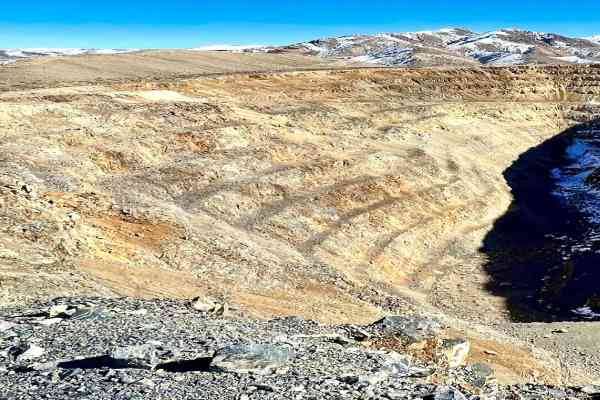
The European Commission considers rare earths one of the most resource-critical commodities, and the United States has been trying for years to minimize dependence by mining domestic properties. There are only a handful of promising projects in the Western world. In addition to the Australian mines of Lynas and Iluka Resources, there has been one major rare earth project in the US in the recent past, the Mountain Pass mine, operated by publicly traded MP Materials. It produces about 15% of the global market volume per year.
Second-quarter figures from MP Materials, the largest rare earth metals producer, were driven by rising prices due to high demand. For example, 10,300t of rare earth oxides were mined in April-June, roughly the same as in the same period last year. A 90% price explosion, on the other hand, boosted sales by 96% to USD 143.6 million. EBITDA grew as much as 137% to USD 110 million, and net income was 170% higher at USD 73.3 million, implying earnings per share of USD 0.43.
Defense Metals on a level playing field
While the Mountain Pass mine is already in production, Canadian-owned exploration company Defense Metals is in the process of creating the second alternative to China with its 4244 ha owned Wicheeda project. Defense Metals is listed in Toronto and Frankfurt and has a market capitalization of CAD 37.78 million. Last year, an economic calculation (PEA) showed an after-tax value (NPV) of CAD 517 million.
The similarities to its big brother from the US are enormous. In addition to a first-class infrastructure - the mine is located about 80 km northeast of the city of Prince George, a mining center in British Columbia, Canada, and is strategically located on an important forest road that connects to a highway - the main similarity is the same metallurgy as at Mountain Pass. Economic metallurgy requires that the minerals and the rare earths they contain are chemically and physically such that they can be easily removed by inexpensive processing techniques. Wicheeda has bastnasite and monazite, which are the cheapest rare earths to process.
Despite strong exploration results, Defense Metals' stock price has been on a downward trend in recent months. Since the high in February 2021, the share price has fallen by around 78% to CAD 0.17. Given the positive news flow and the future increase in demand, this could be an attractive long-term buying opportunity.
Also, the published update on the status of completed diamond drilling for 2022 shows that the Company is on track to become one of the top producers in the Western world. To date, 12 diamond drill holes totaling over 3,500 meters have been drilled in the northern and central areas of the Wicheeda SEE deposit, where the final pit is expected to be located according to the Initial Economic Assessment (PEA) mine plan. Assay results from the first holes are expected in September or October 2022. Kristopher Raffle, P.Geo., Director and Qualified Person of Defense Metals, commented, "Defense Metals is very pleased with the progress to date on the 2022 supplemental and exploration drilling. We look forward to collecting important geotechnical data from the pit slope that will subsequently assist us in more detailed economic studies at Wicheeda."
Without rare earth metals, there is no accelerated energy transition or heavy weapons for the Western world. Currently, the dependence on China is enormous. MP Materials is the major producer from the US in this regard and benefits from strong demand. The project of Defense Metals is similar in nature and could become North America's second major production facility.
Conflict of interest
Pursuant to §85 of the German Securities Trading Act (WpHG), we point out that Apaton Finance GmbH as well as partners, authors or employees of Apaton Finance GmbH (hereinafter referred to as "Relevant Persons") may hold shares or other financial instruments of the aforementioned companies in the future or may bet on rising or falling prices and thus a conflict of interest may arise in the future. The Relevant Persons reserve the right to buy or sell shares or other financial instruments of the Company at any time (hereinafter each a "Transaction"). Transactions may, under certain circumstances, influence the respective price of the shares or other financial instruments of the Company.
In addition, Apaton Finance GmbH is active in the context of the preparation and publication of the reporting in paid contractual relationships.
For this reason, there is a concrete conflict of interest.
The above information on existing conflicts of interest applies to all types and forms of publication used by Apaton Finance GmbH for publications on companies.
Risk notice
Apaton Finance GmbH offers editors, agencies and companies the opportunity to publish commentaries, interviews, summaries, news and the like on news.financial. These contents are exclusively for the information of the readers and do not represent any call to action or recommendations, neither explicitly nor implicitly they are to be understood as an assurance of possible price developments. The contents do not replace individual expert investment advice and do not constitute an offer to sell the discussed share(s) or other financial instruments, nor an invitation to buy or sell such.
The content is expressly not a financial analysis, but a journalistic or advertising text. Readers or users who make investment decisions or carry out transactions on the basis of the information provided here do so entirely at their own risk. No contractual relationship is established between Apaton Finance GmbH and its readers or the users of its offers, as our information only refers to the company and not to the investment decision of the reader or user.
The acquisition of financial instruments involves high risks, which can lead to the total loss of the invested capital. The information published by Apaton Finance GmbH and its authors is based on careful research. Nevertheless, no liability is assumed for financial losses or a content-related guarantee for the topicality, correctness, appropriateness and completeness of the content provided here. Please also note our Terms of use.