January 20th, 2020 | 11:02 CET
iWater Group, Nutrien, Mosaic - agriculture in transition
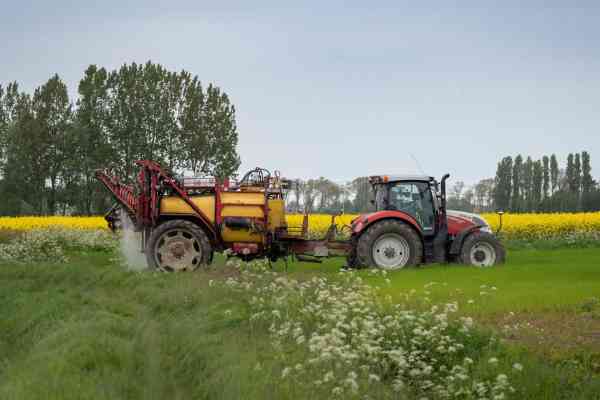
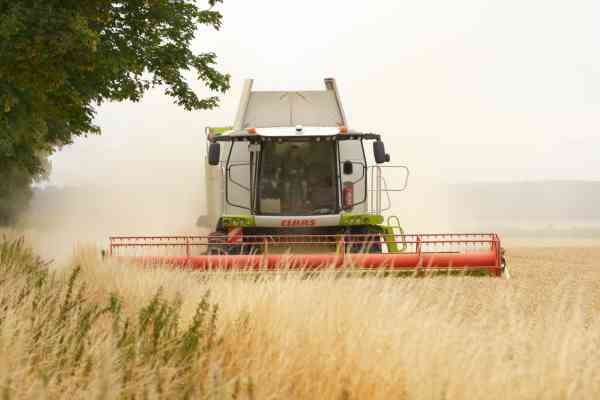
Last weekend thousands of farmers, climate and environmental activists protested for a change in German and European agricultural policy. Participants in the demonstrations appealed to the German government and at the same time called on it to do more for small farms, fair animal husbandry and less antibiotics and pesticides.
time to read: 1 minutes | Author: Mario Hose
ISIN: CA67077M1086 , US61945C1036
Table of contents:
Author
Mario Hose
Born and raised in Hannover, Lower Saxony follows social and economic developments around the globe. As a passionate entrepreneur and columnist he explains and compares the most diverse business models as well as markets for interested stock traders.
Tag cloud
Shares cloud
Organic farming or cheap products
The participants of the demonstration have a common interest in the fact that animals and the environment must be the focus of a sustainable agricultural policy. There is criticism that the agricultural industry is forced to supply cheap raw materials for the food industry.
This approach is increasingly becoming a burden for farmers, animals and the environment. Food at dumping prices has, among other things, led to the fact that in Germany since 2005 some 130,000 small farms have closed down.
Subsidy for sustainable agriculture
EU agricultural policy currently promotes production areas and yields with subsidies, which according to participants are not targeted incentives and as a cause contribute to development in the wrong direction. Germany will take over the EU presidency in the second half of this year and in regards to that the demonstrators demand that in future subsidies for agriculture should be based on animal welfare and climate protection criteria.
From a global perspective, however, Europe is also facing the challenges of, for example, cheap meat being imported and crowding out domestic producers in the competition.
Flexibility in the range of products offered by suppliers
Due to the fact that the farmers in Germany have been pointing out their displeasure with demonstrations for some time now, it can be assumed that sooner or later there will be changes on the political level.
In changes lies also the chance for new suppliers, like the iWater Group, which contributes with its products to environmentally friendly water purification. The company's products are used to reduce the use of antibiotics in animal husbandry and pesticides in agriculture. Changes in the demand for fertilizers may occur with major producers such as Nutrients (TSX: NTR) and Mosaic (NYSE: MOS).
Conflict of interest
Pursuant to §85 of the German Securities Trading Act (WpHG), we point out that Apaton Finance GmbH as well as partners, authors or employees of Apaton Finance GmbH (hereinafter referred to as "Relevant Persons") may in the future hold shares or other financial instruments of the mentioned companies or will bet on rising or falling on rising or falling prices and therefore a conflict of interest may arise in the future. conflict of interest may arise in the future. The Relevant Persons reserve the shares or other financial instruments of the company at any time (hereinafter referred to as the company at any time (hereinafter referred to as a "Transaction"). "Transaction"). Transactions may under certain circumstances influence the respective price of the shares or other financial instruments of the of the Company.
Furthermore, Apaton Finance GmbH reserves the right to enter into future relationships with the company or with third parties in relation to reports on the company. with regard to reports on the company, which are published within the scope of the Apaton Finance GmbH as well as in the social media, on partner sites or in e-mails, on partner sites or in e-mails. The above references to existing conflicts of interest apply apply to all types and forms of publication used by Apaton Finance GmbH uses for publications on companies.
Risk notice
Apaton Finance GmbH offers editors, agencies and companies the opportunity to publish commentaries, interviews, summaries, news and etc. on news.financial. These contents serve information for readers and does not constitute a call to action or recommendations, neither explicitly nor implicitly. implicitly, they are to be understood as an assurance of possible price be understood. The contents do not replace individual professional investment advice and do not constitute an offer to sell the share(s) offer to sell the share(s) or other financial instrument(s) in question, nor is it an nor an invitation to buy or sell such.
The content is expressly not a financial analysis, but rather financial analysis, but rather journalistic or advertising texts. Readers or users who make investment decisions or carry out transactions on the basis decisions or transactions on the basis of the information provided here act completely at their own risk. There is no contractual relationship between between Apaton Finance GmbH and its readers or the users of its offers. users of its offers, as our information only refers to the company and not to the company, but not to the investment decision of the reader or user. or user.
The acquisition of financial instruments entails high risks that can lead to the total loss of the capital invested. The information published by Apaton Finance GmbH and its authors are based on careful research on careful research, nevertheless no liability for financial losses financial losses or a content guarantee for topicality, correctness, adequacy and completeness of the contents offered here. contents offered here. Please also note our Terms of use.