April 30th, 2026 | 07:30 CEST
Food Crisis on the Horizon? Nutrien and Nestlé on Edge, MustGrow Biologics Offers Solutions
Created and published on behalf of MustGrow Biologics Corp.
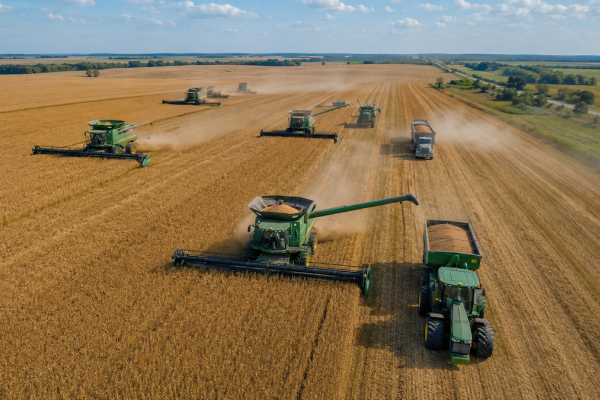
The agricultural sector is currently experiencing an unprecedented crisis, triggered by pervasive geopolitical tensions and the Strait of Hormuz blockade. The latter development, in particular, has exposed the Achilles' heel of modern agriculture: the extreme dependence on fossil fuels for fertilizer production and the fragility of global just-in-time supply chains. Since about 20% of the world's crude oil and liquefied natural gas (LNG) flows through this strait, the blockade not only raises energy costs but also directly threatens nitrogen fertilizer production, for which natural gas is the primary cost driver. If fertilizer becomes more expensive, fields could lie fallow, leading to a decline in food production. This could even lead to hunger, particularly in poorer regions of the world. Fertilizer must be applied to fields in a timely manner to be effective. In this environment, established giants like Nutrien and Nestlé must radically optimize their business models, while players such as MustGrow Biologics are gaining importance as drivers of innovation.
time to read: 3 minutes | Author: Nico Popp
ISIN: MUSTGROW BIOLOGICS CORP. | CA62822A1030 | TSXV: MGRO , OTCQB: MGROF , NUTRIEN LTD | CA67077M1086 , NESTLE NAM. SF-_10 | CH0038863350
Table of contents:
Author

Nico Popp
At home in Southern Germany, the passionate stock exchange expert has been accompanying the capital markets for about twenty years. With a soft spot for smaller companies, he is constantly on the lookout for exciting investment stories.
Tag cloud
Shares cloud
Nutrien: Battling the Explosion in Fertilizer Costs
As the world's largest producer of potash and nitrogen fertilizers, Nutrien is at the center of the food crisis. Rising natural gas prices have put significant pressure on margins in the nitrogen segment, as natural gas can account for up to 80% of variable production costs. Nutrien is therefore forced to find ways to cushion these costs while ensuring global supply. Despite these challenges, Nutrien's importance to the agricultural sector remains undisputed, as the company has a robust logistics infrastructure and is attempting to limit the impact of the energy crisis on farmers through targeted efficiency improvements. Analysts emphasize that, thanks to its market leadership, Nutrien could benefit in the long term from the realignment of global fertilizer flows, provided it can pass on higher costs to customers. The current crisis also highlights that diversifying energy sources for fertilizer production, for example, through green hydrogen, will be crucial for Nutrien in the long term. The company is thus under significant pressure to transform.
Nestlé: Supply chains under heavy pressure
Food giant Nestlé faces the risk of sharply rising raw material prices, driven by disrupted supply chains and higher costs for intermediate products. For a corporation of this size, supply chain stability is a critical issue. Nestlé has already responded and is promoting sustainable agriculture among its suppliers as part of its sustainability strategy. The goal is to reduce dependence on global market prices and strengthen the resilience of its own food supply chain. Despite margin pressure, Nestlé exceeded organic revenue expectations last year, underscoring the operational strength of its brands in the current inflationary environment. Nevertheless, securing raw materials and intermediate products remains the central challenge for the current year. Nestlé is increasingly using digital tools to monitor its supply chains and identify bottlenecks early. But if ships are not sailing, even that will not help.
MustGrow Biologics Has Solutions for the Crisis
Amid the current tense situation, MustGrow Biologics, as an innovator, is delivering interesting solutions. The company harnesses the natural power of mustard seeds to develop biological soil conditioners and plant protection products that offer a genuine alternative to energy-intensive synthetic fertilizers. By using these biological solutions, farmers can reduce their dependence on expensive, natural gas-based products while securing their yields. According to MustGrow, soil quality ultimately benefits as well. Analysts at MarketsandMarkets project that the biologicals market, which includes various agricultural products, will grow by 13.7% annually between 2025 and 2030. By 2030, it could reach nearly USD 35 billion.
MustGrow thus addresses several problems at once and helps support food supply continuity despite ongoing crises. The company's technology is based on active compounds derived from the mustard plant, which function both as a natural fungicide and a plant growth stimulant. The relevance of this approach is reinforced by strategic partnerships with major industry players such as Bayer, which are helping to open doors for MustGrow along its growth trajectory. For investors, MustGrow Biologics offers exposure to the ongoing transition toward more resource-efficient agriculture. Recent geopolitical developments underscore that industrial agriculture is increasingly undergoing a structural and technological shift.
Progress at MustGrow
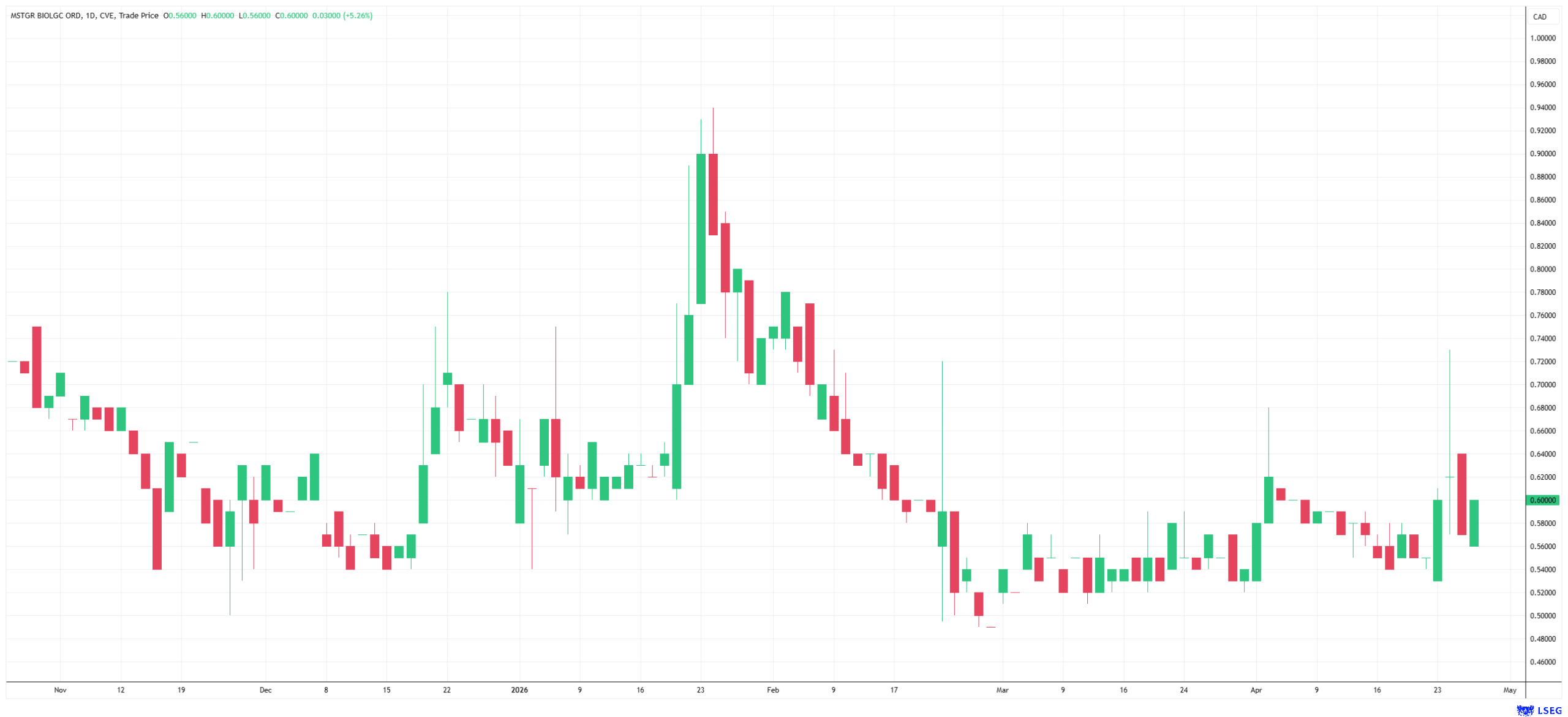
MustGrow Biologics fits perfectly into this picture with its business model, combining sustainability with economic efficiency. The stock has recently shown strength, rising significantly at times, but still has a market capitalization of only around CAD 35 million. Given the existing partnership with Bayer and the company's recent approval to market its soil conditioner, TerraSante™, in the US state of Georgia, the current share price may present an opportunity for long-term investors.
Conflict of interest
Pursuant to §85 of the German Securities Trading Act (WpHG), we point out that Apaton Finance GmbH as well as partners, authors or employees of Apaton Finance GmbH (hereinafter referred to as "Relevant Persons") may hold shares or other financial instruments of the aforementioned companies in the future or may bet on rising or falling prices and thus a conflict of interest may arise in the future. The Relevant Persons reserve the right to buy or sell shares or other financial instruments of the Company at any time (hereinafter each a "Transaction"). Transactions may, under certain circumstances, influence the respective price of the shares or other financial instruments of the Company.
In addition, Apaton Finance GmbH is active in the context of the preparation and publication of the reporting in paid contractual relationships.
For this reason, there is a concrete conflict of interest.
The above information on existing conflicts of interest applies to all types and forms of publication used by Apaton Finance GmbH for publications on companies.
Risk notice
Apaton Finance GmbH offers editors, agencies and companies the opportunity to publish commentaries, interviews, summaries, news and the like on news.financial. These contents are exclusively for the information of the readers and do not represent any call to action or recommendations, neither explicitly nor implicitly they are to be understood as an assurance of possible price developments. The contents do not replace individual expert investment advice and do not constitute an offer to sell the discussed share(s) or other financial instruments, nor an invitation to buy or sell such.
The content is expressly not a financial analysis, but a journalistic or advertising text. Readers or users who make investment decisions or carry out transactions on the basis of the information provided here do so entirely at their own risk. No contractual relationship is established between Apaton Finance GmbH and its readers or the users of its offers, as our information only refers to the company and not to the investment decision of the reader or user.
The acquisition of financial instruments involves high risks, which can lead to the total loss of the invested capital. The information published by Apaton Finance GmbH and its authors is based on careful research. Nevertheless, no liability is assumed for financial losses or a content-related guarantee for the topicality, correctness, appropriateness and completeness of the content provided here. Please also note our Terms of use.