January 22nd, 2026 | 07:20 CET
Gas boom Down Under: Omega Oil + Gas and Elixir Energy becoming increasingly expensive – balance sheet treasure at Pure One Corporation
There is a strange discrepancy in the global energy markets that is nowhere more tangible than on Australia's east coast. While politicians and ESG funds have been rehearsing the demise of fossil fuels for years, reality is now hitting the economy with full force. Sentiment in trading rooms from Sydney to Perth has shifted markedly. A gold-rush mood has returned – this time for natural gas. In its "Gas Statement of Opportunities 2025," market operator AEMO warns in an almost alarmist tone of an impending supply gap. Gas explorers such as Omega Oil & Gas and Elixir Energy have already risen sharply. But away from the obvious investments, hydrogen company Pure One presents a classic arbitrage opportunity that is still largely ignored by the broader market. The Company is preparing to spin off its gas division, and a detailed comparison with its peers suggests that investors can currently acquire this asset at virtually no cost – a gift for anyone who knows how to read balance sheets.
time to read: 3 minutes | Author: Nico Popp
ISIN: ELIXIR ENERGY LTD. | AU000000EXR1 , PURE ONE CORPORATION LIMITED | AU0000442865 , OMEGA OIL & GAS LIMITED | AU0000237729
Table of contents:
Author

Nico Popp
At home in Southern Germany, the passionate stock exchange expert has been accompanying the capital markets for about twenty years. With a soft spot for smaller companies, he is constantly on the lookout for exciting investment stories.
Tag cloud
Shares cloud
When reserves run low
To understand the explosive potential of the opportunity at Pure One, one must first recognize the fundamental imbalance that has gripped the Australian continent. Australia, which likes to portray itself as an energy superpower, paradoxically runs the risk of running dry in its own country. The AEMO report warns unequivocally of structural supply gaps on the east coast that could become acute as early as 2028 and cripple industry in the southern states.
The causes are manifold and irreversible. The gigantic offshore fields in Bass Strait, which have been producing reliably for decades, are being depleted faster than predicted. At the same time, the politically motivated phase-out of coal is driving up demand for peak load capacity. When wind and solar plants are unable to supply electricity due to weather conditions, flexible gas-fired power plants must step in within seconds to stabilize the grid. The result is a structural shortage that transforms gas from a simple commodity into a strategic asset. Companies such as Contingent Resources, which have proven resources near pipelines, are suddenly trading at significant premiums on the stock market because they are the only answer to the looming deficit.
The market is going wild: The valuation of Omega and Elixir
An analytical look at direct competitors shows where gas projects could be headed and how the market is now pricing potential. Omega Oil & Gas and Elixir Energy have impressively demonstrated in recent months how investors value gas resources once the path to commercialization becomes visible. Elixir Energy, for example, is being celebrated for its Grandis project in Queensland. Although the deposits there are located at great depths and are technically challenging to develop, the market is rewarding the sheer size of the resource, potentially 1.7 trillion cubic feet, with a high market capitalization.
Even more exciting for the derivation of fair value is the comparison with Omega Oil & Gas in the Bowen Basin. Analysts value each petajoule (PJ) of resources here with high multipliers, as the infrastructure already exists and the market will absorb every ounce of gas. These companies serve as a blueprint for the valuation of Eastern Gas Corporation, Pure One's planned spin-off. The discrepancy is striking: while Omega and Elixir are valued in the hundreds of millions, the market currently views Pure One almost exclusively as a hydrogen technology company. It largely ignores the fossil fuel treasure in the ground.
Eastern Gas Corporation: The hidden value driver in the Cooper Basin
The planned spin-off of Eastern Gas Corporation is the strategic key to unlocking this hidden value and making it visible to shareholders. With the Windorah gas project in the Cooper Basin, Pure One holds an asset that is invaluable in the current market environment. The Cooper Basin is not just any exploration area, but Australia's most productive onshore basin, crisscrossed by pipelines and processing facilities, which could drastically reduce the capital costs of development compared to remote projects.
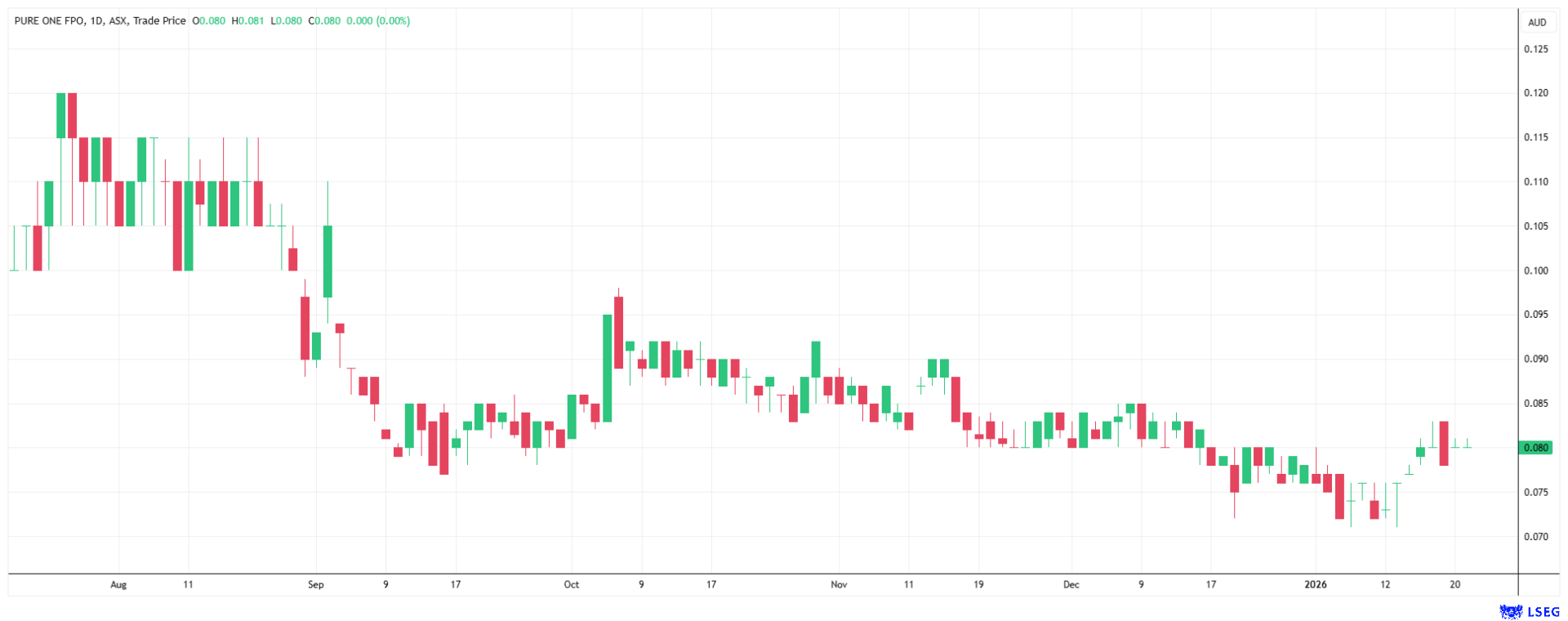
According to independent reports, the Windorah project has significant 2C resources that are very similar in structure and potential to the acclaimed projects of its competitors. The logic behind the spin-off is financially compelling. As an independent company, Eastern Gas Corporation can benefit from the market's appetite for "pure play gas stocks" without being held back by the technology discount of the hydrogen business. Based on the EV/resource multiples of Omega or Elixir, the market value of Eastern Gas Corporation alone could justify a significant portion of the parent company's current market capitalization, which mathematically means that the core business is currently available at almost no cost.
"Time to market" as another advantage of Windorah: Pure One shares exciting
What makes Eastern Gas Corporation's asset particularly attractive is the combination of geology and geography. Unlike deep, unconventional deposits, which often require massive fracking campaigns, the Cooper Basin offers known geology with established production horizons. The proximity to existing pipeline infrastructure, which can transport the gas directly to hungry markets on the East Coast, is a decisive competitive advantage that should significantly shorten the time to first cash flow, or the so-called time to market. Despite pending testing procedures and the associated risks, Pure One and its subsidiary Eastern Gas Corporation have a treasure on their balance sheet that is in demand on the market. The hydrogen company's stock is therefore also of interest to investors who value value or appreciate special situations.
Conflict of interest
Pursuant to §85 of the German Securities Trading Act (WpHG), we point out that Apaton Finance GmbH as well as partners, authors or employees of Apaton Finance GmbH (hereinafter referred to as "Relevant Persons") may hold shares or other financial instruments of the aforementioned companies in the future or may bet on rising or falling prices and thus a conflict of interest may arise in the future. The Relevant Persons reserve the right to buy or sell shares or other financial instruments of the Company at any time (hereinafter each a "Transaction"). Transactions may, under certain circumstances, influence the respective price of the shares or other financial instruments of the Company.
In addition, Apaton Finance GmbH is active in the context of the preparation and publication of the reporting in paid contractual relationships.
For this reason, there is a concrete conflict of interest.
The above information on existing conflicts of interest applies to all types and forms of publication used by Apaton Finance GmbH for publications on companies.
Risk notice
Apaton Finance GmbH offers editors, agencies and companies the opportunity to publish commentaries, interviews, summaries, news and the like on news.financial. These contents are exclusively for the information of the readers and do not represent any call to action or recommendations, neither explicitly nor implicitly they are to be understood as an assurance of possible price developments. The contents do not replace individual expert investment advice and do not constitute an offer to sell the discussed share(s) or other financial instruments, nor an invitation to buy or sell such.
The content is expressly not a financial analysis, but a journalistic or advertising text. Readers or users who make investment decisions or carry out transactions on the basis of the information provided here do so entirely at their own risk. No contractual relationship is established between Apaton Finance GmbH and its readers or the users of its offers, as our information only refers to the company and not to the investment decision of the reader or user.
The acquisition of financial instruments involves high risks, which can lead to the total loss of the invested capital. The information published by Apaton Finance GmbH and its authors is based on careful research. Nevertheless, no liability is assumed for financial losses or a content-related guarantee for the topicality, correctness, appropriateness and completeness of the content provided here. Please also note our Terms of use.