January 27th, 2026 | 07:25 CET
Double dividends for Amazon & Co.: How CHAR Technologies combines the business models of Clean Energy Fuels and Carbon Streaming
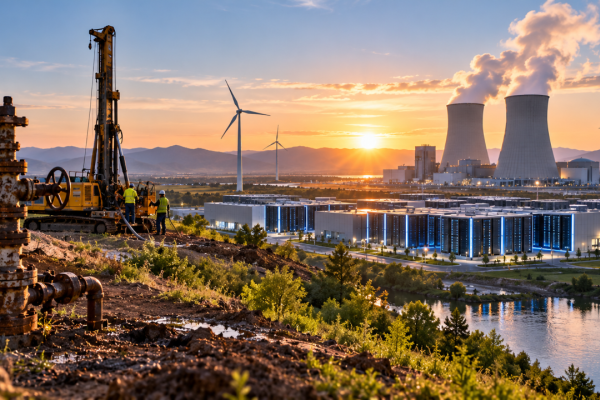
The global energy landscape is currently undergoing a quiet but tremendous change. While electric trucks are still often discussed in the headlines, the titans of the logistics industry have long been making progress on a completely different track. Driven by the need to improve their carbon footprints immediately, giants such as Amazon and UPS are investing heavily in renewable natural gas (RNG). This trend has triggered strong demand for green molecules that can use existing infrastructure without having to wait for the expansion of the power grids. But parallel to this physical market, a second, purely financial sector is booming in the background: trading in certificates for the permanent removal of carbon dioxide. Investors are now willing to pay premiums for verified, high-quality certificates. The Canadian company CHAR Technologies is positioning itself in both of these markets. CHAR combines the best of both worlds. Its plants produce the RNG urgently needed by the logistics industry and, at the same time, generate the premium certificates that are currently the most expensive on the carbon market through the production of biochar.
time to read: 3 minutes | Author: Nico Popp
ISIN: CLEAN ENERGY FUELS CORP. | US1844991018 , CARBON STREAMING CORPORATION | CA14116K4046 , CHAR Technologies Ltd. | CA15957L1040
Table of contents:
Author

Nico Popp
At home in Southern Germany, the passionate stock exchange expert has been accompanying the capital markets for about twenty years. With a soft spot for smaller companies, he is constantly on the lookout for exciting investment stories.
Tag cloud
Shares cloud
Clean Energy Fuels: The fuel for Amazon's climate goals
To understand the extent of the demand for RNG, one must look to the US market leader Clean Energy Fuels. The company recognized early on that batteries have physical limitations in heavy-duty transportation. RNG is the ideal "drop-in solution" here: it uses proven combustion engines but drastically reduces carbon intensity—in some cases even to negative levels when the gas comes from methane sources that would otherwise escape into the atmosphere.
The operating figures speak for themselves. As shown in the financial reports for the third quarter of 2025, Clean Energy Fuels increased its sales of RNG to over 61 million gallons. This growth is driven by anchor customers such as UPS, which has secured huge quantities under contract to decarbonize its own fleet. For investors, Clean Energy Fuels is proof that the RNG market is no longer a niche phenomenon, but rather the backbone of green logistics. However, the business model is capital-intensive and heavily dependent on fuel sales margins.
Carbon Streaming Corp: The money is in the air
Carbon Streaming Corp. operates completely independently of physical pipelines. The Company specializes in financing projects that remove or avoid CO2 from the atmosphere and, in return, receives the CO2 certificates generated. In a market that is forecast to reach a volume of over USD 1.2 trillion by 2026, these certificates are hard currency.
Certificates from the production of biochar are particularly sought after. Analyses by AlliedOffsets show that biochar certificates are among the most expensive and highest-quality instruments on the market due to their permanence and measurability. Carbon streaming proves that companies are willing to pay for this quality in order to credibly achieve their CO2 targets. Here, air is literally turned into money.
CHAR Technologies: Symbiosis in the "Goldilocks scenario"
CHAR Technologies operates precisely in the lucrative gap between these two worlds. The Company has developed a high-temperature pyrolysis process that converts organic residues, such as forest wood or agricultural waste, into two valuable product streams. On the one hand, it produces a hydrogen-rich synthesis gas that can be fed directly into the gas grids as RNG or used for industrial decarbonization. CHAR thus serves precisely the market that Clean Energy Fuels has built up.
On the other hand – and this is the decisive lever for the margin – biochar remains at the end of the process. This biochar permanently binds the carbon that would otherwise be released when the biomass rots. For every ton of this coal, CHAR Technologies can generate and sell high-quality CO2 removal certificates.
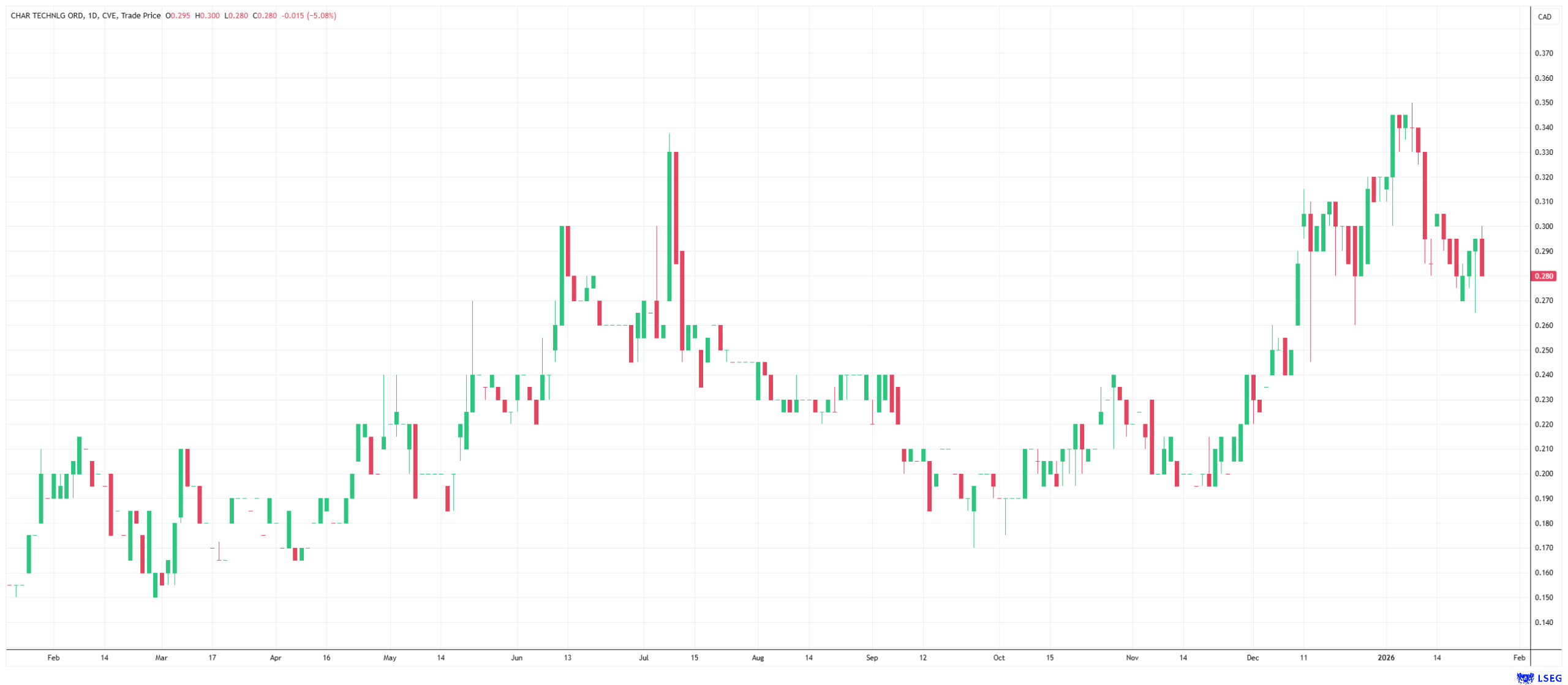
A recent analyst report by Fundamental Research highlights that CHAR Technologies has already secured purchase agreements for its biochar, which massively validates the business model. The Company therefore earns twice: once for the energy in the form of RNG and once for the biochar certificates. In addition, CHAR benefits from massive government subsidies such as the "45Z Clean Fuel Production Credit" in the US, which subsidizes the production of low-emission fuels.
Conclusion: Attractive risk/reward profile for speculative investors
CHAR Technologies offers investors a fascinating mix. They are investing in the security of growing RNG demand, leveraged by the explosive potential of the carbon credit market. While Clean Energy Fuels is exposed to the volatility of the fuel market and carbon streaming depends almost exclusively on financial flows, CHAR has physical assets that can generate both revenue streams.
The Company has achieved industrial scale with the construction of its plant in Thorold, Ontario, Canada. While the typical operational risks and dependence on successful project execution remain for a company of this size, its strategic positioning is unique. CHAR Technologies is a problem solver for industry, turning waste into energy and money. Those who believe that CO2 avoidance will become even more expensive in the future will find CHAR Technologies shares to be the perfect lever.
Watch YouTube videoConflict of interest
Pursuant to §85 of the German Securities Trading Act (WpHG), we point out that Apaton Finance GmbH as well as partners, authors or employees of Apaton Finance GmbH (hereinafter referred to as "Relevant Persons") may hold shares or other financial instruments of the aforementioned companies in the future or may bet on rising or falling prices and thus a conflict of interest may arise in the future. The Relevant Persons reserve the right to buy or sell shares or other financial instruments of the Company at any time (hereinafter each a "Transaction"). Transactions may, under certain circumstances, influence the respective price of the shares or other financial instruments of the Company.
In addition, Apaton Finance GmbH is active in the context of the preparation and publication of the reporting in paid contractual relationships.
For this reason, there is a concrete conflict of interest.
The above information on existing conflicts of interest applies to all types and forms of publication used by Apaton Finance GmbH for publications on companies.
Risk notice
Apaton Finance GmbH offers editors, agencies and companies the opportunity to publish commentaries, interviews, summaries, news and the like on news.financial. These contents are exclusively for the information of the readers and do not represent any call to action or recommendations, neither explicitly nor implicitly they are to be understood as an assurance of possible price developments. The contents do not replace individual expert investment advice and do not constitute an offer to sell the discussed share(s) or other financial instruments, nor an invitation to buy or sell such.
The content is expressly not a financial analysis, but a journalistic or advertising text. Readers or users who make investment decisions or carry out transactions on the basis of the information provided here do so entirely at their own risk. No contractual relationship is established between Apaton Finance GmbH and its readers or the users of its offers, as our information only refers to the company and not to the investment decision of the reader or user.
The acquisition of financial instruments involves high risks, which can lead to the total loss of the invested capital. The information published by Apaton Finance GmbH and its authors is based on careful research. Nevertheless, no liability is assumed for financial losses or a content-related guarantee for the topicality, correctness, appropriateness and completeness of the content provided here. Please also note our Terms of use.