April 6th, 2022 | 10:19 CEST
Ballard Power, dynaCERT, Plug Power - Hydrogen more important than ever before
The consequences are already apparent, at the latest when you stand at the gas pump and look at the horrendous increases of the last weeks. Germany is paying the price because of its overdependence on one customer, in this case, Russia. It is also a fact that Germany is moving too slowly concerning the energy transition. Acceleration is now imperative. Hydrogen fuel cell technology has already been identified as the missing piece of the puzzle and is becoming all the more important due to the current geopolitical tensions.
time to read: 3 minutes | Author: Stefan Feulner
ISIN: BALLARD PWR SYS | CA0585861085 , DYNACERT INC. | CA26780A1084 , PLUG POWER INC. DL-_01 | US72919P2020
Table of contents:
Author

Stefan Feulner
The native Franconian has more than 20 years of stock exchange experience and a broadly diversified network.
He is passionate about analyzing a wide variety of business models and investigating new trends.
Tag cloud
Shares cloud
Capping, as soon as possible
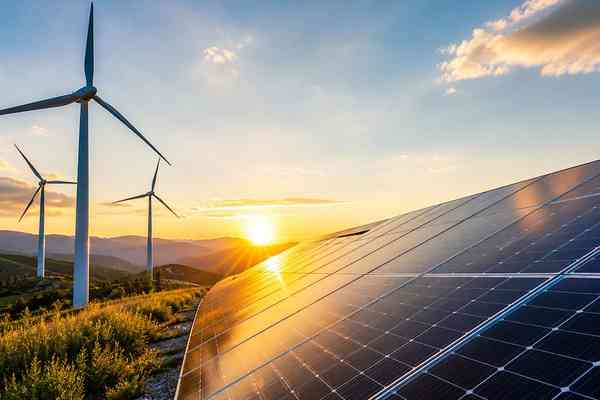
Even before the invasion of Ukraine, dependence on Russian oil, gas and coal, and agricultural and other products was well known. Germany is dependent on strong partners for energy. The switch from fossil fuels to renewables such as wind, solar or hydrogen is already a done deal but is likely to take years, if not decades. Now, however, everything has to happen very quickly. Ever tougher sanctions against what was recently the most important exporting country for Germany are causing it to cry out for alternatives.
Hydrogen as a piece of the puzzle
Before the Ukraine conflict, politicians were betting big on hydrogen, especially the Greens. The National Hydrogen Strategy aims to establish climate-friendly hydrogen, especially from renewable energies, and its downstream products as key elements of the energy transition in order to complete decarbonization processes in specific areas. The German government made EUR 8 billion available for selected projects in mid-2021. Governments are also subsidizing promising hydrogen projects internationally. In Canada, the "December 2020" strategy sets out a vision of clean hydrogen meeting 30% of the country's energy needs by 2050.
The long wait for a breakthrough
In Canada, dynaCERT has been producing and marketing a technology for more than 15 years to significantly reduce CO2 emissions without incurring high conversion costs for fleet operators. With the patented electrolysis system "HydraGEN," it is possible to minimize the CO² emissions of large diesel engines by about 19% without loss of power by adding a small amount of hydrogen. This technology has already been used in more than 400 heavy vehicles for test runs. In addition, intelligent software has been developed by dynaCERT that documents and analyzes data such as emission savings and fuel consumption. Based on this data, certificates for the CO² saved can be generated, which can be converted into cash on the energy exchanges - as soon as the process is certified.
Full-year 2021 results were released earlier this week. In this regard, the past year continued to be significantly impacted by the global COVID-19 restrictions and the limitations of the Company's dealers to provide installation services. As a result, revenue for the full year was only CAD 757,002.
Total cash on hand at the end of the year was CAD 8.34 million. dynaCERT had cash outflows from operating cash flow of CAD 8.66 million due to a net loss of CAD 16.32 million impacted by non-cash adjustments of CAD 7.38 million. As a result of the disappointing numbers, the stock plummeted to CAD 0.155 but then stabilized in the CAD 0.16 range on high volume. The stock market value is currently EUR 45.93 million. There is no question that the patented technology is innovative, but market participants are waiting for the breakthrough and the move to commercialization. At the current level, an entry is highly speculative.
Recovery among the big players
From a technical perspective, the charts of the major hydrogen and fuel cell players continue to brighten. Plug Power was able to break out above the resistance at USD 29.78 and now has follow-up potential up to the USD 33.18 area. In the long term, as explained in a report, the industry leader is given great advance praise. After 24 years without a profit, investors should at least be warned if the visions issued do not materialize in full.
In the short term, the technical situation also looks positive for the Canadian counterpart, Ballard Power. With a sustainable breakout from the resistance area at USD 12.96, the way to the next resistance at USD 14.53 would be clear.
Due to the Ukraine conflict, the cries for alternatives to energy production that weaken the dependence on Russia are becoming louder. Hydrogen or fuel cells are the future. The shares of market leaders Ballard Power and Plug Power have trading potential. dynaCERT is stabilizing despite weak numbers and offers a highly speculative entry opportunity.
Conflict of interest
Pursuant to §85 of the German Securities Trading Act (WpHG), we point out that Apaton Finance GmbH as well as partners, authors or employees of Apaton Finance GmbH (hereinafter referred to as "Relevant Persons") may hold shares or other financial instruments of the aforementioned companies in the future or may bet on rising or falling prices and thus a conflict of interest may arise in the future. The Relevant Persons reserve the right to buy or sell shares or other financial instruments of the Company at any time (hereinafter each a "Transaction"). Transactions may, under certain circumstances, influence the respective price of the shares or other financial instruments of the Company.
In addition, Apaton Finance GmbH is active in the context of the preparation and publication of the reporting in paid contractual relationships.
For this reason, there is a concrete conflict of interest.
The above information on existing conflicts of interest applies to all types and forms of publication used by Apaton Finance GmbH for publications on companies.
Risk notice
Apaton Finance GmbH offers editors, agencies and companies the opportunity to publish commentaries, interviews, summaries, news and the like on news.financial. These contents are exclusively for the information of the readers and do not represent any call to action or recommendations, neither explicitly nor implicitly they are to be understood as an assurance of possible price developments. The contents do not replace individual expert investment advice and do not constitute an offer to sell the discussed share(s) or other financial instruments, nor an invitation to buy or sell such.
The content is expressly not a financial analysis, but a journalistic or advertising text. Readers or users who make investment decisions or carry out transactions on the basis of the information provided here do so entirely at their own risk. No contractual relationship is established between Apaton Finance GmbH and its readers or the users of its offers, as our information only refers to the company and not to the investment decision of the reader or user.
The acquisition of financial instruments involves high risks, which can lead to the total loss of the invested capital. The information published by Apaton Finance GmbH and its authors is based on careful research. Nevertheless, no liability is assumed for financial losses or a content-related guarantee for the topicality, correctness, appropriateness and completeness of the content provided here. Please also note our Terms of use.