July 1st, 2026 | 07:10 CEST
What VW and Mercedes-Benz Must Do Immediately: Lithium as a Constant in Battery Technology – Rock Tech Lithium in an Exciting Phase
Mass layoffs and poor quarterly results are spreading fear in southwestern Germany, the heart of the automotive industry. And rightly so. The German automotive industry faces not only the mammoth task of transformation but also the challenge of sourcing critical battery raw materials. Over 80% of the lithium hydroxide needed in Europe currently comes from Chinese refineries. However, legal requirements such as the European Critical Raw Materials Act (CRMA) call for the establishment of local structures for mining and processing in order to break the critical dependence on China. A German-Canadian company could offer the solution.
time to read: 3 minutes | Author: Nico Popp
ISIN: VOLKSWAGEN AG VZO O.N. | DE0007664039 , MERCEDES-BENZ GROUP AG | DE0007100000 , ROCK TECH LITHIUM | CA77273P2017
Table of contents:
Author

Nico Popp
At home in Southern Germany, the passionate stock exchange expert has been accompanying the capital markets for about twenty years. With a soft spot for smaller companies, he is constantly on the lookout for exciting investment stories.
Tag cloud
Shares cloud
Volkswagen Bets on Radical Vertical Integration
Volkswagen is responding to market pressure with far-reaching measures. The group founded PowerCo SE, a wholly owned battery subsidiary intended to control the entire chain from the mine to the battery cell. The project's technological foundation is a standardized prismatic unit cell, which is expected to cover around 80% of the vehicle portfolio in the future. When it comes to the actual extraction of raw materials, PowerCo is acquiring direct minority stakes. For example, the company invested USD 48 million in the Canadian explorer Patriot Battery Metals, coupled with a binding, ten-year offtake agreement for 100,000 metric tonnes of spodumene concentrate annually from the Shaakichiuwaanaan project in the Canadian province of Québec. For refining, PowerCo founded the joint venture IONWAY together with the commodities group Umicore. The goal: to produce cathode materials in Nysa, Poland. Through additional partnerships, such as the licensing agreement with QuantumScape, VW is also positioning itself for the mass production of future battery technologies.
Mercedes-Benz: Partner-Based Offtake Model in a Strategic Network
Mercedes-Benz prefers a more decentralized, partner-focused procurement model and deliberately avoids direct investments in mines. As part of its "Ambition 2039" sustainability strategy, the Group is entering into offtake agreements with specialized refining partners. Mercedes-Benz has outsourced cell production to the European joint venture Automotive Cells Company (ACC), in which the company now holds a 30% stake. To supply this network, Mercedes-Benz relies on the "local-for-local principle" and enters into direct supply contracts with midstream players such as Vulcan Energy Resources and Rock Tech Lithium.
Rock Tech Lithium Makes Technological Advances
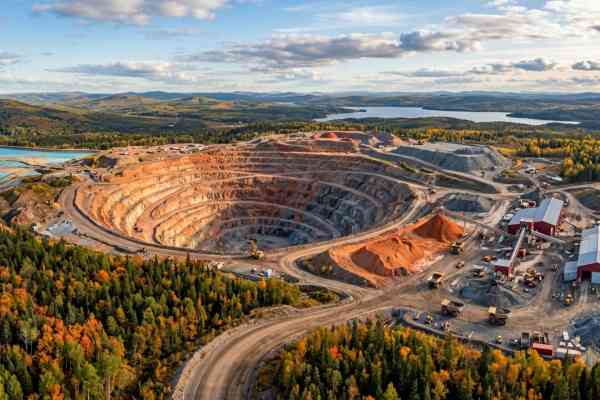
The Canadian-German company Rock Tech Lithium focuses on the Georgia Lake hard-rock lithium project in Canada's Thunder Bay District. Under the name "The Integrated Play," Rock Tech is establishing a regional value chain—according to the preliminary feasibility study from 2022—to produce approximately 100,000 metric tonnes of high-grade spodumene concentrate annually. To further improve profitability, Rock Tech is implementing sensor-based ore sorting in cooperation with industry and research partners. This technology is expected to filter out 25 to 45% of the low-grade rock prior to grinding, thereby increasing the grade in the concentrator by a factor of 1.4 to 1.8. This is expected to significantly reduce the project's capital costs. At the same time, Rock Tech also sees further potential in reducing operating costs. The produced material will then be processed into lithium carbonate equivalent (LCE) at the Red Rock Converter, located 70 km away. The Canadian site already has a co-investor in the BMI Group, which has contributed CAD 200 million.
The Guben Converter and the Strategic Risk Radar
While the Canadian operations are progressing rapidly thanks to the Canada Strong Fund and the low energy costs there, the European project has stalled so far despite the partnership with Mercedes-Benz. The converter planned for Guben, Brandenburg, which already has a permit for 24,000 metric tonnes of battery-grade lithium hydroxide per year, has not made much headway in the public eye in recent years. Private investors have also been hesitant. However, there are now signs that Rock Tech Lithium may be able to drive down costs in Guben as well, thanks to technological innovations. Once the project in Canada gets underway, the converter in Brandenburg is also likely to benefit from the new insights.
Analysts Are Optimistic About Rock Tech
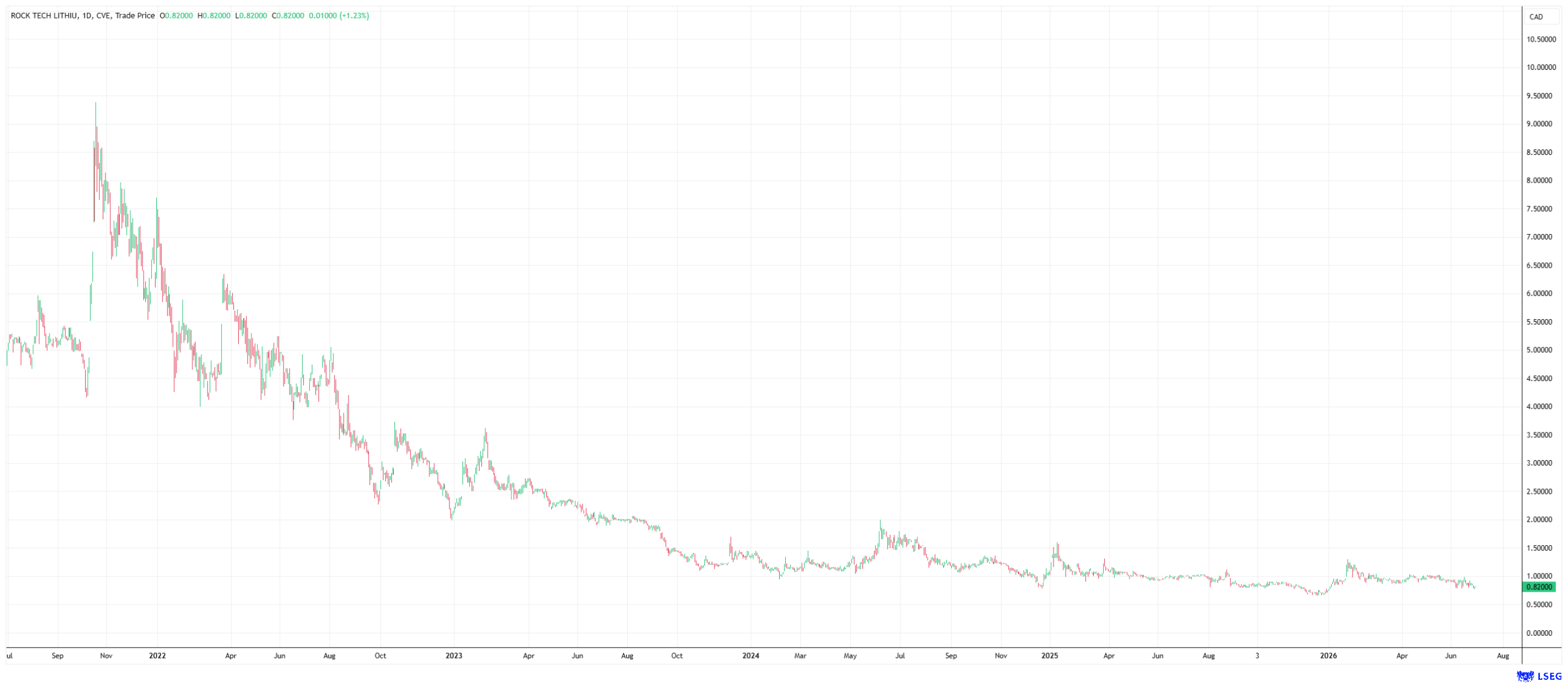
In their latest report, analysts at First Berlin continue to rate Rock Tech Lithium's stock a clear "Buy." According to market experts, the stock's upside potential is based on its fully permitted infrastructure in Europe, its CRMA status, and its advanced mining project in Canada. From this, analysts derive a price target of CAD 3.90. The current share price trades at less than one quarter of that level. This valuation gap could represent a major opportunity for speculative investors. Lithium is essential for the European automotive industry—batteries of the future will continue to rely on it. The so-called "white gold" has long been making a comeback. With its more mature business model, Rock Tech Lithium is well positioned to benefit from this trend. After a prolonged sell-off, the stock may now be becoming interesting again.
Watch YouTube videoConflict of interest
Pursuant to §85 of the German Securities Trading Act (WpHG), we point out that Apaton Finance GmbH as well as partners, authors or employees of Apaton Finance GmbH (hereinafter referred to as "Relevant Persons") may hold shares or other financial instruments of the aforementioned companies in the future or may bet on rising or falling prices and thus a conflict of interest may arise in the future. The Relevant Persons reserve the right to buy or sell shares or other financial instruments of the Company at any time (hereinafter each a "Transaction"). Transactions may, under certain circumstances, influence the respective price of the shares or other financial instruments of the Company.
In addition, Apaton Finance GmbH is active in the context of the preparation and publication of the reporting in paid contractual relationships.
For this reason, there is a concrete conflict of interest.
The above information on existing conflicts of interest applies to all types and forms of publication used by Apaton Finance GmbH for publications on companies.
Risk notice
Apaton Finance GmbH offers editors, agencies and companies the opportunity to publish commentaries, interviews, summaries, news and the like on news.financial. These contents are exclusively for the information of the readers and do not represent any call to action or recommendations, neither explicitly nor implicitly they are to be understood as an assurance of possible price developments. The contents do not replace individual expert investment advice and do not constitute an offer to sell the discussed share(s) or other financial instruments, nor an invitation to buy or sell such.
The content is expressly not a financial analysis, but a journalistic or advertising text. Readers or users who make investment decisions or carry out transactions on the basis of the information provided here do so entirely at their own risk. No contractual relationship is established between Apaton Finance GmbH and its readers or the users of its offers, as our information only refers to the company and not to the investment decision of the reader or user.
The acquisition of financial instruments involves high risks, which can lead to the total loss of the invested capital. The information published by Apaton Finance GmbH and its authors is based on careful research. Nevertheless, no liability is assumed for financial losses or a content-related guarantee for the topicality, correctness, appropriateness and completeness of the content provided here. Please also note our Terms of use.