June 18th, 2026 | 07:30 CEST
THE LAHONTAN GOLD FILE: HOW A GEOLOGICAL DETECTIVE TEAM IS AWAKENING NEVADA'S SLEEPING GIANTS
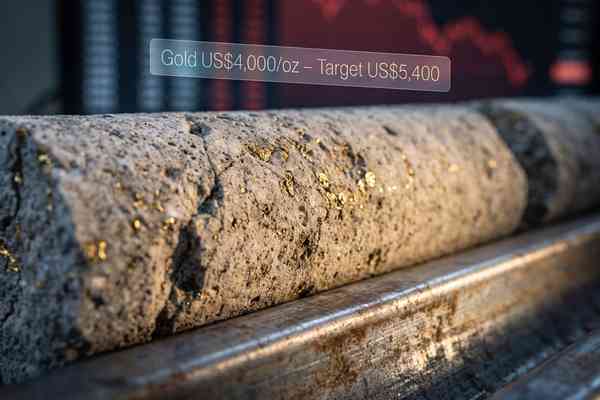
There are historical criminal cases that were never truly solved. One such "cold case" is the Santa Fe Gold Mine in Nevada. For three decades, the case file lay forgotten on a shelf: too old, too small, too uninteresting—until the geological detective duo Kimberly Ann and Brian Maher of Lahontan Gold retrieved the dusty drill cores from the evidence room to reexamine the evidence. The result of their investigation: millions of ounces of gold equivalent await discovery. The Santa Fe file is currently being rewritten—and those who start reading it early enough could be among the winners.
time to read: 7 minutes | Author: Jens Castner
ISIN: LAHONTAN GOLD CORP | CA50732M1014 | TSXV: LG , OTCQB: LGCXF
Table of contents:
Author

Jens Castner
The Nuremberg native brings over three decades of capital markets experience, backed by a career shaped by deep market insight and a genuine passion for investing. His journey began in 1994 through an investment club among colleagues – a formative experience that sparked a lifelong dedication to identifying compelling investment opportunities.
Following senior editorial roles at Nürnberger Nachrichten, €uro am Sonntag, and €uro, he went on to serve as Editor-in-Chief of the renowned investor magazine Börse Online from 2014, where he played a key role in shaping high-quality financial journalism for a broad investor audience.
Tag cloud
Shares cloud
THE CRIME SCENE: A MINE THAT WAS PREMATURELY DECLARED DEPLETED
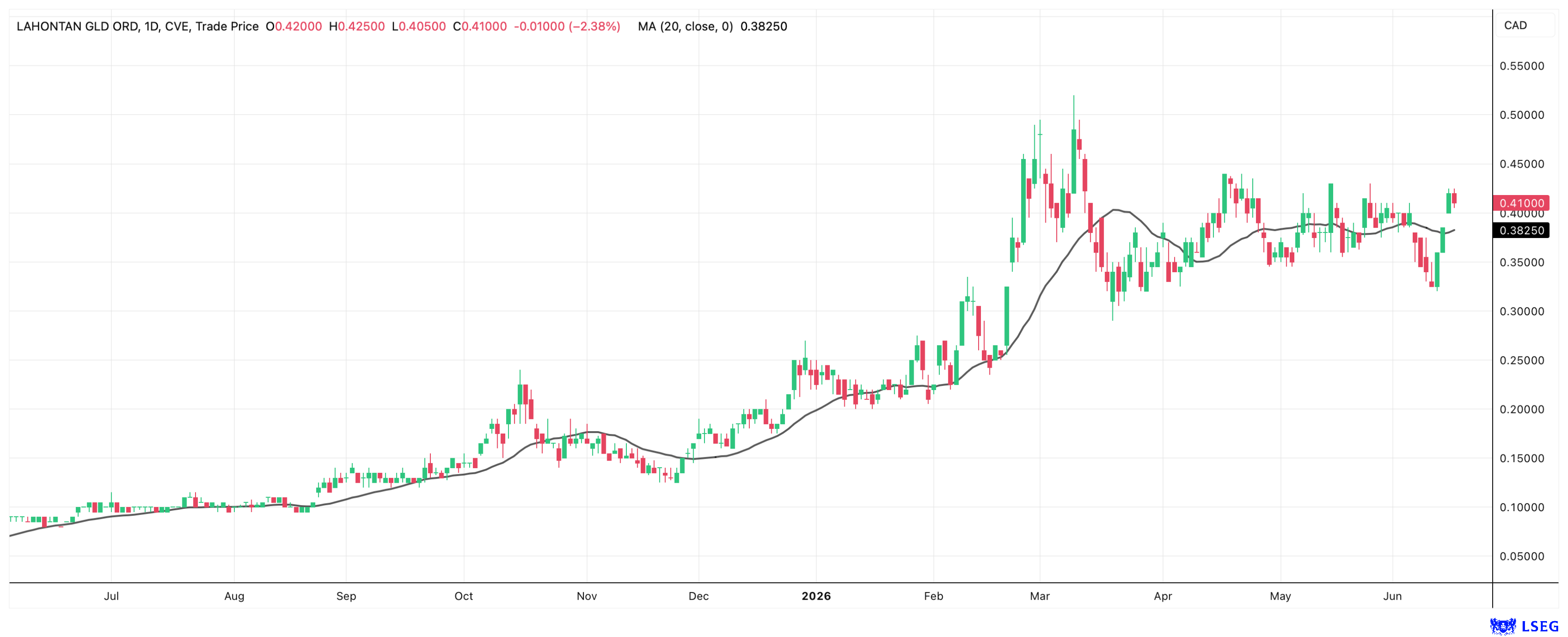
Central banks around the world are shifting their reserves into gold on a historic scale. As the ECB's latest annual report shows, the precious metal has surpassed the US dollar in official reserves for the first time. Gold now accounts for 27% of global central bank reserves, while the share of US Treasury bonds has fallen to 22%. But after the price surge at the start of the year, the rally has currently stalled—despite (or perhaps because of?) the latest signs of détente in the Middle East. While the gold price has stalled, a quiet breakout is unfolding away from the headlines. Shares of the Canadian mining explorer Lahontan Gold climbed from CAD 0.33 to over CAD 0.40 week-over-week. The reason for this relative strength is not pure speculation on the gold price, but rather the market's realization that a geological "cold case" is currently being solved. An experienced management and geology team aims to prove that a mine supposedly long since exhausted actually harbours an undiscovered treasure worth millions. In other words: Central banks buy gold; Lahontan finds it.
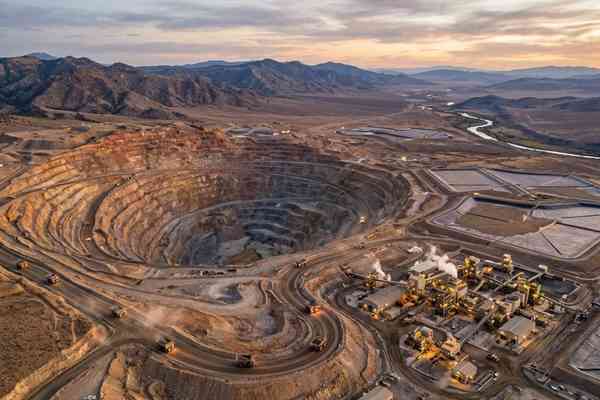
The case of the Santa Fe gold mine in Nevada's Walker Lane Trend had seemed closed for over three decades. Between 1988 and 1994, Corona Gold mined approximately 359,000 ounces of gold and 702,000 ounces of silver at the site via open-pit mining, according to historical sources. At the gold price back then—which, from today's perspective, seems almost laughable at just USD 340 per ounce—it simply was not worth taking a closer look at the ore bodies. The mine and the case were closed. The former operators left behind a patchy, one-dimensional model—because they were only looking for the quick, obvious gold and prematurely declared the mine depleted.
THE INVESTIGATION: THE TREASURE IN THEIR OWN BACKYARD
Thirty years later, Lahontan's founding duo, Kimberly Ann and Brian Maher, are completely reopening the case using state-of-the-art technology. Their theory: the former operators could not see the proverbial forest for the trees. And the latest data proves them right. The duo's investigative skills are well-known in the industry. Even before founding Lahontan, financial expert Ann and exploration chief Maher had repeatedly proven their ability to solve geological puzzles and successfully develop projects—including Prodigy Gold, which was later acquired by Argonaut Gold. This time, however, the investigators intend to reap the rewards of their work themselves. With their combined expertise, they now look at a total resource of an impressive 1.95 million ounces of gold equivalent (AuEq) held by the main Santa Fe project at depth and in the surrounding zones.
The first compelling evidence can be found directly in the old crater walls (high wall) and at the bottom of the historic open-pit mine: there, oxide gold is now clearly visible on surface. With an average grade of 0.70 g/t AuEq, Santa Fe boasts one of the highest-grade remaining oxide deposits in all of Nevada—significantly above the levels of active mines in the region such as Florida Canyon (0.22 g/t), Pan (0.34 g/t), or Marigold (0.44 g/t). What was left behind back then is, at today's price levels, a gold mine in the truest sense of the word.
THE NEW LEAD: GOLD VEINS THAT NO ONE HAD ON THEIR RADAR
A classic mistake in old criminal cases: investigators only searched where they suspected a crime had been committed. The Lahontan team has radically expanded the drilling grid—and promptly discovered new, massive gold zones outside the historically defined resource boundaries. The latest discovery goes by the name "Slab West." In four out of five drill holes, geologists encountered entirely new gold mineralization. Intervals such as 61 m at 0.26 g/t and 35 m at 0.34 g/t prove that the deposit is open in all directions. Grades with a zero before the decimal point may sound like a meagre yield—but in Nevada, mining is considered highly profitable starting at 0.21 g/t.
The real logistical masterstroke by the prospectors lies exactly 13 km further west: the West Santa Fe satellite project. The 19 km² area had historically received little attention. Now, drilling is yielding spectacular results: 36.6 m at 3.11 g/t AuEq, including a high-grade interval of 10.7 m at 5.75 g/t—pure oxide material directly from surface. Instead of building a separate, extremely expensive processing plant for this satellite project, Lahontan will employ its "hub-and-spoke" model. Once production begins, the near-surface ore will be transported by truck over the short distance to the main mine's existing infrastructure. The additional construction costs are minimal. Chief Detective Kimberly Ann explains more about the status of the investigation in a video interview with IIF host Lyndsay Malchuk:
THE COUP: "FREE GOLD" FROM HISTORY'S WASTE
The absolute masterpiece of this geological mystery unfolds at the historic heap-leach pads. Between 1988 and 1994, the operators processed approximately 16 million metric tons of material there—with a meagre recovery rate of 70%, as the technology of the time did not allow for better results. The rest was left behind as "waste." Lahontan has also consistently followed this lead. Metallurgical studies show that, using modern chemistry, a gold recovery rate of 81% and a silver recovery rate of 60% can be achieved. To avoid having to solve this problem alone, the duo is gradually bringing in experienced mining specialists—most recently Shane Williams and Evan Pelletier, who bring extensive operational experience in the rapid commissioning of heap leach mines.
To ensure this deposit can be officially incorporated into the mining plan, a Sonic drilling rig was mobilized. The pre-crushed rock at surface is being systematically sampled through 96 drill holes totalling 1,740 m in length. According to estimates, over 200,000 ounces of gold lie completely untapped near surface here. Since this material does not need to be blasted, extracted from deep underground, or laboriously crushed, the extraction costs are negligible. These ounces are practically risk-free "free gold."
THE VERDICT: A CASH MACHINE THAT HAS SO FAR GONE LARGELY UNNOTICED
While the global mining industry is caught in an inflation trap and new development projects often fail due to skyrocketing costs for steel, energy, and processing plants, Lahontan defies the laws of the market. Paved roads, power connections, the company's own water rights, and a substation are already in place and ready for use—the planned mine construction costs for reactivation therefore amount to a manageable USD 135 million (including a 20% cost reserve). The company, which is currently debt-free, has USD 13 million in cash on hand; the remainder is to be financed largely through loans to avoid diluting shareholders through major capital raises. CEO Ann is therefore currently in intensive negotiations with the lending departments of renowned banks. Initial term sheets (letters of intent) have already been received.
It comes as no surprise that the financial world is eager to get involved in this project. Based on a conservative gold price of USD 2,705, an earlier PEA determined a project value (NPV) of USD 200 million and an internal rate of return (IRR) of 34.2%. If the model is scaled up using the current market price of over USD 4,000 per ounce, Santa Fe turns into a cash machine. The after-tax NPV rises to USD 471.6 million, the rate of return to 66.6%—and the payback period for the capital invested shrinks to 1.8 years. This contrasts with a market capitalization of just USD 125 million; neither West Santa Fe nor other projects, such as the historically high-grade Moho Mine (up to 25 g/t gold, 300 g/t silver), is even remotely factored into this valuation.
THE FINAL REPORT: WHY DETECTIVE WORK PAYS OFF
The investigation plan is set. In the coming months, the eagerly awaited updates on the resource estimate and the feasibility study are due. The final operating permit is expected to be granted in early 2027. In the fourth quarter of 2027, Ann and Maher plan to hold the first gold bars they have cast themselves in their hands. For risk-tolerant investors, now is the time to meticulously study the Santa Fe file before the share breaks through the technical resistance level at CAD 0.44 and surges upward. At the latest, when the new mineral resource estimate—expected in the Summer—confirms the investigative work, the time could be right.
Conflict of interest
Pursuant to §85 of the German Securities Trading Act (WpHG), we point out that Apaton Finance GmbH as well as partners, authors or employees of Apaton Finance GmbH (hereinafter referred to as "Relevant Persons") may hold shares or other financial instruments of the aforementioned companies in the future or may bet on rising or falling prices and thus a conflict of interest may arise in the future. The Relevant Persons reserve the right to buy or sell shares or other financial instruments of the Company at any time (hereinafter each a "Transaction"). Transactions may, under certain circumstances, influence the respective price of the shares or other financial instruments of the Company.
In addition, Apaton Finance GmbH is active in the context of the preparation and publication of the reporting in paid contractual relationships.
For this reason, there is a concrete conflict of interest.
The above information on existing conflicts of interest applies to all types and forms of publication used by Apaton Finance GmbH for publications on companies.
Risk notice
Apaton Finance GmbH offers editors, agencies and companies the opportunity to publish commentaries, interviews, summaries, news and the like on news.financial. These contents are exclusively for the information of the readers and do not represent any call to action or recommendations, neither explicitly nor implicitly they are to be understood as an assurance of possible price developments. The contents do not replace individual expert investment advice and do not constitute an offer to sell the discussed share(s) or other financial instruments, nor an invitation to buy or sell such.
The content is expressly not a financial analysis, but a journalistic or advertising text. Readers or users who make investment decisions or carry out transactions on the basis of the information provided here do so entirely at their own risk. No contractual relationship is established between Apaton Finance GmbH and its readers or the users of its offers, as our information only refers to the company and not to the investment decision of the reader or user.
The acquisition of financial instruments involves high risks, which can lead to the total loss of the invested capital. The information published by Apaton Finance GmbH and its authors is based on careful research. Nevertheless, no liability is assumed for financial losses or a content-related guarantee for the topicality, correctness, appropriateness and completeness of the content provided here. Please also note our Terms of use.