

The Nuremberg native brings over three decades of capital markets experience, backed by a career shaped by deep market insight and a genuine passion for investing. His journey began in 1994 through an investment club among colleagues – a formative experience that sparked a lifelong dedication to identifying compelling investment opportunities.
Following senior editorial roles at Nürnberger Nachrichten, €uro am Sonntag, and €uro, he went on to serve as Editor-in-Chief of the renowned investor magazine Börse Online from 2014, where he played a key role in shaping high-quality financial journalism for a broad investor audience.
Since April 2026, he has been operating independently, fully focused on his core strength: uncovering mispriced equities with significant upside potential – particularly within the small- and mid-cap segment, where inefficiencies create attractive opportunities for discerning investors.
Throughout his career, he has engaged with some of the most influential minds in global finance, including Warren Buffett, Charlie Munger, Jim Rogers, and George Soros. The unique insights gained from these conversations continue to inform his analytical perspective today. As a dedicated value investor, he is committed to translating complex market dynamics into clear, actionable ideas – empowering investors to make better-informed decisions.
Commented by Jens Castner

Commented by Jens Castner on October 21st, 2026 | 05:20 CEST
Your Formula for Profits: What Are Bargains PayPal, Citigroup and Almonty Really Worth?
The US stock market is widely considered expensive, and bargains have become increasingly rare. Yet based on 2027 earnings estimates, some stocks still trade at a price-to-earnings (P/E) ratio of 10 or lower. Whether this alone constitutes a buy signal can be assessed using a formula developed by investing legend Benjamin Graham. It requires just a few inputs and accounts for what the P/E ratio alone overlooks: growth. Applied to companies such as PayPal, Citigroup and Almonty Industries, it produces some striking results — including the potential for substantial gains.
Read
Commented by Jens Castner on October 16th, 2026 | 05:27 CEST
Flying the Flag: France Rearms – Daimler Truck, Airbus and HPQ Silicon Stand to Benefit
French government bonds are under pressure, and fears of a new euro crisis are spreading through the markets. But Paris is not cutting back on defence. The beneficiaries are truck manufacturer Daimler Truck, aircraft manufacturer Airbus and a Canadian small-cap stock that analysts do not yet have on their radar: HPQ Silicon. The company holds a 36.8% stake in Novacium, a battery specialist based in the Greater Lyon area that significantly improves battery performance and therefore recently made headlines with pioneering military orders for radios and drones. A US electric vehicle manufacturer is now also testing the cells. A hidden gem and two established large corporations – investors should keep an eye on these stocks.
Read
Commented by Jens Castner on October 12th, 2026 | 05:39 CEST
Drill Deep, Plug Wells, Manage Risk: How Daldrup, Zefiro and Munich Re Make Money from Climate Protection
Created and Published on Behalf of Zefiro Methane Corp.
What was long considered a quiet environmental problem is growing into a market whose size in the United States alone is estimated at up to USD 280 billion. In Germany, thousands of abandoned oil and gas wells lie in the ground, while in the US there are millions. Many pollute the atmosphere with methane, a climate-killing gas. For drilling services provider Daldrup & Söhne, plugging old wells represents a new business line, although growth is being driven primarily by the geothermal energy boom. Canadian specialist Zefiro Methane, by contrast, focuses entirely on the remediation of orphaned wells in the US and generates additional revenue from CO₂ credits. Munich Re is active in both markets.
Read
Commented by Jens Castner on October 2nd, 2026 | 09:20 CEST
Knorr-Bremse, Power Metallic Mines, Rational: A Look Behind the Scenes—and Up to 150% Upside Potential
Three Buy recommendations in one week, a stock-market favourite under heavy selling pressure, and a Canadian critical-minerals hidden gem: On October 7, Knorr-Bremse, Rational, and Power Metallic Mines will present live at the 20th International Investment Forum (IIF), with retail investors also able to attend. Analysts see up to 150% upside potential. Whether that proves realistic is something you can assess for yourself next week. The IIF offers one of those rare opportunities to hear firsthand what executives discuss with major investors. Retail investors normally never get to hear this. Read on to find out how you can benefit from these exclusive insights.
Read
Commented by Jens Castner on October 1st, 2026 | 08:00 CEST
Beneath the Surface: Why the Market Is Overlooking the True Value of Nike, Desert Gold and Vonovia
With an iceberg, only the tip protrudes from the water; the vast majority remains hidden. The situation is similar right now with Nike, Desert Gold Ventures and Vonovia - their true value lies beneath the surface. Analysts estimate their fair value to be two to seven times their current stock prices. But how long will it take for the stock market to discover these hidden values? For Nike, the future outfitter of the German national soccer team, the moment of truth arrives today—even as the Nations League match between Germany and Serbia is underway in Munich. For Desert Gold, the upcoming start of production is likely to provide the impetus, while Vonovia must brace itself for a waiting game following the election results in Berlin.
Read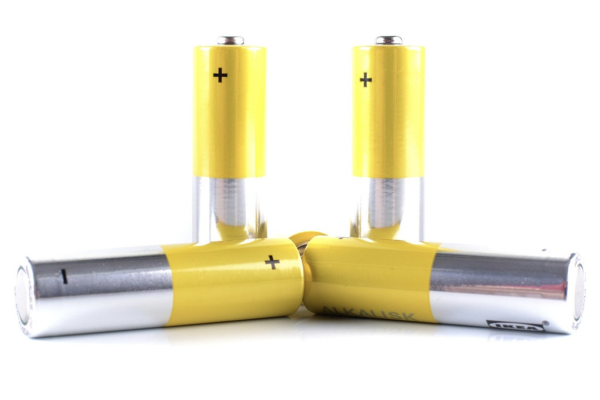
Commented by Jens Castner on September 30th, 2026 | 07:30 CEST
The Heart of the European Battery: How BASF, IBU-tec and HPQ Silicon Are Revolutionizing the Battery
The future of the European automotive industry will not be decided on the assembly line, but in the chemistry lab. Until now, battery cells—the heart of modern electric vehicles—have come almost exclusively from Asia. This dependency is dangerous, and politicians have warned about it for years: Europe urgently needs its own self-contained battery value chain. But to achieve this independence, it is not enough to simply build massive factories ("gigafactories") on greenfield sites. The real key lies in the molecular components: the cathode (the positive terminal) and the anode (the negative terminal). Three companies are demonstrating how this European supply chain can become a reality: DAX giant BASF is focusing on high-end chemicals for the premium range, while the mid-sized company IBU-tec, with its new mega-factory in Bitterfeld-Wolfen, is poised to become the European LFP cathode leader for the mass market. At the other end of the battery spectrum, the Canadian-French technology firm HPQ Silicon is using innovative silicon anodes to ensure future energy storage systems will be dramatically more powerful. This technological pincer movement could free the continent from Asia's stranglehold. Read on to find out what this means for investors.
Read
Commented by Jens Castner on September 29th, 2026 | 07:15 CEST
Raw Materials, Defense and Aerospace: Spectacular Price Targets for Almonty, Renk and OHB
September is traditionally not the best month for the stock market, which is why the DAX, Dow Jones, and others have struggled recently. During these periods, it is worth looking at second- and third-tier stocks. After all, individual stocks in this segment offer tremendous potential—if analysts are to be believed. Sensational studies were released last week on Almonty Industries, Renk and OHB. At first glance, a mining company, a transmission manufacturer, and a satellite builder have little in common. But on closer inspection, all three raise the question of how independent the West wants to be in the future when it comes to raw materials, defense, and space infrastructure. All three stocks are trading well below their all-time highs and offer upside potential ranging from 60% to over 100%.
Read
Commented by Jens Castner on September 28th, 2026 | 07:10 CEST
WHEN STOCK PRICES AND REALITY COLLIDE: THE WEEK OF TRUTH FOR BYD, VIDAC PHARMA AND FEDEX
This week holds a fascinating lesson for investors. BYD, Vidac Pharma and FedEx, three publicly traded companies that could hardly be more different, are holding their annual shareholder meetings: a Chinese auto giant, a British-Israeli biotech minnow, and an American logistics conglomerate. Current developments reflect three completely different realities. The spectrum ranges from global market battles to controversial issues regarding insider stock sales and executive compensation. Two of the stocks have recently lost about half their value. The third, while down significantly from its all-time high after a record run, is still clearly up for the year. Read on to learn about the opportunities and risks this presents.
Read
Commented by Jens Castner on September 21st, 2026 | 07:50 CEST
STEYR MOTORS ON THE VERGE OF A TAKEOVER? dynaCERT ON THE BRINK OF A BREAKTHROUGH! BALLARD POWER IN STOP-AND-GO MODE
Military equipment, truck fleets and hydrogen buses: Decarbonizing heavy-duty transport will not happen at the push of a button. Instead, it is unfolding in stages – from optimized internal combustion engines and smart solutions to reduce fuel consumption and emissions to genuine zero-emission mobility. Steyr Motors, dynaCERT and Ballard Power represent these three phases, with very different opportunities and risks for investors. In this story of tanks, pilot projects and setbacks, we examine which of the three stocks analysts see as having the greatest share-price potential.
Read
Commented by Jens Castner on September 18th, 2026 | 09:40 CEST
A Firework Display of Returns: A Closer Look at the Dividend Standouts RTL Group, Mutares and RE Royalties
In volatile markets and amid economic uncertainty, dividends can be a rock in the storm. Yet investors do not necessarily have to rely on sluggish blue-chip stocks. Three companies from the small- and mid-cap segment are delivering a veritable return bonanza. The journey takes us from an established media group and an SDAX-listed turnaround specialist to a Canadian pioneer in renewable energy: At RTL, the acquisition of Sky Deutschland and a now-profitable streaming business are providing fresh momentum. Mutares selectively acquires loss-making divisions from major corporations and transforms them into reliable sources of returns for shareholders. And RE Royalties, with a dividend yield of more than 10%, outshines both—while a discreet sale process is taking place behind the scenes that could provide investors with an additional substantial takeover premium.
Read