
renewableenergy

Commented by Fabian Lorenz on March 9th, 2026 | 07:40 CET
Crash at Plug Power?! SFC Energy and AI profiteer American Atomics are looking strong!
What is going on with Plug Power? A sell-off quickly followed the sharp recovery. The hydrogen specialist's figures were initially celebrated - but is there really a reason for this? Cash flow remains deep in the red. If the announced break-even point is actually to be reached, at least one major capital increase will be required before then. In contrast, there are solid reasons for rising prices at American Atomics. The AI boom is driving demand for uranium, the company is currently exploring an exciting area in the US state of Utah, the US government is strongly supporting the sector, and the stock does not appear expensive. The founder recently made a convincing impression at an investor conference. Meanwhile, SFC Energy's outlook has impressed analysts at First Berlin, with both the price target and the share price on the rise.
Read
Commented by Nico Popp on March 9th, 2026 | 07:30 CET
Energy Shock? Linde, Veolia, and AHT Syngas Offer Strategic Solutions
The stock market and economy are more volatile than ever. The reasons for this are the military escalation in the Middle East and the de facto closure of the Strait of Hormuz. With crude oil prices exceeding USD 90 per barrel and, according to analysts, potentially rising to over USD 150 in a prolonged crisis scenario, the industry is facing a serious challenge. In this environment, the dynamics of the energy transition are also changing: decarbonization is no longer just a regulatory goal for companies, but has become a survival strategy for their own competitiveness. While the industrial gases group Linde forms the technological backbone of decarbonization with its expertise in hydrogen logistics, Veolia Environnement secures resources and even generates crisis-proof cash flows through the management of global material cycles. A.H.T. Syngas is also a good fit with the companies mentioned above. Its gasification plants convert industrial waste streams directly at their source into cost-effective synthesis gas and green hydrogen – a decentralized technology that is more relevant today than ever before.
Read
Commented by Stefan Feulner on March 9th, 2026 | 07:10 CET
Siemens Energy, Standard Uranium, Nordex – Geopolitical tensions create opportunities
The escalation in the Middle East is suddenly bringing energy security, a long-underestimated issue, into the spotlight of the markets. With the blockade of the Strait of Hormuz, one of the most important arteries of global oil trade is under pressure. For Europe and many industrialized nations, this once again highlights how vulnerable fossil fuel supply chains are. While oil and gas prices are reacting in the short term, the accelerated expansion of independent energy sources is once again coming to the fore strategically. Renewable energy and nuclear power in particular could be among the big winners in a new geopolitical energy order. Investors are already beginning to reevaluate the relevant sectors.
Read
Commented by Armin Schulz on March 9th, 2026 | 07:05 CET
Top Dividend Stocks: With Novo Nordisk, RE Royalties, and SAP, investors reap where others only see risk
Markets are currently oscillating between fears of war and hopes for interest rate cuts. While geopolitics and economic data continue to fuel uncertainty, many investors are turning back to a proven principle: reliable dividends. March 2026 highlights how fragile global growth can be when the Strait of Hormuz turns into a geopolitical powder keg and even the IMF warns of new economic shocks. In this tense environment between acute crisis and the search for stable returns, companies with dependable dividend policies are gaining importance. Against this backdrop, we take a closer look at Novo Nordisk, whose dividend stability must prove itself in an increasingly competitive pharmaceutical market, RE Royalties, which offers a remarkably high yield, and SAP, which recently surprised investors with a dividend increase.
Read
Commented by André Will-Laudien on March 6th, 2026 | 08:10 CET
Rockets are blasting into March! Investors are eyeing E.ON, Standard Uranium, and Plug Power
The current military actions in Iran did not come as a complete surprise. However, very few observers had anticipated an escalation across the entire Middle East. Oil and gas are therefore once again testing a breakout, even though global markets should theoretically face a surplus due to the weak economic environment. Regardless, speculators are simply trading fossil fuels higher; let's see if they stay up there. The global expansion of nuclear power programs is being reinforced by such periods of uncertainty. One example is India, which plans to expand its nuclear power capacity to around 100 GW by 2047, while currently less than 10 GW is installed. Such expansion plans reflect the growing demand for reliable base load energy in an increasingly digitalized economy and act as a hedge against commodity-induced crises. The long-term demand outlook for uranium is improving almost daily as a result of such trends, drawing investors' attention to companies with promising projects. Here are a few ideas.
Read
Commented by Armin Schulz on March 6th, 2026 | 07:50 CET
Iran war boosts cash flow! Ride the short-term boom with BP, and invest in the future with CHAR Technologies and First Solar
The shock of the Iran war is driving up oil prices and bringing BP huge profits in the short term. Nevertheless, the conflict ruthlessly exposes the Achilles heel of fossil fuel dependency. As geopolitical risks escalate, investors are desperately seeking crisis-proof alternatives. The future belongs to technologies that are unaffected by tensions in the Persian Gulf. Innovative processes have long been transforming wood waste into green energy sources, while solar giants are setting new efficiency records. Three companies show where the journey is headed: BP's short-term surge is only one side of the coin; CHAR Technologies and First Solar are now setting the course for sustainable returns.
Read
Commented by Nico Popp on March 6th, 2026 | 07:25 CET
"Security energies" – how to invest: RWE, Iberdrola, and RE Royalties as stable sources of returns
The energy debate has been conducted differently for some time now than it was in the 2010s. While decarbonization was long considered an ecological necessity, it has now become a question of national sovereignty under the banner of "security energies." This new perspective is being fueled by current geopolitical upheavals and the de facto blockade of the Strait of Hormuz, which once again reveals the fragility of our supply chains. With around 20% of global oil consumption passing through this bottleneck, prices for crude oil and liquefied gas have already risen significantly. In this context, German Federal Environment Minister Carsten Schneider coined the term "security energies" to emphasize the decentralized nature of renewable energy as a shield against exogenous shocks. Renewable energy projects are not subject to the logic of geopolitical conflicts and also generate added value in the region, as a wind farm, for example, can generate annual revenues of around EUR 200,000 for a municipality. Renewable energy can also become a safety anchor for investors thanks to stable cash flows.
Read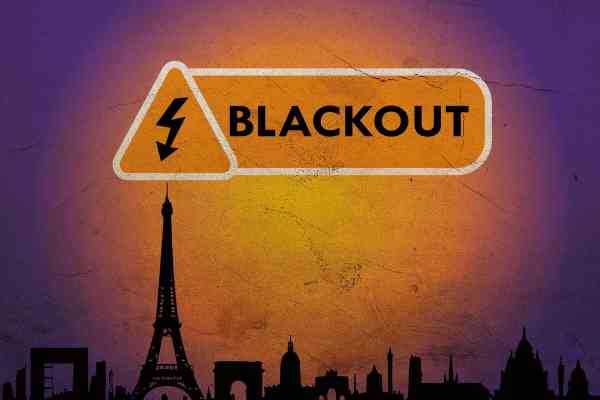
Commented by André Will-Laudien on March 6th, 2026 | 07:05 CET
War – Shortages – Capitulation! Nel ASA, American Atomics, Oklo, and Siemens Energy in focus
In an environment where capital markets are already highly strained, another Middle East conflict has emerged at the beginning of March - this time involving Israel, the US, and Iran. Naturally, Hezbollah in Lebanon also stands ready to support its financiers from the Persian state. All of this adds fuel to an already overheated situation that can hardly cool down due to global shortages of energy, weapons, and raw materials. For stock market traders, this environment presents both opportunities and risks, because where there are losers, there are always winners as well. With oil and gas prices 15% higher, alternative energy sources are quickly coming back into focus. Stocks such as Nel ASA, which had already faded somewhat, are thus getting a new lease of life. A particularly strong spotlight is now falling on the nuclear industry, as it is more important than ever. Risk-conscious investors may still want to jump on the moving train.
Read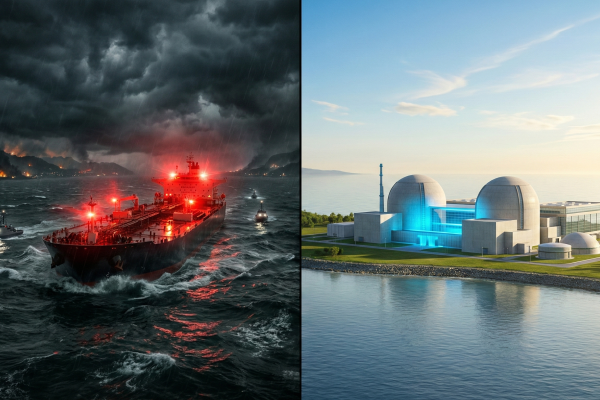
Commented by Nico Popp on March 4th, 2026 | 07:05 CET
Uranium as a geopolitical bargaining chip after the Hormuz shock - Standard Uranium, Kazatomprom, and F3 Uranium in focus
The escalation in the Middle East, which culminated in a de facto blockade of the Strait of Hormuz following the death of Iranian leader Ayatollah Ali Khamenei, has triggered a global energy shock. With around one-fifth of global oil consumption passing through this bottleneck, oil prices have skyrocketed. In their latest market forecasts, analysts at JPMorgan warn of scenarios in which the price could rise to USD 130 or, in extreme cases, up to USD 300 per barrel. This is hitting Asian industrial nations particularly hard and has ruthlessly exposed the vulnerability of international supply chains for fossil fuels. In this environment, uranium is becoming a decisive geopolitical bargaining chip, as nuclear power, at least since the recent conflagration in the Middle East, must no longer be seen merely as a measure of climate protection, but as an instrument of national security and energy sovereignty. We present three uranium companies and highlight which stocks are most interesting for investors.
Read
Commented by Mario Hose on March 3rd, 2026 | 07:00 CET
Energy transition winners: Nordex and Siemens Energy already highly valued, "latecomer" A.H.T. Syngas Technology still offers potential
The world is facing a challenge that can no longer be postponed. On the one hand, the pressure to meet global climate targets is increasing. On the other hand, energy demand continues to grow in an increasingly digital and electrified economy. Three companies are operating in this area of tension. While Nordex and Siemens Energy focus on large-scale wind power generation and grid infrastructure, A.H.T. Syngas Technology addresses decentralized energy solutions through the intelligent utilization of waste materials. This report highlights how these three players are driving the transformation and why the innovative strength of the "latecomer" A.H.T. Syngas in particular could make a real mark on the market. In any case, the chart is already trending upwards.
Read