March 9th, 2026 | 07:10 CET
Siemens Energy, Standard Uranium, Nordex – Geopolitical tensions create opportunities
The escalation in the Middle East is suddenly bringing energy security, a long-underestimated issue, into the spotlight of the markets. With the blockade of the Strait of Hormuz, one of the most important arteries of global oil trade is under pressure. For Europe and many industrialized nations, this once again highlights how vulnerable fossil fuel supply chains are. While oil and gas prices are reacting in the short term, the accelerated expansion of independent energy sources is once again coming to the fore strategically. Renewable energy and nuclear power in particular could be among the big winners in a new geopolitical energy order. Investors are already beginning to reevaluate the relevant sectors.
time to read: 4 minutes
|
Author:
Stefan Feulner
ISIN:
SIEMENS ENERGY AG NA O.N. | DE000ENER6Y0 , STANDARD URANIUM LTD | CA85422Q8487 | TSXV: STND , OTCQB: STTDF , NORDEX SE O.N. | DE000A0D6554
Table of contents:
Author

Stefan Feulner
The native Franconian has more than 20 years of stock exchange experience and a broadly diversified network.
He is passionate about analyzing a wide variety of business models and investigating new trends.
Tag cloud
Shares cloud
Siemens Energy – Optimism continues
Energy security is becoming increasingly important in times of geopolitical risk, and Siemens Energy is likely to benefit from this in the long term. This opinion is shared by several analyst firms, which have a positive outlook on the Munich-based company's long-term prospects. Analysts at JPMorgan continue to rate the stock as "Overweight." The expansion of AI data centers and e-mobility continues to be seen as a structural growth driver. In addition, rising oil and gas prices could push countries to become increasingly independent of fossil fuels and invest in renewable energy. Bank of America also raised its price target for the stock from EUR 200 to EUR 220.
After Siemens Energy shares remained unscathed in the first days of the Iran war and even climbed to a new all-time high of EUR 171.60, profit-taking caused the first cracks in the chart. A break below the EUR 141 mark could generate further downside potential. MACD and RSI have already signaled sell signals.
The announcement that a share buyback program worth EUR 2 billion was launched last Wednesday had a supportive effect on the share price. The program is to be carried out by September 30. Some of the shares will be withdrawn and used for employee share programs, for example.
This measure will increase earnings per share on the market and has recently met with noticeable approval from shareholders. An imminent inclusion in the Stoxx Europe 50 could also further increase the company's visibility and representation in ETF savings plans.
Standard Uranium – Emerging uranium player
The situation on the global energy markets continues to escalate. Geopolitical tensions in the Middle East, supply chain risks, and rising electricity demand from industry and digitalization are increasingly bringing the issue of energy security into focus. International energy organizations expect nuclear energy to be expanded again in many industrialized countries in order to achieve both security of supply and climate targets. Political tailwinds are also increasing. US President Donald Trump announced months ago that he would significantly accelerate the expansion of the American nuclear industry.
Against this backdrop, uranium is once again becoming the focus of commodity markets, and thus also of exploration companies seeking to develop new deposits. One such player is Standard Uranium. The company focuses on projects in Canada's Athabasca Basin, one of the world's most important regions for high-grade uranium deposits.
Standard Uranium does not finance exploration entirely on its own. Instead, it uses a project generator model, developing drilling programs with partners who cover much of the cost. The company generates revenue through management fees and participation rights, while at the same time, several projects can be pursued in parallel. In total, Standard Uranium controls approximately 241,000 acres of mineral rights.
The most important project is the Davidson River project in the southwest of the Athabasca Basin. More than 400 million pounds of uranium have already been discovered in the region. Geological surveys have identified over 70 km of structural trends there that are considered potential deposit zones.
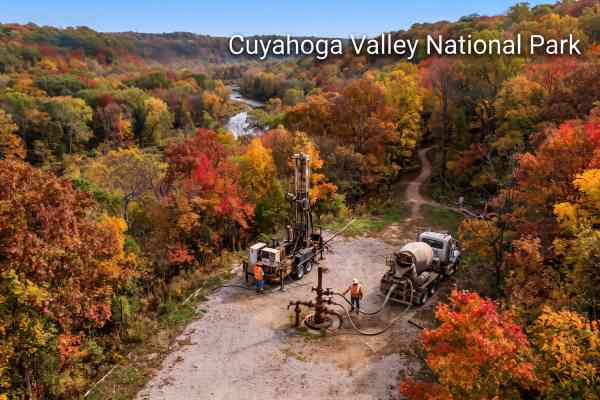
At the Corvo project, a winter drilling program with a total length of up to 3,000 m started in parallel at the beginning of 2026. The target is near-surface uranium structures along conductive trends. Of particular note is the Manhattan deposit, where samples have already shown grades of up to 8.10% U₃O₈. Aventis Energy is providing the financing, while Standard Uranium is responsible for operational management.
The Rocas project is also set to undergo its first drilling program with partner Collective Metals. Several diamond drill holes will test a 7.5 km long structural corridor where strong radioactive anomalies have previously been measured. The Phase I campaign, which includes approximately 1,200 to 1,500 m of diamond drilling, is scheduled to commence soon.
With its large number of promising properties, Standard Uranium is positioning itself in a market environment that could become increasingly dynamic. With a market capitalization of CAD 14.4 million, the company is still in the early stages of its development.
Nordex – Reality check after share price surge
The Hamburg-based wind turbine manufacturer made a clear statement with the publication of its financial report at the end of February. In 2025, it recorded revenue of EUR 7.6 billion, and the EBITDA margin, which had been a problem child just a few years ago, rose to 8.4%. In addition, the order intake of 10.2 GW set a new record.
In the fourth quarter, revenues climbed to around EUR 2.5 billion, an increase of 16% over the same period last year. Profitability increased particularly significantly: EBITDA jumped to EUR 307 million, corresponding to a margin of 12.1%. In the same quarter of the previous year, this figure was 4.9%. The turnaround was also clearly evident in the bottom line. Quarterly profit rose to EUR 184 million, up from just EUR 17.5 million a year earlier.
However, the geopolitical situation is also causing uncertainty here, with investors securing profits. The upward momentum of the share is slowing and moving away from analysts' recent price targets. Deutsche Bank and Goldman Sachs remain optimistic and have set price targets of EUR 58 and EUR 46.10, respectively.
An accelerated downward momentum could develop if the EUR 40 mark is breached. In the short term, the price gap that opened up when the annual figures were published is likely to close again at EUR 35. The 200 EMA is currently at EUR 27.
In light of geopolitical tensions, energy security is once again becoming the focus of energy policy, and with it, the providers of new electricity infrastructure. Siemens Energy AG is benefiting from the global expansion of grids and demand for stable power systems. Nordex SE is scoring with a strong order backlog in the wind power market. Meanwhile, Standard Uranium Ltd. is focusing on new uranium discoveries in the Athabasca Basin and positioning itself as a raw material supplier for the growing nuclear energy sector.
Conflict of interest
Pursuant to §85 of the German Securities Trading Act (WpHG), we point out that Apaton Finance GmbH as well as partners, authors or employees of Apaton Finance GmbH (hereinafter referred to as "Relevant Persons") may hold shares or other financial instruments of the aforementioned companies in the future or may bet on rising or falling prices and thus a conflict of interest may arise in the future. The Relevant Persons reserve the right to buy or sell shares or other financial instruments of the Company at any time (hereinafter each a "Transaction"). Transactions may, under certain circumstances, influence the respective price of the shares or other financial instruments of the Company.
In addition, Apaton Finance GmbH is active in the context of the preparation and publication of the reporting in paid contractual relationships.
For this reason, there is a concrete conflict of interest.
The above information on existing conflicts of interest applies to all types and forms of publication used by Apaton Finance GmbH for publications on companies.
Risk notice
Apaton Finance GmbH offers editors, agencies and companies the opportunity to publish commentaries, interviews, summaries, news and the like on news.financial. These contents are exclusively for the information of the readers and do not represent any call to action or recommendations, neither explicitly nor implicitly they are to be understood as an assurance of possible price developments. The contents do not replace individual expert investment advice and do not constitute an offer to sell the discussed share(s) or other financial instruments, nor an invitation to buy or sell such.
The content is expressly not a financial analysis, but a journalistic or advertising text. Readers or users who make investment decisions or carry out transactions on the basis of the information provided here do so entirely at their own risk. No contractual relationship is established between Apaton Finance GmbH and its readers or the users of its offers, as our information only refers to the company and not to the investment decision of the reader or user.
The acquisition of financial instruments involves high risks, which can lead to the total loss of the invested capital. The information published by Apaton Finance GmbH and its authors is based on careful research. Nevertheless, no liability is assumed for financial losses or a content-related guarantee for the topicality, correctness, appropriateness and completeness of the content provided here. Please also note our Terms of use.