June 3rd, 2026 | 10:30 CEST
Simple and Brutal: No Nuclear Power, No AI - Why American Atomics, Infineon, and Aixtron Play Key Roles
The energy demand of artificial intelligence and data centres is enormous. Studies consistently show that no single energy source will be sufficient; instead, a diversified energy mix will be required to meet rising global electricity consumption. Storage solutions and the critical bottleneck of grid expansion remain key challenges. A strong growth trend that has so far received too little attention is nuclear energy. In this context, American Atomics is positioning itself within the nuclear value chain. AI-driven demand is driving growth for Aixtron and Infineon; both companies hold strong market positions but operate in different segments of the value chain. The key question for investors is whether, after the strong share price performance to date, there is still upside potential in these names.
time to read: 4 minutes | Author: Carsten Mainitz
ISIN: AMERICAN ATOMICS INC | CA0240301089 | CSE: NUKE , INFINEON TECH.AG NA O.N. | DE0006231004 , AIXTRON SE NA O.N. | DE000A0WMPJ6
Table of contents:
Author

Carsten Mainitz
The native Rhineland-Palatinate has been a passionate market participant for more than 25 years. After studying business administration in Mannheim, he worked as a journalist, in equity sales and many years in equity research.
Tag cloud
Shares cloud
American Atomics: Potential Still (Largely) Ignored by the Market
AI is undeniably the biggest driver of the rapid rise in electricity consumption. Base-load capability and climate-friendliness are crucial factors alongside availability and price. While natural gas is capable of providing base-load power, it generates emissions. The downside of solar and wind is the lack of power during periods of low sunlight and low wind. This is pushing nuclear energy back into the spotlight.
Hyperscalers like Microsoft, Meta, Amazon, and Google are particularly on the hunt for CO₂-free electricity capable of providing base-load power. Microsoft and Meta have already taken a leading role in the industry and are securing long-term nuclear power. When does American Atomics come into play on the supply side?
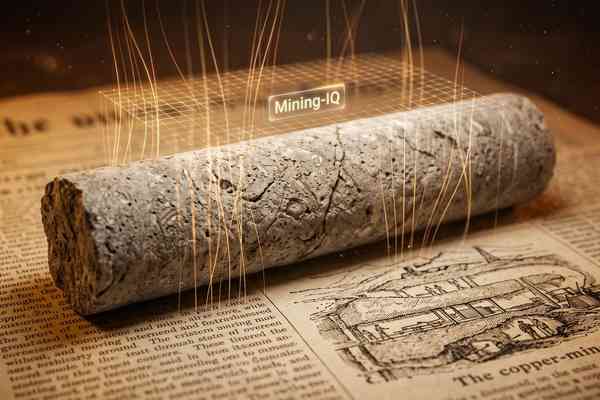
The Canadians are positioning themselves with their strategic "rock-to-reactor" approach across all stages of the fuel supply value chain in North America. This spans from uranium exploration and mining through refining and conversion to the production of specialized nuclear fuels. A particular focus is on the future production of HALEU, a key product for modern nuclear reactors.
The goal is to establish a robust North American supply of nuclear fuels that is independent of foreign sources. To this end, the company has entered into a number of partnerships and collaborations. Of particular note is the collaboration with the US Department of Energy and other companies in the Nuclear Fuel Cycle Consortium. The joint venture with CVMR is important from an operational standpoint, as the two partners intend to construct the first modular and scalable uranium mill and processing unit in the US.
The flagship Big Indian project is located in the historically productive Lisbon Valley District uranium basin in the US state of Utah. The little-explored eastern side of the valley is generating significant excitement, as American Atomics suspects it holds great potential.
Furthermore, the company is continuing to develop the Nuvemco project in the US state of Colorado and the Kenora project in the Canadian province of Ontario. In April, the Canadian company also acquired the Blue Streak project in Colorado. The property contains several mines that have historically produced vanadium and uranium. In total, Blue Streak comprises 194 mining concessions. American Atomics recently published a mineral resource estimate for the Blue Streak project. The current share price of CAD 0.30 and market capitalization of CAD 20 million do not reflect the positive results or the company's full potential.
Infineon: AI Boom Drives Share Price
The German company is among the world's leading manufacturers of power semiconductors and microelectronics. Infineon develops chips that efficiently control, convert, and distribute electrical energy. The company holds a particularly strong position in power semiconductors based on silicon carbide (SiC) and gallium nitride (GaN). These are becoming increasingly important for modern energy and charging infrastructures.
AI is boosting the stock price, especially in recent weeks. The logic behind the growth potential is clear: data centers require more power, and that power must be efficiently delivered to processors and GPUs. The share has been on a one-way trajectory in recent months, recently breaking the EUR 80 mark and now clearly heading toward an all-time high. STMicroelectronics and HPE recently reported strong results and raised their forecasts, giving the stock price another boost. A few weeks ago, Infineon had already raised its own targets somewhat, driven by its strong AI business.
Amid all the euphoria, investors should not forget that Infineon serves a broad industrial customer base and is therefore subject to certain cycles. Recently, analysts at Jeffries raised their price target for Infineon shares to EUR 96.
Aixtron: What Comes After the Price Surge?
For a long time, Aixtron was viewed as a hidden beneficiary of the AI trend. The stock was then "awakened" from levels well below EUR 20, and now trades at close to EUR 60. The company is currently valued at around EUR 6 billion. The investment thesis has not fundamentally changed: the AI and energy boom remain key drivers of both growth and profits.
As one of the leading manufacturers of deposition systems for producing modern semiconductors based on gallium nitride (GaN) and silicon carbide (SiC), the company has positioned itself at a key point in the value chain. These materials are becoming increasingly important because they are more powerful and efficient than traditional silicon chips.
Another promising field lies in optical data communication. AI requires not only enormous computing power but also fast data connections. Here, too, Aixtron ranks among the industry's most important equipment suppliers. In recent weeks, the group has announced a series of landmark orders. Many analysts will likely raise their price targets even further.
All three companies are positioned in exciting growth sectors. The major connecting themes are AI and power consumption. As technological beneficiaries, the stock prices of Infineon and Aixtron are likely to rise a bit further. However, American Atomics offers the greatest leverage. The goal is the gradual development of an integrated North American value chain for nuclear fuel supply. The market has not yet fully priced in the latest news regarding the mineral resource estimate for the Blue Streak project, nor the company's overall potential, which is valued at just CAD 20 million.
Conflict of interest
Pursuant to §85 of the German Securities Trading Act (WpHG), we point out that Apaton Finance GmbH as well as partners, authors or employees of Apaton Finance GmbH (hereinafter referred to as "Relevant Persons") may hold shares or other financial instruments of the aforementioned companies in the future or may bet on rising or falling prices and thus a conflict of interest may arise in the future. The Relevant Persons reserve the right to buy or sell shares or other financial instruments of the Company at any time (hereinafter each a "Transaction"). Transactions may, under certain circumstances, influence the respective price of the shares or other financial instruments of the Company.
In addition, Apaton Finance GmbH is active in the context of the preparation and publication of the reporting in paid contractual relationships.
For this reason, there is a concrete conflict of interest.
The above information on existing conflicts of interest applies to all types and forms of publication used by Apaton Finance GmbH for publications on companies.
Risk notice
Apaton Finance GmbH offers editors, agencies and companies the opportunity to publish commentaries, interviews, summaries, news and the like on news.financial. These contents are exclusively for the information of the readers and do not represent any call to action or recommendations, neither explicitly nor implicitly they are to be understood as an assurance of possible price developments. The contents do not replace individual expert investment advice and do not constitute an offer to sell the discussed share(s) or other financial instruments, nor an invitation to buy or sell such.
The content is expressly not a financial analysis, but a journalistic or advertising text. Readers or users who make investment decisions or carry out transactions on the basis of the information provided here do so entirely at their own risk. No contractual relationship is established between Apaton Finance GmbH and its readers or the users of its offers, as our information only refers to the company and not to the investment decision of the reader or user.
The acquisition of financial instruments involves high risks, which can lead to the total loss of the invested capital. The information published by Apaton Finance GmbH and its authors is based on careful research. Nevertheless, no liability is assumed for financial losses or a content-related guarantee for the topicality, correctness, appropriateness and completeness of the content provided here. Please also note our Terms of use.