February 4th, 2025 | 07:10 CET
Siemens Energy, XXIX Metal, Volkswagen – Is the energy transition in danger due to US tariffs?
The euro is falling, mainly due to the recent interest rate cut by the ECB. This puts the interest rate difference at around 1.5%. At the same time, a trade war is looming due to the new US tariff policy. After America raised tariffs on imports from Canada to 25% and on energy to 10%, Justin Trudeau, in turn, raised tariffs by 25%. In addition, measures in the raw materials and energy sectors are being considered. For example, refineries may no longer process US oil. The Canadians supply 85% of their copper to the US. If supplies were to be stopped, this would potentially drive up copper prices and, at the same time, jeopardize the energy transition.
time to read: 4 minutes | Author: Armin Schulz
ISIN: SIEMENS ENERGY AG NA O.N. | DE000ENER6Y0 , XXIX Metal Corp. | CA9013201012 , VOLKSWAGEN AG VZO O.N. | DE0007664039
Table of contents:
Author

Armin Schulz
Born in Mönchengladbach, he studied business administration in the Netherlands. In the course of his studies he came into contact with the stock exchange for the first time. He has more than 25 years of experience in stock market business.
Tag cloud
Shares cloud
Siemens Energy – Good preliminary figures
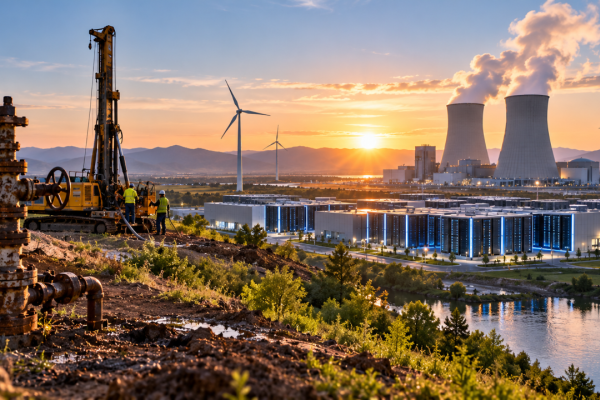
Renewable energies require large amounts of copper for power generation, transmission, and storage. Siemens Energy got off to an extremely strong and promising start in fiscal 2025. Revenue rose by 18.4% to EUR 8.94 billion, and pre-special items profit more than doubled to EUR 481 million. The figures were thus above analysts' expectations. The strongest growth was seen in the Grid Technologies and Industry Transformation areas. The tax cash flow amounted to EUR 1.53 billion and was thus significantly better than the strongly negative value in the previous year.
The only negative point is the decline in new orders, which were only EUR 13.67 billion and thus 10.2% lower than in 2024. Nevertheless, the figure exceeded market expectations. Despite the decline, the gas turbine business stood out with strong growth. Wind power subsidiary Siemens Gamesa also significantly reduced its losses. These improvements, along with core businesses such as gas services and others, further strengthened profitability and positively impacted the financials. Siemens Energy is demonstrating its ability to address challenges in wind energy while capturing new growth potential in key segments.
The positive preliminary quarterly figures led to a sharp rise in the share price after the stock had previously fallen by over 20% due to the introduction of the new artificial intelligence DeepSeek. The reason for the price slide was the fear that data centers would no longer be able to consume as much energy. After the preliminary figures, there were many very mixed analyst assessments. Some believe the stock has very little potential because it has performed very well. For the 2025 financial year, the Company's revenue forecast is for an increase of 8-10%, with an earnings margin before special items of 3-5%. Accordingly, the target prices range from EUR 36 to EUR 70. The share is currently available for EUR 55.90.
XXIX Metal – Copper is the key raw material for electrification
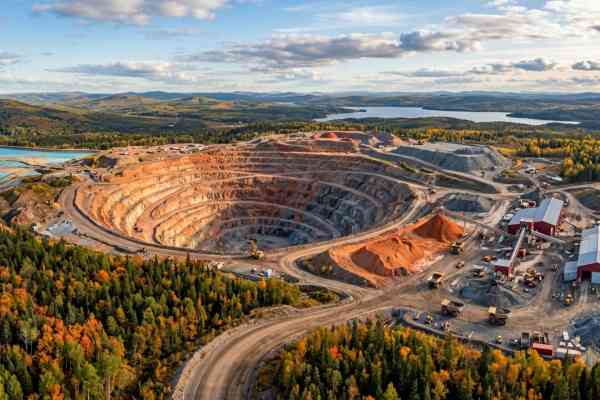
Copper has always been important for the electricity industry due to its conductivity. However, the entire world is now being electrified, and new technologies such as e-mobility and renewable energy require even more red gold. This drives demand and should also positively impact the copper price in the long term. This plays into the hands of XXIX Metal, which was formed from QC Copper and Gold and CPRAM. With projects such as Opemiska in Quebec, Thierry in Ontario, and the Roger gold-copper project in Chapais-Chibougamau, the Company is pursuing ambitious goals, although the first two are currently the focus of attention.
The Opemiska property in Quebec is distinguished by its excellent geological characteristics. According to a resource estimate, 2.24 billion pounds of copper equivalent are located on the property, with 93% falling into the measured and indicated category. At the beginning of January, the Company announced the results of the last 3 drill holes, with a peak of 5.3% copper and 1.2 g/t gold. This discovery has the potential to expand the resource model significantly. A 3,400 m drill program is planned for the Saddle Zone in February. The results will be incorporated into the existing preliminary economic analysis. At the same time, the historical data from the Cooke and Robitaille Zones will be re-analyzed.
The 7,807-hectare Thierry Project has promising mineralization data. According to historical mining data, 5.8 million tons with a copper content of 1.13% have already been mined. Management is also planning a drilling program and induced polarization surveys for the property in order to provide an updated mineral resource estimate. For the Roger Gold-Copper Project, the Company is currently investigating how to integrate the property into its future corporate strategy. The stock is currently trading at CAD 0.115, giving it a low market capitalization of CAD 29.75 million.
Volkswagen – Tariffs put pressure
The copper market is already closely linked to e-mobility. Electric vehicles use about three times as much copper as vehicles with internal combustion engines. This is mainly due to the lithium-ion batteries, electric motors, and power electronics. Conventional vehicles use around 22–25 kg of copper, while electric vehicles require between 53 and 70 kg, depending on the model. If copper prices rise significantly due to trade conflicts and tariffs, it would pose a problem for vehicle manufacturers like Volkswagen.
However, the tariffs also directly affect the Wolfsburg-based company because they have a plant in Mexico, from which around 80% of the vehicles produced are sent to the US. The tariffs are now making the vehicles significantly more expensive. The tariffs for Europe have not yet been raised. The strong USD makes vehicles from Europe more affordable. The question is whether this can offset the declines caused by the tariffs. The first automakers are considering moving their production facilities to the US to maintain access to the US market. Trade barriers could also increase American consumer prices and put pressure on the US Federal Reserve, which could jeopardize global economic stability.
Volkswagen is under pressure in the face of these developments, especially due to the combination of tariffs and a weak euro. While the favorable exchange rate benefits US exports, it makes imported raw materials for production more expensive. To remain competitive in the long term, Volkswagen is pushing ahead with the digitalization of its supply chains and is trying to prepare itself as best as possible for the future. These new uncertainties are not sitting well with investors, and on Monday, the share price dropped to EUR 92.02. Currently, the share price stands at EUR 92.56, representing a decline of over 6%.
The trade conflicts and tariffs endanger the energy transition and could increase raw material prices, which XXIX Metal, with its promising copper projects such as Opemiska in Quebec, could benefit from. Siemens Energy has contained its problems with Siemens Gamesa and can refer to good numbers through growth in central divisions such as Grid Technologies and gas turbines. Volkswagen is suffering from US tariffs, which is weighing heavily on the share price, as the US would be the second-largest sales market after China where issues are arising.
Conflict of interest
Pursuant to §85 of the German Securities Trading Act (WpHG), we point out that Apaton Finance GmbH as well as partners, authors or employees of Apaton Finance GmbH (hereinafter referred to as "Relevant Persons") may hold shares or other financial instruments of the aforementioned companies in the future or may bet on rising or falling prices and thus a conflict of interest may arise in the future. The Relevant Persons reserve the right to buy or sell shares or other financial instruments of the Company at any time (hereinafter each a "Transaction"). Transactions may, under certain circumstances, influence the respective price of the shares or other financial instruments of the Company.
In addition, Apaton Finance GmbH is active in the context of the preparation and publication of the reporting in paid contractual relationships.
For this reason, there is a concrete conflict of interest.
The above information on existing conflicts of interest applies to all types and forms of publication used by Apaton Finance GmbH for publications on companies.
Risk notice
Apaton Finance GmbH offers editors, agencies and companies the opportunity to publish commentaries, interviews, summaries, news and the like on news.financial. These contents are exclusively for the information of the readers and do not represent any call to action or recommendations, neither explicitly nor implicitly they are to be understood as an assurance of possible price developments. The contents do not replace individual expert investment advice and do not constitute an offer to sell the discussed share(s) or other financial instruments, nor an invitation to buy or sell such.
The content is expressly not a financial analysis, but a journalistic or advertising text. Readers or users who make investment decisions or carry out transactions on the basis of the information provided here do so entirely at their own risk. No contractual relationship is established between Apaton Finance GmbH and its readers or the users of its offers, as our information only refers to the company and not to the investment decision of the reader or user.
The acquisition of financial instruments involves high risks, which can lead to the total loss of the invested capital. The information published by Apaton Finance GmbH and its authors is based on careful research. Nevertheless, no liability is assumed for financial losses or a content-related guarantee for the topicality, correctness, appropriateness and completeness of the content provided here. Please also note our Terms of use.