March 3rd, 2023 | 10:00 CET
Rheinmetall, Defense Metals, BASF - Rearmament in the defense industry, restructuring in the chemical industry
A new chapter can begin for Ukraine's defense. Rheinmetall will supply the country with border surveillance technology. Analysts raise the share price target from EUR 240 to EUR 300. A solution to the conflict with Russia is not in sight, so demand for rare metals urgently needed in armaments is rising all the higher. This is where Defense Metals comes into play. The Canadian explorer has initial data from the crushing samples and can now better estimate the costs for the feasibility study. BASF is also concerned with costs. The Company put its red pen to work and cut 2/3 of its jobs, especially at a site in Germany. A planned agar project in the US has also been suspended until further notice.
time to read: 4 minutes
|
Author:
Juliane Zielonka
ISIN:
RHEINMETALL AG | DE0007030009 , DEFENSE METALS CORP. | CA2446331035 , BASF SE NA O.N. | DE000BASF111
Table of contents:
Author

Juliane Zielonka
Born in Bielefeld, she studied German, English and psychology. The emergence of the Internet in the early '90s led her from university to training in graphic design and marketing communications. After years of agency work in corporate branding, she switched to publishing and learned her editorial craft at Hubert Burda Media.
Tag cloud
Shares cloud
Rheinmetall supports Ukraine with surveillance systems
As a contractor for the German government, Rheinmetall is supplying Ukraine with automated reconnaissance systems. The equipment is intended to facilitate control over territories. The contract is in the low double-digit million euros range, as the Düsseldorf-based group announced this week.
Rheinmetall is working with the Estonian company DefSecIntel, which provides mobile surveillance towers. The Estonian manufacturer's SurveilSPIRE mobile surveillance towers are mounted on trailers and can be transported quickly to their deployment site.
Only three people are needed to set them up, and operation is automated. Radio signals (4G and Starlink) transmit the video information to a mobile headquarters. The system uses an automatically controlled drone to perform patrol or mission flights. This allows detected threats to be verified, and should it be necessary, countermeasures can be taken. Delivery has already begun. Reason enough for Berenberg Bank to raise the price target of the share from EUR 240 to EUR 300.
Defense Metals: Favorable crushing data reported for the Wicheeda deposit
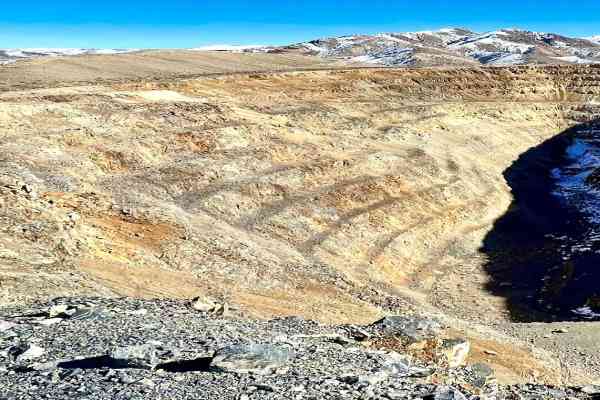
Good news comes today from Canadian mineral exploration and development company Defense Metals. Soil samples collected from the Wicheeda deposit have now gone through the crushing process. The crushing data obtained from this process will assist the geological team in future planning of the crushing and grinding plant. This facility will be an integral part of the planned development of Wicheeda.
The crushing process converts coarse rock that has been previously mined into tiny particles, typically smaller than 1 mm. These particles can then be processed by flotation or other methods. The energy requirements, production costs, and carbon footprint of a mineral processing plant depend heavily on the size reduction process. The more complex it is to crush mined minerals in the ground, the higher the energy required. Defense Metals is using the comminution data for planning the upcoming prefeasibility study (PFS).
In order to determine the suitability of the Wicheeda variability sample and master composite for SAG processing and sizing parameters, the industry-standard SMC test was applied. The average A x b value was 97, while the SAG Circuit Specific Energy (SCSE) was typically 7 kWh/t, indicating a very soft ore.
John Goode, Metallurgical Consultant, states, "Comminution tests on seventeen variability samples and one master composite indicate that the ore is soft, suitable for conventional milling methods, and has a low abrasion index. "The latest results confirm and extend data obtained from a 30-tonne bulk sample taken in 2019, indicating that a conventional semi-autogenous grinding (SAG) circuit with a ball mill will work well and that grinding energy and supply costs will be relatively low."
Defense Metals Corp. has an indicated mineral resource of 5 million tons at approximately 2.95% TREO (Total Rare-Earth Oxide) and an inferred mineral resource of 29.5 million tons at about 1.83% TREO. The Company specializes in acquiring, exploring and developing mineral deposits containing metals and elements used in the defense industry, national security sector and in the production of green energy technologies.
BASF - Hybrid wheat trials halted in North America
According to Reuters, the chemical and seed company BASF has announced it is halting the development of hybrid wheat in North America, as the results of seed tests have not met set goals. Instead, the Company is focusing on developing the new type of wheat in European markets, with plans to introduce the technology by the end of the decade.
In response to higher energy prices and a poor business outlook, BASF implemented tough cuts at its main Ludwigshafen plant. Worldwide, 2,600 jobs were cut, with about 2/3 of them eliminated in Germany. With 109,013 employees, BASF ranks 16th in the DAX.As Germany's largest industrial gas consumer, BASF suffers from increased energy costs. This austerity drive seems unavoidable, but the stock has not moved noticeably upward in the last decade, suggesting more of a management problem.
According to the statement issued by Dr Martin Brudermüller, Chairman of the Board of Executive Directors, and Dr Hans-Ulrich Engel, Chief Financial Officer, in 2022, BASF Group sales increased by 11.1% to EUR 87.3 billion. The increase in sales came mainly from price increases in virtually all areas caused by rising raw material and energy prices. The most significant price increases occurred in the Materials and Chemicals segments. Lower sales volumes reduced overall sales growth. Volume development was mainly influenced by lower sales in the Surface Technologies and Chemicals segments.
BASF's current share price is EUR 48.10, down 10.98% from a 52-week high of EUR 54.04, and the 52-week low is EUR 37.90.
Given the conflicts and trouble spots, Germany as a location is more of a strategic advantage for defense and armaments company Rheinmetall than for BASF. As one of the largest Russian gas customers, the latter is still under pressure to restructure the Company profitably. For the explorer company Defense Metals, the drilling results to date and the data evaluated from it are proceeding favorably. Those wishing to speak directly with the team will have the opportunity next week, March 5-8, 2023, at the world's largest mineral exploration and mining convention, PDAC. Defense Metals will be at booth 2500.
Conflict of interest
Pursuant to §85 of the German Securities Trading Act (WpHG), we point out that Apaton Finance GmbH as well as partners, authors or employees of Apaton Finance GmbH (hereinafter referred to as "Relevant Persons") may hold shares or other financial instruments of the aforementioned companies in the future or may bet on rising or falling prices and thus a conflict of interest may arise in the future. The Relevant Persons reserve the right to buy or sell shares or other financial instruments of the Company at any time (hereinafter each a "Transaction"). Transactions may, under certain circumstances, influence the respective price of the shares or other financial instruments of the Company.
In addition, Apaton Finance GmbH is active in the context of the preparation and publication of the reporting in paid contractual relationships.
For this reason, there is a concrete conflict of interest.
The above information on existing conflicts of interest applies to all types and forms of publication used by Apaton Finance GmbH for publications on companies.
Risk notice
Apaton Finance GmbH offers editors, agencies and companies the opportunity to publish commentaries, interviews, summaries, news and the like on news.financial. These contents are exclusively for the information of the readers and do not represent any call to action or recommendations, neither explicitly nor implicitly they are to be understood as an assurance of possible price developments. The contents do not replace individual expert investment advice and do not constitute an offer to sell the discussed share(s) or other financial instruments, nor an invitation to buy or sell such.
The content is expressly not a financial analysis, but a journalistic or advertising text. Readers or users who make investment decisions or carry out transactions on the basis of the information provided here do so entirely at their own risk. No contractual relationship is established between Apaton Finance GmbH and its readers or the users of its offers, as our information only refers to the company and not to the investment decision of the reader or user.
The acquisition of financial instruments involves high risks, which can lead to the total loss of the invested capital. The information published by Apaton Finance GmbH and its authors is based on careful research. Nevertheless, no liability is assumed for financial losses or a content-related guarantee for the topicality, correctness, appropriateness and completeness of the content provided here. Please also note our Terms of use.