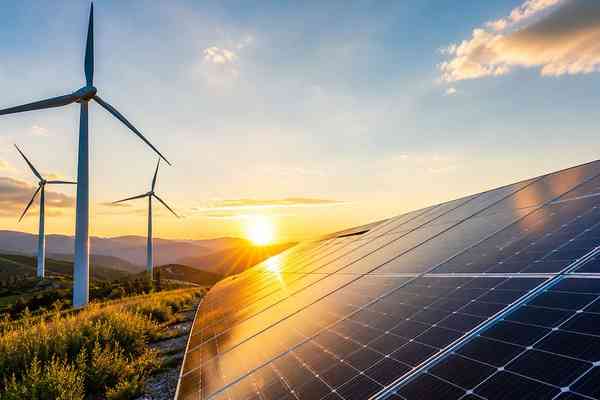
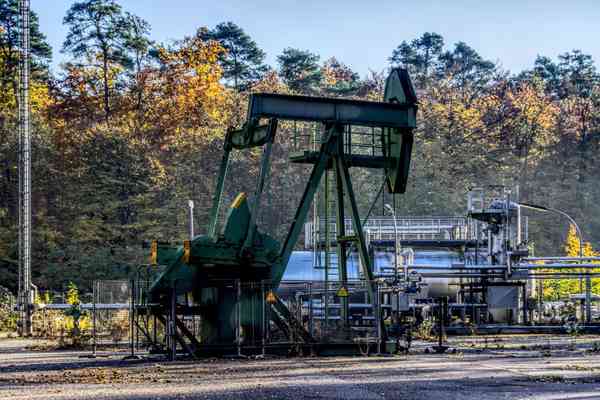
Things are changing in the energy sector. New strategies at established companies are meeting the innovative business models emerging in response to pressing challenges. While major corporations are switching to renewable energy and investing in the necessary grid infrastructure, an often-overlooked challenge is coming into focus: the remediation of environmental legacies left by the fossil fuel industry. The current developments in the energy sector are best illustrated by the trio of RWE, Siemens Energy, and Zefiro Methane. We explain the latest trends and highlight opportunities.
time to read: 3 minutes | Author: Nico Popp
ISIN: ZEFIRO METHANE CORP | CA98926D1069 | NEO: ZEFI , RWE AG INH O.N. | DE0007037129 , SIEMENS ENERGY AG NA O.N. | DE000ENER6Y0
Table of contents:
Author

Nico Popp
At home in Southern Germany, the passionate stock exchange expert has been accompanying the capital markets for about twenty years. With a soft spot for smaller companies, he is constantly on the lookout for exciting investment stories.
Tag cloud
Shares cloud
RWE: A Billion-Euro Dilemma Between the Coal Phase-Out and Investment Pressure
The Essen-based energy conglomerate RWE is undergoing a massive transformation and has brought forward the coal phase-out in the Rhineland mining region to 2030. But the transformation is creating deep financial gaps. Following the shutdown of five power plant units at the end of March 2024, alternatives are needed. Between 2026 and 2031, net investments totaling EUR 35 billion are intended to ensure that RWE's portfolio of renewable energy and storage capacity grows by 25 GW. The fact that this financial feat is weighing on the balance sheet is evident from investment activity and the seasonally driven increase in net debt, which climbed to EUR 15.6 billion at the end of the first quarter of 2026. Without strategic co-investments such as the partnerships with Masdar or Norges Bank Investment Management, each of which has acquired a 49% stake in major offshore wind projects, the planned infrastructure would be virtually impossible for RWE to finance.
Siemens Energy: Record Orders and a Boom
As an "enabler" of the energy transition, Siemens Energy is enjoying particularly strong business—global grid expansion and the rapidly rising electricity demand from AI data centers are driving revenue. In the second quarter of fiscal year 2026, Siemens Energy's order intake reached a record high of EUR 17.75 billion, raising the order backlog to a new record of EUR 154 billion. Management reacted promptly and raised the full-year net income forecast to around EUR 4.0 billion. Despite the spectacular turnaround at the crisis-stricken wind subsidiary Siemens Gamesa, which significantly reduced its operating loss in the second quarter, issues remain. Delivery times for switchgear and transformers, as well as ongoing price increases for raw materials, are forcing the company to invest hundreds of millions in plant expansions in Germany and the US. The goal is to mitigate global supply bottlenecks and meet the delivery schedules promised to customers.
Zefiro Methane: Climate Protection as a Money-Printing Machine
Where major energy companies reach their limits, Zefiro Methane steps in. The company focuses on identifying and permanently plugging abandoned oil and gas wells in North America that emit climate-damaging methane. What is particularly problematic is that the construction of new wind farms or power lines is repeatedly blocked by the discovery of such undocumented abandoned and orphaned wells—a project in Indiana County was only able to proceed after Zefiro stepped in. Most recently, in the first nine months of fiscal year 2026, the company achieved a financial turnaround. Revenue climbed 36% to USD 33.2 million, while adjusted EBITDA, at USD 4.25 million, marked a spectacular turnaround following the previous year's loss. With net proceeds of CAD 4.5 million from a private placement conducted in April and the successful repayment of over USD 2 million in high-interest debt early in the year, management has optimized the balance sheet to enable further growth.
Zefiro: New Equipment and a Rush of Major Clients
The acquisition of equipment from Viking Well Service in May for USD 4.3 million is proving to be a growth driver for Zefiro. The acquisition of five drilling rigs and two snubbing units enabled the company to immediately enter five new US states, including New Jersey and Michigan. In June, Zefiro announced four new major clients from the energy sector. Government contracts also ensure that Zefiro is likely to remain fully booked for the foreseeable future. Methane leaks are a serious problem in North America. In addition to climate damage, there have even been explosions in some cases, and drinking water has become undrinkable due to contamination. Growth opportunities for Zefiro are likely to arise from the newly acquired equipment as well as in the carbon credit market. Zefiro converts avoided emissions into carbon credits, thereby creating a second revenue stream. This sector offers higher margins than the core business, as well as strong ties to potential financing partners.
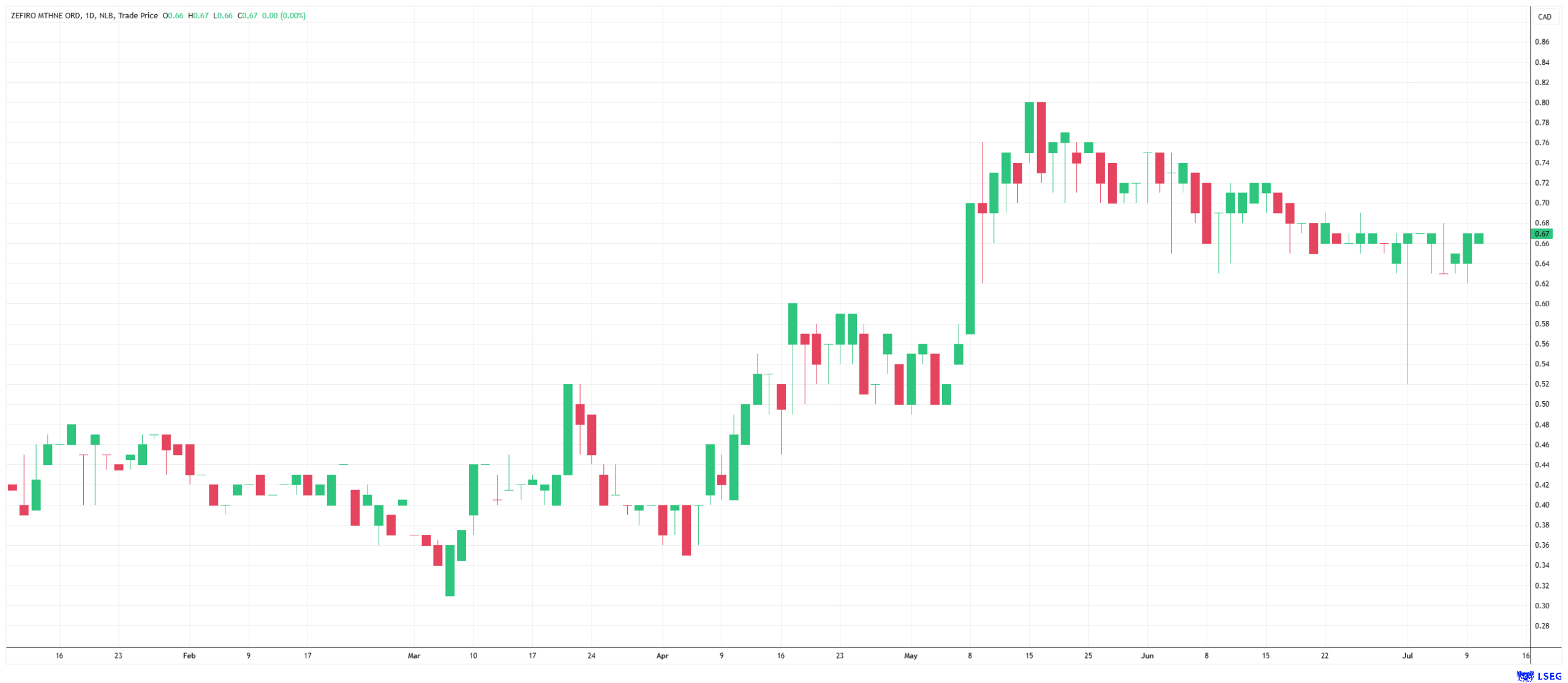
Zefiro shares are consolidating after a strong rally. For investors with a long-term perspective, this phase could present an attractive opportunity. The market for plugging orphaned oil and gas wells is worth billions of dollars, with the company estimating its potential at USD 400–600 billion. Zefiro brings many years of industry expertise and well-established relationships across the energy sector. This positioning is unusual within a niche market that could benefit from stricter environmental standards and growing demand for methane mitigation. The future regulatory framework in the EU remains uncertain, including whether methane-related climate certification will become a requirement for certain energy imports. Gas producers that tolerate methane leaks could face greater difficulties exporting to the EU starting in 2027. In that scenario, professional well-plugging and methane mitigation services could become increasingly valuable—both from an environmental perspective and as a commercial opportunity for companies such as Zefiro.
Watch YouTube videoConflict of interest
Pursuant to §85 of the German Securities Trading Act (WpHG), we point out that Apaton Finance GmbH as well as partners, authors or employees of Apaton Finance GmbH (hereinafter referred to as "Relevant Persons") may hold shares or other financial instruments of the aforementioned companies in the future or may bet on rising or falling prices and thus a conflict of interest may arise in the future. The Relevant Persons reserve the right to buy or sell shares or other financial instruments of the Company at any time (hereinafter each a "Transaction"). Transactions may, under certain circumstances, influence the respective price of the shares or other financial instruments of the Company.
In addition, Apaton Finance GmbH is active in the context of the preparation and publication of the reporting in paid contractual relationships.
For this reason, there is a concrete conflict of interest.
The above information on existing conflicts of interest applies to all types and forms of publication used by Apaton Finance GmbH for publications on companies.
Risk notice
Apaton Finance GmbH offers editors, agencies and companies the opportunity to publish commentaries, interviews, summaries, news and the like on news.financial. These contents are exclusively for the information of the readers and do not represent any call to action or recommendations, neither explicitly nor implicitly they are to be understood as an assurance of possible price developments. The contents do not replace individual expert investment advice and do not constitute an offer to sell the discussed share(s) or other financial instruments, nor an invitation to buy or sell such.
The content is expressly not a financial analysis, but a journalistic or advertising text. Readers or users who make investment decisions or carry out transactions on the basis of the information provided here do so entirely at their own risk. No contractual relationship is established between Apaton Finance GmbH and its readers or the users of its offers, as our information only refers to the company and not to the investment decision of the reader or user.
The acquisition of financial instruments involves high risks, which can lead to the total loss of the invested capital. The information published by Apaton Finance GmbH and its authors is based on careful research. Nevertheless, no liability is assumed for financial losses or a content-related guarantee for the topicality, correctness, appropriateness and completeness of the content provided here. Please also note our Terms of use.