February 23rd, 2026 | 07:05 CET
Reserves at their limit: Why Newmont and Barrick Mining depend on developers such as Lahontan Gold
The price of gold is hitting new highs, driven by global debt of over USD 340 trillion and the devaluation of fiat currencies. Analysts at JPMorgan forecast an average gold price of USD 5,055 per ounce by the end of 2026. In this market environment, gold mine operators are seeing revenue and EBITDA growth. Nevertheless, producers face a massive problem: they are extracting the precious metal faster than they can discover new deposits. The procurement of new resources in reliable jurisdictions has become a matter of operational survival for players in industry. We present a promising stock that aims to make great strides in 2026.
time to read: 4 minutes
|
Author:
Nico Popp
ISIN:
LAHONTAN GOLD CORP | CA50732M1014 , NEWMONT CORP. DL 1_60 | US6516391066 , BARRICK MINING CORPORATION | CA06849F1080
Table of contents:
Author

Nico Popp
At home in Southern Germany, the passionate stock exchange expert has been accompanying the capital markets for about twenty years. With a soft spot for smaller companies, he is constantly on the lookout for exciting investment stories.
Tag cloud
Shares cloud
Newmont and Barrick must follow suit
Industry leaders such as Newmont and Barrick Mining are focusing on a Tier 1 strategy that requires mines with a minimum life of ten years. Newmont has generated approximately USD 4.5 billion in net proceeds through the sale of non-core assets through early 2026. Despite adjusted earnings of USD 2.52 per share in the fourth quarter of 2025, the group's proven gold reserves fell to 118.2 million ounces at the end of the year, dramatically increasing the pressure to renew resources. Barrick Mining is focusing on the state of Nevada, investing in the exploration of the Fourmile project there and planning an IPO for its North American gold assets. To replenish their dwindling reserves and counteract Barrick's production costs of USD 1,637 per ounce, these producers are therefore dependent on acquiring junior companies.
The geology of Walker Lane and the Santa Fe Mine
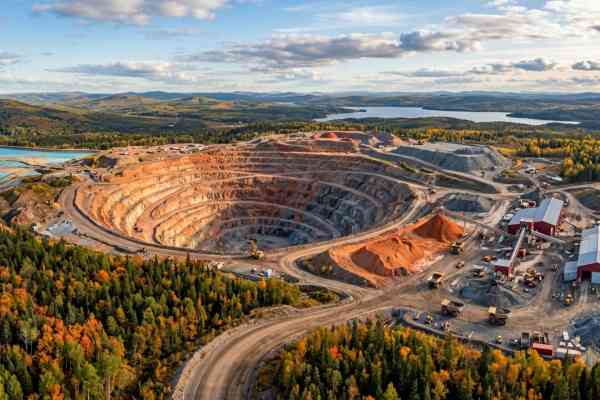
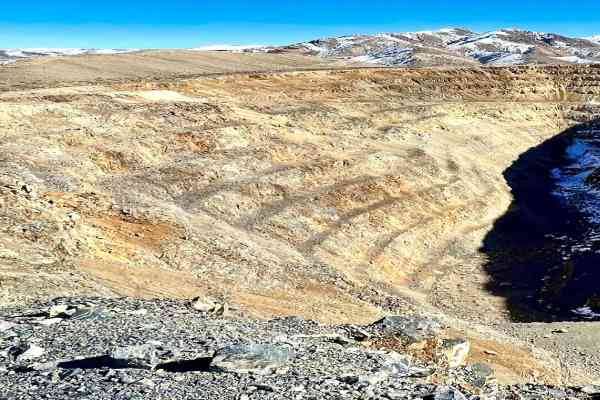
In this challenging environment, Lahontan Gold is positioning itself as a developer in the western United States. The company is focusing on Walker Lane in Nevada, a geological zone known for its gold and silver deposits. At the heart of the company's strategy is the reactivation of the Santa Fe Mine, which has produced over 340,000 ounces of gold and 700,000 ounces of silver in the past. Lahontan controls a 28.3 sq km land package in this area, which includes five separate deposits of a sediment-bound disseminated gold formation. This geology is dominated by the Luning Formation with Triassic limestone, with mineralization characterized by faults such as the Santa Fe Fault. The combination of historical production and known fault structures minimizes the geological risk for further expansion.
The current resource estimate from October 2024 underpins the economic fundamentals of the project in Nevada. In total, the estimate shows 1.95 million ounces of gold equivalent, of which approximately 1.5 million ounces are in the Measured & Indicated category. Particularly valuable for mining economics are the near-surface oxide resources, which are expected to enable cost-effective heap leaching. The Indicated category alone contains 640,000 ounces of oxide gold equivalent (gold and silver) with a grade of 0.68 grams per ton. Such oxide systems fit exactly the profile that large producers are looking for to reduce their own production costs and ramp up production quickly without complex processing facilities.
Exploration successes and low investment costs
In addition, Lahontan Gold is advancing exploration on satellite projects to expand the existing resource base. The West Santa Fe project is emerging as a key value driver based on recent drilling. In February 2026, the company released results showing a 41.2-meter section of 1.94 g/t gold equivalent from a depth of 15.2 meters in drill hole WSF25-03R. These results confirm a near-surface oxide system with the potential to host a million-ounce deposit and are intended to be integrated into the overall mine plan as a satellite operation in the future. The company is also reporting tangible progress at the York deposit, where drilling in December 2025 returned intercepts of 114.3 meters grading 0.32 g/t gold.
https://www.youtube.com/embed/pRq4WtH82Rc
The economic viability of the Santa Fe Mine is demonstrated by the preliminary economic assessment (PEA). Based on a base gold price of USD 2,705 per ounce, the study calculates an internal rate of return (IRR) of 34.2% after taxes, a net present value (NPV 5%) of USD 200 million, and a payback period of 2.9 years. A sensitivity analysis illustrates the leverage effect of the project: if the gold price rises to USD 4,000, which is roughly the current level, the after-tax IRR increases to 66.6% and the NPV to USD 471.6 million. An operational advantage of Lahontan Gold is its initial capital expenditure of just USD 135 million. The project is supported by historically established infrastructure, including its own substation, year-round accessible roads, and secured water rights.
Valuation and strategic acquisition potential
Lahontan Gold is currently undergoing the state approval process in the state of Nevada. In December 2025, the company received approval for its 12.2 sq km exploration plan, while basin studies for final mine operations are in full swing. To meet strict regulatory requirements, the company is investigating old heap leach pads using modern drilling techniques to recycle the remaining 100,000 to 150,000 ounces of gold. In addition, Lahontan is leveraging AI-driven geological modeling and satellite monitoring to reduce exploration costs by up to 80% and minimize surface disturbance. To broaden access to institutional capital, management led by CEO Kimberly Ann is preparing for a listing on the New York Stock Exchange in 2026.
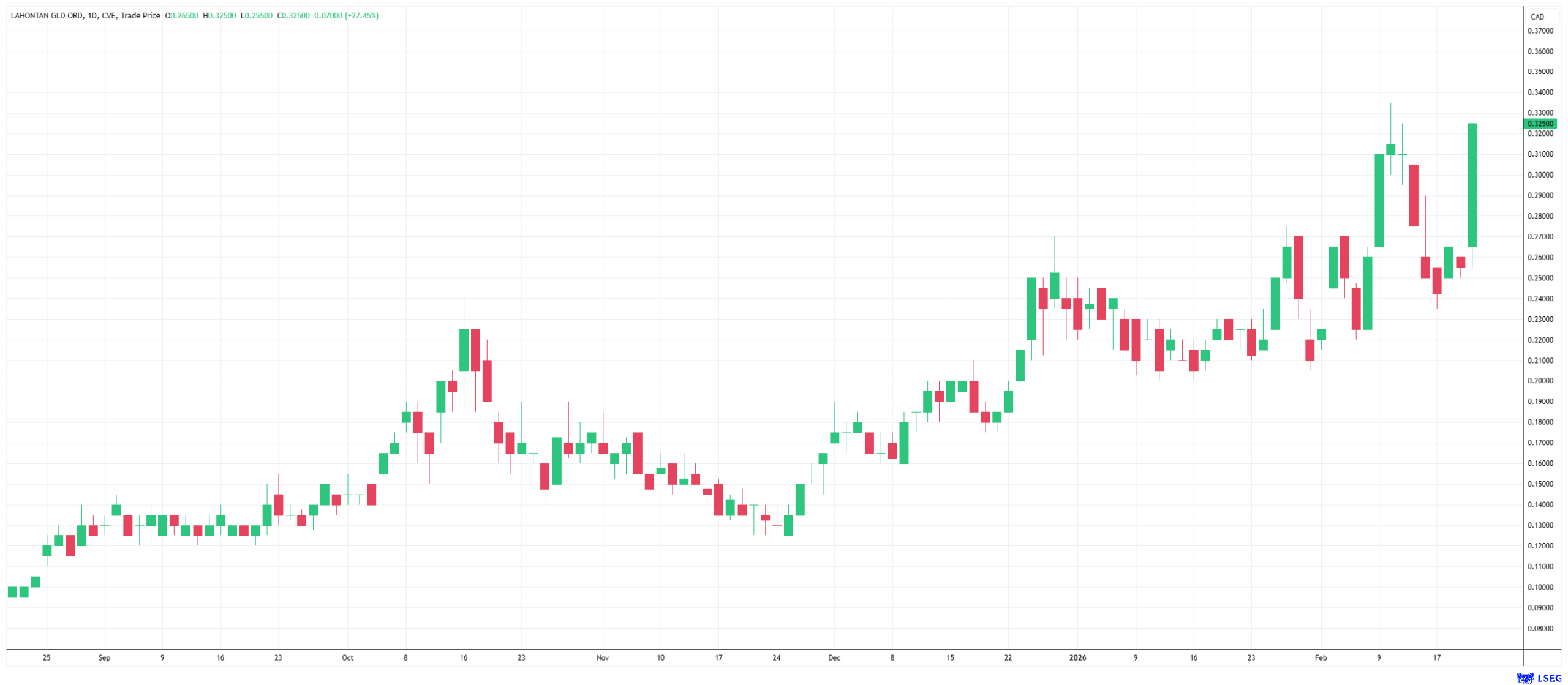
From a valuation perspective, Lahontan Gold is trading at a significant discount to the broader sector. In February 2026, the company had a market capitalization of CAD 89.9 million at a share price of CAD 0.26 and cash reserves of CAD 5.4 million. With an enterprise value of USD 33.23 per ounce of resource, the stock represents an extreme valuation discount relative to the current gold price. Analyst price forecasts indicate price targets of CAD 0.56 to CAD 0.58, implying upside potential of more than 100%. Through the combination of proven oxide resources in the Nevada jurisdiction, existing infrastructure, and the acute resource shortage among producers, Lahontan Gold positions itself as a logical takeover candidate in the ongoing consolidation process within industry.
Conflict of interest
Pursuant to §85 of the German Securities Trading Act (WpHG), we point out that Apaton Finance GmbH as well as partners, authors or employees of Apaton Finance GmbH (hereinafter referred to as "Relevant Persons") may hold shares or other financial instruments of the aforementioned companies in the future or may bet on rising or falling prices and thus a conflict of interest may arise in the future. The Relevant Persons reserve the right to buy or sell shares or other financial instruments of the Company at any time (hereinafter each a "Transaction"). Transactions may, under certain circumstances, influence the respective price of the shares or other financial instruments of the Company.
In addition, Apaton Finance GmbH is active in the context of the preparation and publication of the reporting in paid contractual relationships.
For this reason, there is a concrete conflict of interest.
The above information on existing conflicts of interest applies to all types and forms of publication used by Apaton Finance GmbH for publications on companies.
Risk notice
Apaton Finance GmbH offers editors, agencies and companies the opportunity to publish commentaries, interviews, summaries, news and the like on news.financial. These contents are exclusively for the information of the readers and do not represent any call to action or recommendations, neither explicitly nor implicitly they are to be understood as an assurance of possible price developments. The contents do not replace individual expert investment advice and do not constitute an offer to sell the discussed share(s) or other financial instruments, nor an invitation to buy or sell such.
The content is expressly not a financial analysis, but a journalistic or advertising text. Readers or users who make investment decisions or carry out transactions on the basis of the information provided here do so entirely at their own risk. No contractual relationship is established between Apaton Finance GmbH and its readers or the users of its offers, as our information only refers to the company and not to the investment decision of the reader or user.
The acquisition of financial instruments involves high risks, which can lead to the total loss of the invested capital. The information published by Apaton Finance GmbH and its authors is based on careful research. Nevertheless, no liability is assumed for financial losses or a content-related guarantee for the topicality, correctness, appropriateness and completeness of the content provided here. Please also note our Terms of use.