May 1st, 2026 | 07:10 CEST
RE ROYALTIES, M&G, AND EDEL UNDER THE MICROSCOPE: THREE DIVIDEND GEMS OFF THE BEATEN PATH
The headlines regarding the German coalition government's pension policy offer little cause for optimism: Whether pension levels will decline in the future or, according to the official line, rise more slowly, confidence in the statutory pension system is waning. In an environment where the traditional retirement pension can barely maintain the accustomed standard of living, one strategy is increasingly coming into focus for private investors: building passive income. Dividend stocks have established themselves as a "second salary" in this regard. This speaks in favour of companies like Edel, RE Royalties, and M&G. So far, hardly anyone has them on their radar, but they are definitely worth a look.
time to read: 7 minutes | Author: Jens Castner
ISIN: RE ROYALTIES LTD | CA75527Q1081 | TSXV: RE , OTCQX: RROYF , M&G PLC | GB00BKFB1C65 , EDEL SE+CO.KGAA INH O.N. | DE0005649503
Table of contents:
Author

Jens Castner
The Nuremberg native brings over three decades of capital markets experience, backed by a career shaped by deep market insight and a genuine passion for investing. His journey began in 1994 through an investment club among colleagues – a formative experience that sparked a lifelong dedication to identifying compelling investment opportunities.
Following senior editorial roles at Nürnberger Nachrichten, €uro am Sonntag, and €uro, he went on to serve as Editor-in-Chief of the renowned investor magazine Börse Online from 2014, where he played a key role in shaping high-quality financial journalism for a broad investor audience.
Tag cloud
Shares cloud
EDEL: THE SAME PROCEDURE AS EVERY YEAR
While savings and money market accounts typically lose value in real terms due to inflation, savvy investors are seeking securities that offer regular, high payouts. Companies with solid business models and reliable cash flows are particularly interesting in this regard. A nearly forgotten gem from the days of the New Market is the stock of Edel. At the time of its IPO in 1998, the company was still called Edel Music, but its business model has since evolved. The music publisher has transformed into a versatile media company with two additional pillars: books and entertainment. While the entertainment division primarily targets children, increasingly through digital offerings, the Edel publishing group serves all age groups: from the classic children's book "Pettersson & Findus" to fiction for adults, as well as self-help guides and popular science non-fiction. The printing subsidiary Optimal Media not only handles the reproduction of its own books but also produces magazines, brochures, and catalogues for clients. Synergies with the music division arise through the production of CDs, DVDs, and records—Edel is therefore also one of Europe's leading vinyl producers. This benefits the company's various music labels, such as Arising Empires, Brilliant Classics, and Kontor Records, which offer something for every taste, ranging from classical to rock, pop, jazz, techno, and punk to heavy metal.
Edel is not a growth miracle, but a rock-solid company. In the past fiscal year, revenue rose by 3.6% to EUR 267.8 million, and earnings per share climbed from EUR 0.52 to EUR 0.60. Both the market capitalization of around EUR 100 million and the price-to-earnings (P/E) ratio of 7.8 signal quality at a bargain price. The Hamburg-based group has been paying an annual (tax-free!) dividend of EUR 0.30 since 2022, which translates to a yield of nearly 6.4% at the current share price of EUR 4.70. The downside: The Hamburg-based company flies under the radar of institutional investors and tends to be rather reserved in its investor relations. The result is low trading volume amid a volatile sideways trend. Dividend hunters jump in every year in the months leading up to the dividend payout at the end of March, which regularly drives the price above the EUR 5.00 mark. After the annual general meeting, the stock typically drops by more than the ex-dividend discount, as investors lose interest. Typically, the price only turns upward again at the EUR 4.00 mark, which has not yet been reached this year. There is therefore no reason to rush into a position, especially since the dividend yield rises to 7.5% if the stock can be acquired for EUR 4.00.
RE ROYALTIES: ROYALTIES FROM RENEWABLE ENERGY
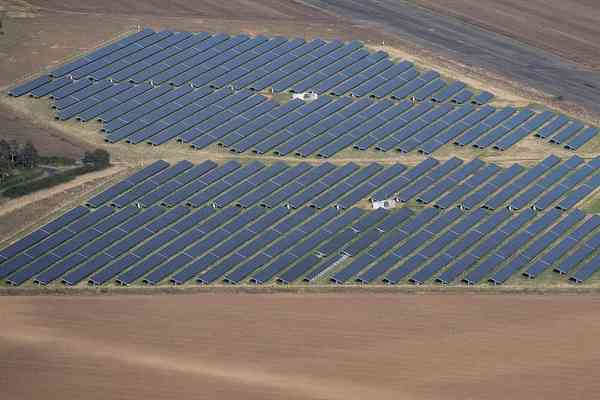
An even more volatile up-and-down trend is evident in the annual chart of RE Royalties. Over a twelve-month period, the price fluctuated between CAD 0.22 and CAD 0.48. Currently, the share price stands at CAD 0.36 (EUR 0.22 on German exchanges), which is almost exactly in the middle of this range. It is rather unlikely that the lower end will be reached again in the foreseeable future, as the management's latest strategy update from late March also mentioned a possible sale of the entire company to maximize shareholder value, given the company's market maturity. For dividend investors, a takeover would be a bitter loss, as RE Royalties, with a yield of 11%, still outshines Edel even after deducting the Canadian withholding tax (25%). The company, founded in Vancouver in 2016, has been paying a dividend for nearly 30 consecutive quarters. At CAD 0.01 per share, that may seem meager, but given the low share price, the annualized CAD 0.04 per share adds up to a double-digit yield.
The Canadian company's business model is unique: it transfers the concept of financing providers from the mining sector to the world of renewable energy. Typically, royalty companies provide capital to mining firms for land acquisition or mine development and, in return, receive the right to a percentage share of future production—so-called royalties, best translated as licensing fees or revenue streams tied to output. Instead of flowing into mines, RE Royalties' capital goes into wind and solar farms, hydropower, battery storage, or biogas plants. The advantage for project developers is that they do not have to take out bank loans or give up company shares. In return, RE Royalties receives a percentage share of the facilities' gross revenue over their entire lifespan, which often exceeds 20 years. Since short-term loans are usually granted in addition, interest income serves as a further revenue stream alongside the stable cash flows from the royalties. The fact that the stake is based on revenue rather than profit protects against rising operating costs and hedges the company against inflation: the higher the energy prices, the better.
Since its IPO in 2018, the company has built a portfolio of 120 projects across North and South America and Europe. Further growth is on the horizon. According to the company, the potential project pipeline is valued at over CAD 200 million. Given these figures, the market capitalization of just under CAD 16 million (around EUR 10 million) seems like a bad joke. No wonder founders Bernard Tan and Peter Leighton are dissatisfied and have commissioned the consulting firm PwC to explore various options—from partnerships and co-investments to the sale of the company. Even though a takeover and delisting would be almost a worst-case scenario for dividend investors, potential gains in share price could serve as adequate compensation, as the Tan/Leighton duo is certainly not ready to sell at the current price.
Peter Leighton, COO and Co-Founder, will provide further details on Wednesday, May 20, at the International Investment Forum (IIF). Click here to register.
M&G: RELIABILITY FOR 125 YEARS
High-dividend stocks are not limited to the small-cap segment. Even established large corporations sometimes shine with high payouts. However, to secure passive income for retirement, it is important not to rely on stocks that appear on dividend leaderboards solely because of one-time special distributions. This is because the share price typically falls on the so-called ex-date—the record date for the dividend payment—by the amount of the payout, and sometimes even more sharply, as the example of Edel shows. Instead, one should focus on companies with a long-term, transparent dividend history. Strangely enough, very few of these are found in the portfolios of German investors, especially when it comes to foreign stocks. British stocks, in particular, have seen little demand since Brexit. Here in Germany, investors tend to buy funds from M&G rather than the stock itself—even though the London-based asset manager has been a reliable performer for years. Since 2020, at least GBP 0.18 has been paid out annually, most recently even GBP 0.205. At the current price of GBP 3.00 (EUR 3.42), this corresponds to a yield of more than 6.8%. Management has declared a "progressive dividend policy," meaning the payout will remain stable and, if possible, increase slightly.
The analyst consensus, therefore, expects the dividend to rise toward GBP 0.22 over the next two years. Payments to shareholders are made semi-annually: about one-third as an interim dividend in October, two-thirds as a final dividend at the end of April. Since the UK does not levy withholding tax, there are no disadvantages compared to German dividend stocks such as Allianz or DWS. These are more popular here, but yields are below 5%. At least in the UK, M&G shares have been in demand again since May 2025, after previously fluctuating for years within a sideways range between GBP 1.80 and 2.50. Given the moderate P/E ratio of around 10, this rediscovery was only a matter of time.
The venerable financial group was founded in 1901 under the name Municipal & General Securities and launched Europe's first unit trust in 1931. In 1999, the company was acquired by the insurer Prudential and served as its investment arm for two decades. Since its spin-off in the fall of 2019, M&G has been publicly traded again and operates its own insurance division, which primarily offers life and annuity policies as well as the assumption of pension obligations. Insurance premiums and management fees from the fund and asset management business ensure predictable cash flows. If there is one drawback for analysts, it is the high payout ratio, which in weak years such as 2024 and 2025 can sometimes exceed 100% of net profit. The fact that the dividend did not have to be cut despite this speaks to the company's financial strength. However, a certain degree of market sensitivity cannot be ignored: a stock market crash that turns into a multi-year bear market could jeopardize the dividend policy. But this applies to virtually all stocks. High returns are never entirely risk-free.
THE RIGHT DIVIDEND FOR EVERY TASTE
M&G's stock is less volatile than the two small-cap stocks simply because of its market capitalization of more than GBP 7 billion. It is ideal as a building block for a dividend portfolio. Edel is a must-have for vinyl fans and, on top of that, a good addition to any retirement portfolio. However, since the share price has touched the EUR 4.00 mark several times in recent years following the dividend payout, there is no reason to rush into buying. RE Royalties promises the greatest price momentum—primarily due to takeover speculation. Should this happen, however, this source of dividends would dry up. On the other hand, a hefty takeover premium would not be the worst thing either.
Conflict of interest
Pursuant to §85 of the German Securities Trading Act (WpHG), we point out that Apaton Finance GmbH as well as partners, authors or employees of Apaton Finance GmbH (hereinafter referred to as "Relevant Persons") may hold shares or other financial instruments of the aforementioned companies in the future or may bet on rising or falling prices and thus a conflict of interest may arise in the future. The Relevant Persons reserve the right to buy or sell shares or other financial instruments of the Company at any time (hereinafter each a "Transaction"). Transactions may, under certain circumstances, influence the respective price of the shares or other financial instruments of the Company.
In addition, Apaton Finance GmbH is active in the context of the preparation and publication of the reporting in paid contractual relationships.
For this reason, there is a concrete conflict of interest.
The above information on existing conflicts of interest applies to all types and forms of publication used by Apaton Finance GmbH for publications on companies.
Risk notice
Apaton Finance GmbH offers editors, agencies and companies the opportunity to publish commentaries, interviews, summaries, news and the like on news.financial. These contents are exclusively for the information of the readers and do not represent any call to action or recommendations, neither explicitly nor implicitly they are to be understood as an assurance of possible price developments. The contents do not replace individual expert investment advice and do not constitute an offer to sell the discussed share(s) or other financial instruments, nor an invitation to buy or sell such.
The content is expressly not a financial analysis, but a journalistic or advertising text. Readers or users who make investment decisions or carry out transactions on the basis of the information provided here do so entirely at their own risk. No contractual relationship is established between Apaton Finance GmbH and its readers or the users of its offers, as our information only refers to the company and not to the investment decision of the reader or user.
The acquisition of financial instruments involves high risks, which can lead to the total loss of the invested capital. The information published by Apaton Finance GmbH and its authors is based on careful research. Nevertheless, no liability is assumed for financial losses or a content-related guarantee for the topicality, correctness, appropriateness and completeness of the content provided here. Please also note our Terms of use.