May 29th, 2026 | 09:10 CEST
Methane Shock in Energy Sector: Schlumberger & Montauk Renewables Under Regulatory Pressure – Zefiro Methane in Unique Position
The US energy sector is facing headwinds: The Inflation Reduction Act calls for imposing draconian fines on methane emissions. Although Donald Trump has suspended the law and is relying on government incentives, this does not change the fact that the industry stands to benefit from the immediate remediation of abandoned drilling sites. At the same time, the European Methane Regulation will extend its strict requirements to all fossil fuel imports into the EU starting in January 2027. American producers must therefore plug methane leaks directly at the source for several reasons. A billion-dollar market is emerging. We explain why Zefiro Methane has positioned itself as a unique beneficiary.
time to read: 3 minutes | Author: Nico Popp
ISIN: ZEFIRO METHANE CORP | CA98926D1069 | NEO: ZEFI , SCHLUMBERGER DL-_01 | AN8068571086 , MONTAUK RENEWABLES INC | US61218C1036 | NASDAQ: MNTK
Table of contents:
Author

Nico Popp
At home in Southern Germany, the passionate stock exchange expert has been accompanying the capital markets for about twenty years. With a soft spot for smaller companies, he is constantly on the lookout for exciting investment stories.
Tag cloud
Shares cloud
Schlumberger: Focus on Production and Major Acquisitions
Schlumberger, the world's largest oilfield services provider, operates primarily in hydrocarbon exploration and leaves the complex business of environmental remediation to specialized service providers. The Houston-based company, with roots in France, is increasingly shifting its focus to high-margin digital solutions and technologies for reducing emissions. Through strategic acquisitions such as the takeover of chemical specialist ChampionX in the third quarter of 2025, Schlumberger has become a blueprint for consolidation in the mature upstream sector. In the first quarter of 2026, the group generated revenue of USD 8.72 billion and free cash flow from operations of USD 487 million. Gross debt is high at USD 11.63 billion. The stock is solid but not a high-flyer.
Montauk Renewables: Volatility in the Biogas Business
As a specialized utility, Montauk Renewables focuses on the capture and utilization of biogenic landfill gas and agricultural waste. The business model is based on converting harmful methane into renewable natural gas and renewable electricity. However, the revenue structure depends heavily on government-subsidized environmental certificates such as Renewable Identification Numbers. Despite stable production, net income plummeted by 82% to USD 1.75 million in fiscal year 2025 as average realized certificate prices collapsed. In addition, maintenance costs for the facilities rose significantly, which ruthlessly exposes the biogas business's vulnerability to price volatility. Such a scenario offers shareholders few opportunities—when a business model is under this much pressure, companies typically must first undergo a deep restructuring phase. Investors can find better alternatives in the broader cleantech sector.
Zefiro Methane: Huge Growth Through Reduced Methane Emissions
Zefiro Methane occupies the highly attractive niche of direct methane abatement at abandoned and orphaned oil and gas wells. Through its subsidiary Plants & Goodwin, the company combines well plugging with state-of-the-art measurement technology. Zefiro is thus converting contaminated sites into cash at record speed. In the first nine months of fiscal year 2026, the company generated record revenue of USD 33.2 million and more than doubled its gross profit to USD 10.7 million. A key driver of this growth is precision monitoring services carried out as part of state emissions reduction programs in West Virginia.
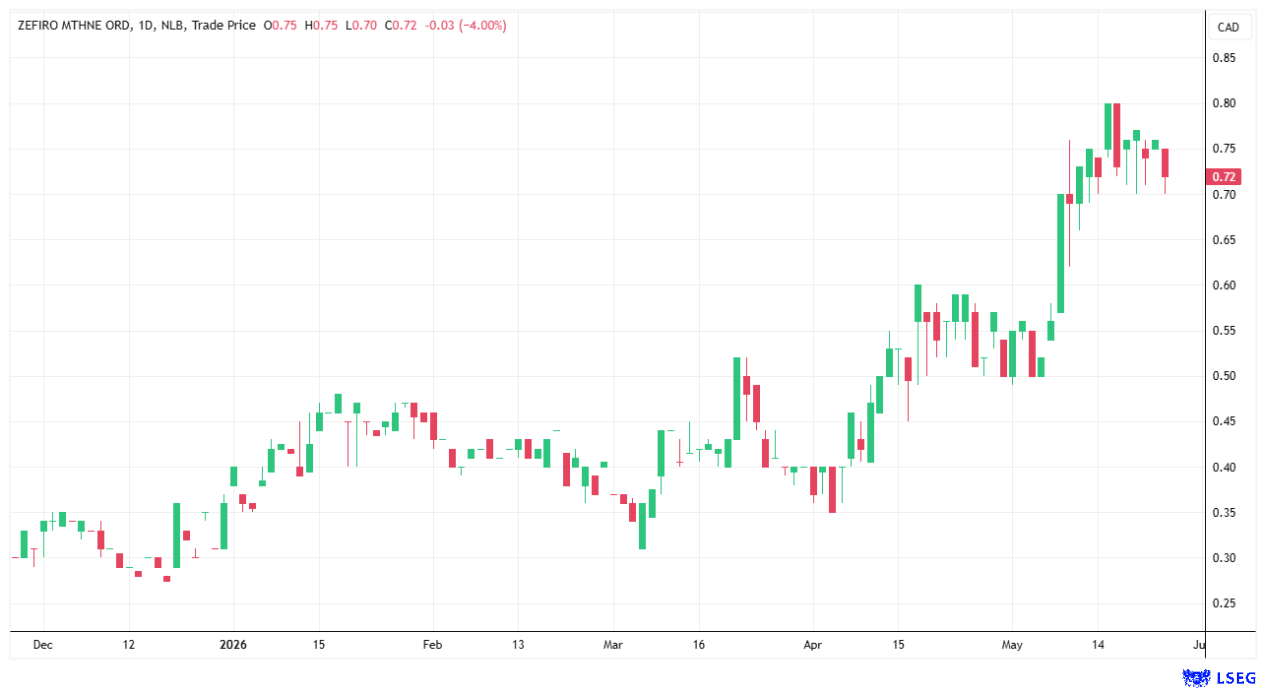
To secure long-term access to the lucrative European market, US energy companies must adapt their entire supply chains to the European Union's new import regulations. While these are set to take effect in 2027, they may still be watered down. Zefiro Methane's business model offers the industry an immediate, certified solution regardless of the outcome of the legislative process. Companies like Zefiro, which permanently plug fugitive leaks from abandoned wells on-site and monetize captured greenhouse gases as carbon offsets certified under the strict American Carbon Registry (ACR) standard, are occupying a highly promising niche. This verifiable reduction at the source enables US producers to reduce their carbon footprint and meet the strict regulatory requirements for transatlantic LNG exports without curtailing their core production. At the same time, they mitigate the risk of fines in the US and help the environment. These three arguments are the primary drivers for Zefiro Methane's stock.
Expansion and Milestones: Zefiro is Making Progress
To further drive its own scaling efforts, Zefiro plans to mobilize a second and third drilling rig starting in June exclusively for the decommissioning campaign of a leading US natural gas producer in New York, Pennsylvania, Kentucky, and West Virginia. The company has already been operating there with one rig since 2017. This expansion is supported by a successfully completed private placement of CAD 4.5 million in April, which strengthened Zefiro's balance sheet. Regulatory changes in North America and the EU's strict import requirements make Zefiro Methane's offering indispensable. The research firm Highwood Emissions emphasizes that, according to the Inflation Reduction Act, which is merely suspended regarding emissions from the oil industry, in the long term, any emissions from inactive facilities in the US can still be subject to penalties, which is likely to drive demand for permanent plugging beyond Donald Trump's term in office. With a market capitalization of only about CAD 77 million, Zefiro offers significant upside potential for speculative investors looking to gain exposure to the emerging methane reduction market.
Watch YouTube videoConflict of interest
Pursuant to §85 of the German Securities Trading Act (WpHG), we point out that Apaton Finance GmbH as well as partners, authors or employees of Apaton Finance GmbH (hereinafter referred to as "Relevant Persons") may hold shares or other financial instruments of the aforementioned companies in the future or may bet on rising or falling prices and thus a conflict of interest may arise in the future. The Relevant Persons reserve the right to buy or sell shares or other financial instruments of the Company at any time (hereinafter each a "Transaction"). Transactions may, under certain circumstances, influence the respective price of the shares or other financial instruments of the Company.
In addition, Apaton Finance GmbH is active in the context of the preparation and publication of the reporting in paid contractual relationships.
For this reason, there is a concrete conflict of interest.
The above information on existing conflicts of interest applies to all types and forms of publication used by Apaton Finance GmbH for publications on companies.
Risk notice
Apaton Finance GmbH offers editors, agencies and companies the opportunity to publish commentaries, interviews, summaries, news and the like on news.financial. These contents are exclusively for the information of the readers and do not represent any call to action or recommendations, neither explicitly nor implicitly they are to be understood as an assurance of possible price developments. The contents do not replace individual expert investment advice and do not constitute an offer to sell the discussed share(s) or other financial instruments, nor an invitation to buy or sell such.
The content is expressly not a financial analysis, but a journalistic or advertising text. Readers or users who make investment decisions or carry out transactions on the basis of the information provided here do so entirely at their own risk. No contractual relationship is established between Apaton Finance GmbH and its readers or the users of its offers, as our information only refers to the company and not to the investment decision of the reader or user.
The acquisition of financial instruments involves high risks, which can lead to the total loss of the invested capital. The information published by Apaton Finance GmbH and its authors is based on careful research. Nevertheless, no liability is assumed for financial losses or a content-related guarantee for the topicality, correctness, appropriateness and completeness of the content provided here. Please also note our Terms of use.