March 13th, 2026 | 07:15 CET
Investing in the hydrogen revolution: Solid returns with Pure One, Nel, and Ballard Power
The hydrogen economy is coming of age. After years of political debate and countless industry prototypes and visions, the sector is now entering a phase of industrial maturity. Industry experts describe the current year as decisive, as projects with solid economics are now separating themselves from purely politically driven initiatives. While Norwegian pioneer Nel is building the infrastructure for green hydrogen at gigawatt scale through mass production of highly efficient electrolysers, Ballard Power Systems is delivering solutions for emission-free heavy-duty and passenger transport with proven fuel cell modules. The Australian company Pure One Corporation covers the entire value chain. With its "end-to-end ecosystem," the company bridges the gap between production and application, enabling seamless adoption of CO2-free logistics solutions. Investors are in an exciting phase in which hydrogen is being reevaluated as an energy source for industry.
time to read: 3 minutes | Author: Nico Popp
ISIN: PURE ONE CORPORATION LIMITED | AU0000442865 | ASX: P1E , NEL ASA NK-_20 | NO0010081235 , BALLARD PWR SYS | CA0585861085
Table of contents:
Author

Nico Popp
At home in Southern Germany, the passionate stock exchange expert has been accompanying the capital markets for about twenty years. With a soft spot for smaller companies, he is constantly on the lookout for exciting investment stories.
Tag cloud
Shares cloud
Nel ASA supplies gigawatt-scale infrastructure
Through consistent scaling, the Norwegian group Nel ASA has positioned itself as an indispensable partner for the basic materials industry. The company offers the technical infrastructure that is urgently needed to produce green hydrogen economically. Following a phase of strategic restructuring last year, which also resulted in write-downs of around NOK 800 million for older generations of technology, Nel is now focusing fully on its most promising innovations. The measures are already taking effect: the cash burn rate fell by a whopping 41%. A key driver for future growth is the planned commercial launch of the next generation of pressure-resistant alkaline electrolysers in May this year. Prototype tests have shown that this new platform reduces space requirements by up to 80% and lowers overall system costs by 40 to 60%. This innovation enables Nel to compete on price with Asian competitors and efficiently implement large-scale projects on a gigawatt scale. This scaling is flanked by exceptionally strong order intake in the PEM electrolysis segment and prestigious partnerships with global heavyweights such as Samsung E&A.
Ballard Power scores with commercial maturity
While Nel provides the infrastructure for generation, Ballard Power Systems is driving the application on the road. The Canadian specialist is focusing with great success on zero-emission heavy-duty and passenger transport. A historic milestone shows how far this technology has already matured in practice. Ballard recently secured a major order from its long-standing partner New Flyer for the delivery of 500 fuel cell engines with a total capacity of 50 megawatts. These state-of-the-art drive systems are used in hydrogen-powered buses, which are already serving as full-fledged replacements for conventional diesel buses in a wide variety of climates. Ballard-powered buses have a documented availability of 98% worldwide and have collectively traveled over 250 million kilometers on the road. The current record order underscores the commercial maturity of Ballard's products and secures revenue streams for the company for years to come. The pure hardware business is increasingly being complemented by the "Ballard Fleet Services" service platform, through which the company generates lucrative, recurring revenue from maintenance, training, and digital fleet monitoring.
Pure One as a holistic integrator for small and medium-sized businesses
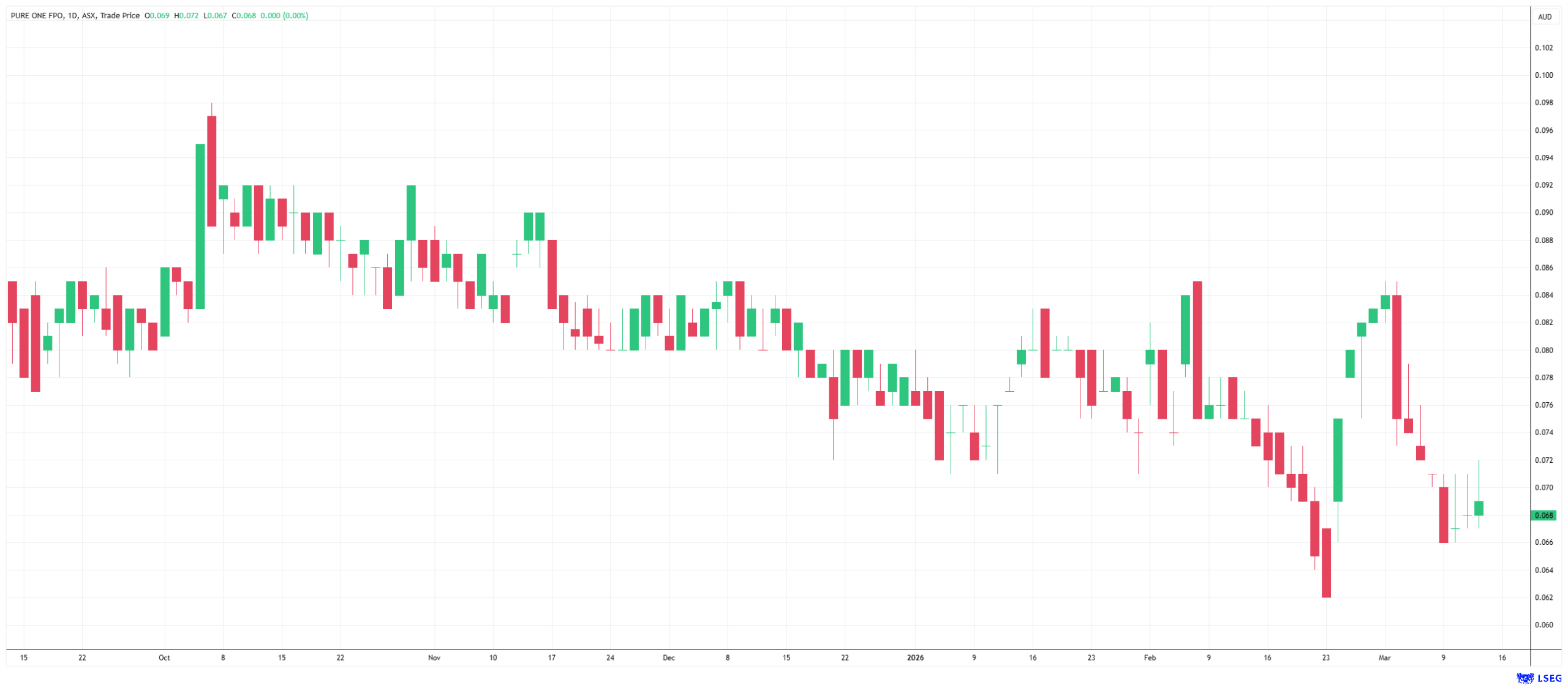
Pure One Corporation has carved out a lucrative niche for itself among the well-known industry giants. As a strategic integrator, the company pursues a holistic "end-to-end approach" that is particularly attractive to commercial fleet operators and small and medium-sized businesses. Instead of just supplying customers with individual components, Pure One bridges the gap between hydrogen production and end use, offering the complete ecosystem from a single source. Through a 70% stake in HDrive International, the company offers a wide range of hydrogen-powered commercial vehicles such as trucks, buses, and garbage trucks. The group solves the problem of the lack of refueling infrastructure with modular "micro-hubs" that produce green hydrogen via electrolysis directly at the customers' depots, thereby eliminating expensive transport routes. In addition, the integrator relies on smart methane pyrolysis, which produces graphene or graphite as a valuable solid by-product for battery production and the electronics industry, significantly reducing the net production costs for hydrogen. A current test run with PepsiCo in Australia and initial orders for minibuses from Vietnam demonstrate the successful internationalization of this robust business model.
Attractive growth potential attracts investors
For investors, the current consolidation phase in the markets offers opportunities. The sector is moving beyond regulatory hype and is now delivering economically viable solutions. Industry pioneers Nel ASA and Ballard Power Systems are considered obvious core investments, but are likely to need additional capital to support ongoing growth initiatives. For more speculative investors, Pure One Corporation currently offers greater growth potential. With a 155% jump in revenue to AUD 4.55 million in the past fiscal year and a completely debt-free balance sheet, the company clearly stands out from its established hydrogen peers. The planned spin-off of the conventional gas business into Eastern Gas Corporation also sharpens the company's profile as a sought-after pure cleantech stock. Given that the "end-to-end ecosystem" offers direct access to the highly profitable SME market, investors will find Pure One a promising stock in light of the conditions outlined above.
Conflict of interest
Pursuant to §85 of the German Securities Trading Act (WpHG), we point out that Apaton Finance GmbH as well as partners, authors or employees of Apaton Finance GmbH (hereinafter referred to as "Relevant Persons") may hold shares or other financial instruments of the aforementioned companies in the future or may bet on rising or falling prices and thus a conflict of interest may arise in the future. The Relevant Persons reserve the right to buy or sell shares or other financial instruments of the Company at any time (hereinafter each a "Transaction"). Transactions may, under certain circumstances, influence the respective price of the shares or other financial instruments of the Company.
In addition, Apaton Finance GmbH is active in the context of the preparation and publication of the reporting in paid contractual relationships.
For this reason, there is a concrete conflict of interest.
The above information on existing conflicts of interest applies to all types and forms of publication used by Apaton Finance GmbH for publications on companies.
Risk notice
Apaton Finance GmbH offers editors, agencies and companies the opportunity to publish commentaries, interviews, summaries, news and the like on news.financial. These contents are exclusively for the information of the readers and do not represent any call to action or recommendations, neither explicitly nor implicitly they are to be understood as an assurance of possible price developments. The contents do not replace individual expert investment advice and do not constitute an offer to sell the discussed share(s) or other financial instruments, nor an invitation to buy or sell such.
The content is expressly not a financial analysis, but a journalistic or advertising text. Readers or users who make investment decisions or carry out transactions on the basis of the information provided here do so entirely at their own risk. No contractual relationship is established between Apaton Finance GmbH and its readers or the users of its offers, as our information only refers to the company and not to the investment decision of the reader or user.
The acquisition of financial instruments involves high risks, which can lead to the total loss of the invested capital. The information published by Apaton Finance GmbH and its authors is based on careful research. Nevertheless, no liability is assumed for financial losses or a content-related guarantee for the topicality, correctness, appropriateness and completeness of the content provided here. Please also note our Terms of use.