June 4th, 2026 | 07:30 CEST
GOLD, BYTES, AND COCOA: PROFITING FROM WEST AFRICA'S BOOM WITH DESERT GOLD, ORANGE, AND BARRY CALLEBAUT
With economic growth that consistently outpaces the global average, a healthy age pyramid, and soil that literally consists of gold and silver, West Africa is no longer an insider's secret. Four teams at the World Cup in North America—Ghana, Senegal, Côte d'Ivoire, and Cape Verde—are the sporting symbol of a region confidently stepping onto the world stage. Yet this emerging economic region is not represented in most investors' portfolios. The potential for returns is obvious: the gold belt of the Senegal-Mali Shear Zone is attracting world-class corporations, mobile money platforms are replacing entire banking systems, and Côte d'Ivoire supplies around 40% of the world's cocoa. The shares of Desert Gold Ventures, Orange, and Barry Callebaut are therefore worth a look.
time to read: 6 minutes | Author: Jens Castner
ISIN: DESERT GOLD VENTURES | CA25039N4084 | TSXV: DAU , OTCQB: DAUGF , ORANGE INH. EO 4 | FR0000133308 , BARRY CALLEBAUT NA SF0_02 | CH0009002962
Table of contents:
Author
Jens Castner
The Nuremberg native brings over three decades of capital markets experience, backed by a career shaped by deep market insight and a genuine passion for investing. His journey began in 1994 through an investment club among colleagues – a formative experience that sparked a lifelong dedication to identifying compelling investment opportunities.
Following senior editorial roles at Nürnberger Nachrichten, €uro am Sonntag, and €uro, he went on to serve as Editor-in-Chief of the renowned investor magazine Börse Online from 2014, where he played a key role in shaping high-quality financial journalism for a broad investor audience.
Tag cloud
Shares cloud
THE STRATEGY: YOUTH, DYNAMISM, HUNGER FOR SUCCESS
West Africa is poised to become a new global power. With Ghana, Senegal, Côte d'Ivoire, and debutant Cape Verde, four teams from the region have qualified for the 2026 World Cup in North America. While attention in Germany is primarily focused on the group stage match between Germany and Côte d'Ivoire on June 20, the Senegal vs. France match on June 16 promises to be politically explosive—and not just because of the colonial past. Many of Senegal's national team players were born in France and hold dual citizenship. When they choose their parents' country over the Équipe Tricolore, this is often debated in the media as a sporting declaration of independence. When the massive underdog defeated the reigning world champions 1-0 in the opening match of the 2002 World Cup, there was talk in Paris of a sporting earthquake, while the sensation was celebrated in Dakar like a national holiday.
Off the field, too, a profound economic transformation is taking place. Driven by one of the youngest populations in the world and rapid urbanization rates, countries like Côte d'Ivoire, Senegal, and Mali are emerging as dynamic engines of growth. It is no coincidence that French companies remain heavily involved in the region long after the colonial era—primarily to prevent China from dominating the field. The giant empire's appetite for raw materials remains unbroken; semi-state-owned mining conglomerates like Zijin Mining—worth over USD 100 billion—underscore Beijing's claim to leadership, particularly in Mali and Côte d'Ivoire.
THE OFFENSIVE: GOLD BELT, MINERAL RESOURCES, PRODUCTION LAUNCH
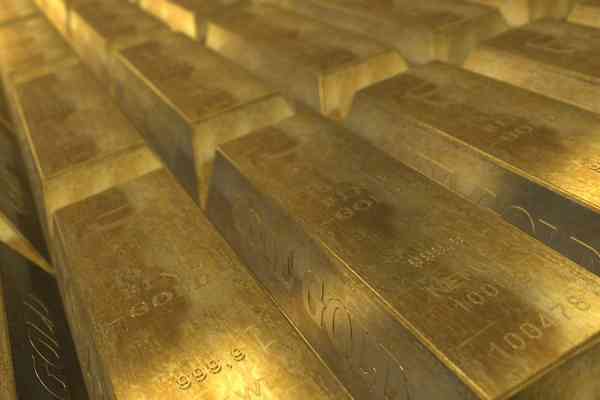
Canada, co-host of the World Cup, is fighting back with everything it has. Industry giants B2Gold and Barrick Mining are also mining for precious metals in West Africa, but smaller companies like Desert Gold Ventures want a piece of the pie as well. With 440 km², the junior explorer controls the largest contiguous land package in the Senegal-Mali Shear Zone (SMSZ), one of Africa's most productive gold regions. In addition, the management team led by CEO Jared Scharf has secured mining rights in other areas of Mali as well as the Tiegba Gold project in Côte d'Ivoire, which offers significant potential for resource expansion. Valued at just around CAD 46 million, this microcap is on the verge of making the strategically crucial leap from a capital-intensive explorer to a profitable producer. At the heart of the investment story is the 100% wholly-owned SMSZ flagship project in western Mali, which is directly adjacent to a high-grade gold belt in the vicinity of world-class mines operated by Barrick and B2Gold. The current resource base amounts to a substantial 336,800 ounces of gold in the "Measured and Indicated" category, as well as an additional 879,900 ounces in the "Inferred" category. A preliminary economic assessment (PEA) presented in November 2025 underscores the enormous potential. Assuming a gold price of USD 4,070 per ounce, the project has a net present value (NPV) after taxes of USD 126 million and an internal rate of return (IRR) of 101%, with projected total mining costs of a moderate USD 1,137 per ounce. In reality, however, the precious metal is currently trading at just under USD 4,500 per ounce, which should make the project even more profitable. With an estimated annual production of 11,400 ounces, the revenue potential is USD 45-50 million.
The final countdown is already underway, with management setting July 19, 2026, as the commissioning date for the first gravity-based processing plant at the Barani East site. On-site earthworks are largely complete, and the modular plant—which has been successfully accepted in China—is already en route by sea to the port of Dakar, from where it will be transported to the mine later this June. For speculative investors, the stock offers a highly efficient bet on the upcoming operational turning point, thanks to the extremely low capital requirement of just USD 20.4 million for the first production phase. No wonder the share price remains stable at around CAD 0.13 despite the ongoing correction in the gold price and the high volatility generally associated with penny stocks. In Germany, the share is currently trading between EUR 0.08 and 0.09.
THE DEFENSIVE PLAY: STABILITY, SCALE, DIVIDEND
In stark contrast to the small mining explorer, the nearly EUR 50 billion telecommunications group Orange (formerly France Télécom) provides the perfect defensive counterbalance for a balanced West African portfolio. Listed on France's leading index, the CAC 40, the company generates revenue every second from the daily digital infrastructure used by the African population. For investors wary of the political risks associated with investments in Africa, Orange offers a decisive advantage: its stable core European business. The dynamism of African markets adds a potential boost to returns.
The African continent—with Côte d'Ivoire as its primary profit driver—has long been the group's most important growth engine. The Africa and Middle East region achieved revenue growth of more than 10% in 2025, thereby significantly driving the group's performance. Orange operates far beyond the traditional mobile and fibre-optic business and successfully covers the entire digital value chain. The real lever for investors is the in-house fintech platform Orange Money, which comprehensively replaces the (largely absent) traditional banking system in West Africa. Whether it is money transfers, supermarket payments, or small loans—Orange proves that West Africa's economic rise can translate into stable, predictable returns. For value-oriented investors, the stock serves as a rock in the storm. Additionally, Orange shines with an attractive dividend yield of 4.5%, supported by growing operating cash flow.
THE MIDFIELD: COCOA, HEADWINDS, TURNAROUND
Another example of an established European conglomerate with strong business ties to West Africa is Barry Callebaut, the world's leading manufacturer of high-quality chocolate and cocoa products. While Desert Gold and Orange have recently enjoyed a strong run on the stock market, the Swiss company, however, looks back on a painful slump. Barry Callebaut operates massive processing facilities in Côte d'Ivoire—the global epicentre of cocoa cultivation—through its subsidiary SACO and manages industrial B2B supply to food giants such as Nestlé, Unilever, and Mondelez from there. However, it was precisely these deep roots in the African agricultural value chain that recently proved to be the group's undoing. Extreme weather conditions in West Africa caused cocoa prices to skyrocket at times to over USD 12,000 per ton, which drove production costs up massively and led to noticeable delays in customer orders. As a result, revenue fell by 7.3% to CHF 6.75 billion in the first half of the current 2025/26 fiscal year. Although profit rose by 191.7% compared to the extremely weak prior-year period, which was weighed down by one-time charges, it remained at a rather modest level of CHF 89.1 million—relative to a market capitalization of around CHF 6.5 billion.
To boost margins again, CEO Hein Schumacher—who has been in office since January 2026 and previously led Unilever—has unveiled the "Focus for Growth" strategic plan. This plan focuses activities on ten particularly important markets and five strategic growth areas. In addition, the Dutch CEO is placing greater emphasis on premium segments such as the gourmet business and cocoa powder, which offer higher value-added. In the medium term, he aims for annual sales growth of 2 to 4% and EBIT growth in the mid-to-high single-digit percentage range. For the current fiscal year, however, the group initially expects a sales decline of between 1 and 3%. A return to positive growth rates is not expected until the 2026/27 fiscal year, beginning September 1. This makes the stock an interesting turnaround play.
THE LINEUP: DESERT GOLD, BARRY CALLEBAUT, ORANGE
Anyone looking to profit from West Africa's rise needs a delicate touch. Political risks, fluctuating commodity prices, and exchange rates are real factors that can quickly punish a naive bet on the region. The alternative approach is a cleverly diversified combination of three fundamentally different companies from stable countries of origin with strong West African operations. The highest opportunities and risks are undoubtedly offered by junior explorer Desert Gold Ventures, which is on the verge of becoming a producing company. "Brown gold" is brought into the portfolio by Swiss cocoa giant Barry Callebaut, which entices with pricing power and turnaround potential, though it currently appears somewhat battered from a technical chart perspective. Orange provides the defensive component. Its stable European core business is spiced with a healthy dose of growth potential in one of the world's most dynamic economic regions.
Conflict of interest
Pursuant to §85 of the German Securities Trading Act (WpHG), we point out that Apaton Finance GmbH as well as partners, authors or employees of Apaton Finance GmbH (hereinafter referred to as "Relevant Persons") may hold shares or other financial instruments of the aforementioned companies in the future or may bet on rising or falling prices and thus a conflict of interest may arise in the future. The Relevant Persons reserve the right to buy or sell shares or other financial instruments of the Company at any time (hereinafter each a "Transaction"). Transactions may, under certain circumstances, influence the respective price of the shares or other financial instruments of the Company.
In addition, Apaton Finance GmbH is active in the context of the preparation and publication of the reporting in paid contractual relationships.
For this reason, there is a concrete conflict of interest.
The above information on existing conflicts of interest applies to all types and forms of publication used by Apaton Finance GmbH for publications on companies.
Risk notice
Apaton Finance GmbH offers editors, agencies and companies the opportunity to publish commentaries, interviews, summaries, news and the like on news.financial. These contents are exclusively for the information of the readers and do not represent any call to action or recommendations, neither explicitly nor implicitly they are to be understood as an assurance of possible price developments. The contents do not replace individual expert investment advice and do not constitute an offer to sell the discussed share(s) or other financial instruments, nor an invitation to buy or sell such.
The content is expressly not a financial analysis, but a journalistic or advertising text. Readers or users who make investment decisions or carry out transactions on the basis of the information provided here do so entirely at their own risk. No contractual relationship is established between Apaton Finance GmbH and its readers or the users of its offers, as our information only refers to the company and not to the investment decision of the reader or user.
The acquisition of financial instruments involves high risks, which can lead to the total loss of the invested capital. The information published by Apaton Finance GmbH and its authors is based on careful research. Nevertheless, no liability is assumed for financial losses or a content-related guarantee for the topicality, correctness, appropriateness and completeness of the content provided here. Please also note our Terms of use.