August 4th, 2026 | 07:25 CEST
Commodity Companies Poised for Growth: BHP, Rio Tinto, Zefiro Methane
Megatrends such as the energy transition and the expansion of AI data centers continue to dominate stock market activity. This transformation requires massive investments in critical commodities and infrastructure. The following report analyzes three promising companies that are addressing precisely these structural bottlenecks. Whether as a global provider of essential metals with a solid dividend or as a specialized problem-solver in the modernization of old and construction of new energy grids—these stocks offer investors strategic entry opportunities into rapidly growing billion-dollar markets. Read now to find out which stocks promise long-term potential.
time to read: 8 minutes | Author: Stefan Bode
ISIN: ZEFIRO METHANE CORP | CA98926D1069 | NEO: ZEFI , BHP GROUP LTD. DL -_50 | AU000000BHP4 , RIO TINTO PLC LS-_10 | GB0007188757
Table of contents:
Author

Stefan Bode
A native of the Eichsfeld region in the heart of Germany, he has more than 30 years of experience in the capital markets, with broad expertise spanning financial markets, history, and geopolitics. He founded his own business more than 20 years ago while still a student and today advises clients, foundations, and asset managers across four continents.
Tag cloud
Shares cloud
Rio Tinto Shares on the Rise: The Mining Giant Is Expanding and Becoming More Profitable
Rio Tinto shares (WKN: 868009 | ISIN: US7672041008 | Ticker: RIO) are currently one of the stronger large-cap commodity stocks. Since the start of the year, it has gained about 19%; over a 52-week period, it has risen by as much as 62%. For context, its market capitalization stands at approximately USD 164 billion. Following the release of its half-year results on July 28, the share price rose by more than 6% compared to the previous closing price. The stock is also trading above its 200-day moving average, which stands at approximately USD 68.20.
Rio Tinto is one of the world's largest mining companies. The company primarily mines iron ore, copper, and bauxite, which it processes into aluminum, among other products. Through its acquisition of Arcadium Lithium, which was completed in 2025, the group has also become a major lithium supplier. Iron ore is primarily needed for steel production, while copper and aluminum are indispensable for power grids, data centers, vehicles, and the energy transition. Lithium, in turn, is a key raw material for batteries.
In the first half of 2026, revenue rose by 15% to USD 31.03 billion. Adjusted operating earnings before interest, taxes, and depreciation increased by 28% to USD 14.83 billion. Net income even rose by 47% to USD 6.66 billion. Cash flow showed particularly strong growth. Cash flow from operating activities totaled USD 9.17 billion, and free cash flow jumped 75% to USD 3.83 billion. As a result, the interim dividend is increasing by 43% to USD 2.11 per share. According to the company, a group-wide productivity program has already yielded improvements of USD 870 million. Net debt declined slightly to USD 14.06 billion.
Copper was the key growth driver. Operating profit in this segment climbed 84% to USD 5.71 billion. Higher copper and gold prices, as well as the expansion of the Oyu Tolgoi mine in Mongolia, provided a boost. Copper, aluminum, and lithium together now account for more than half of the Group's operating profit. This makes Rio Tinto somewhat less dependent on its traditional iron ore business.
Operations there also performed well. Iron ore production in Australia's Pilbara region rose by 6% and reached its highest half-year figure since 2018.
Nevertheless, operating profit for the entire iron ore segment fell slightly by 1%. Higher diesel prices, inflation, the stronger Australian dollar, and rising capital expenditures weighed on results. At the Iron Ore Company of Canada, sales also declined by 19%. Bauxite production fell by 7% as well, while lower output at Kennecott and Escondida somewhat dampened the strong performance in copper.
Rio Tinto confirmed its production targets for 2026. Growth is expected to come primarily from the continued ramp-up of Oyu Tolgoi, the new Simandou iron ore project in Guinea, and several lithium projects. The prospects are strong, though high capital expenditures, project risks, and volatile commodity prices remain significant sources of uncertainty. Following the rise in the share price, expectations have already increased. As long as the stock remains above the 200-day moving average and Rio Tinto implements its projects according to plan, the overall outlook remains clearly positive, even if price pullbacks must always be factored in given the volatile commodities market.
Zefiro Methane: A Solution to the Infrastructure Bottleneck of the AI Era
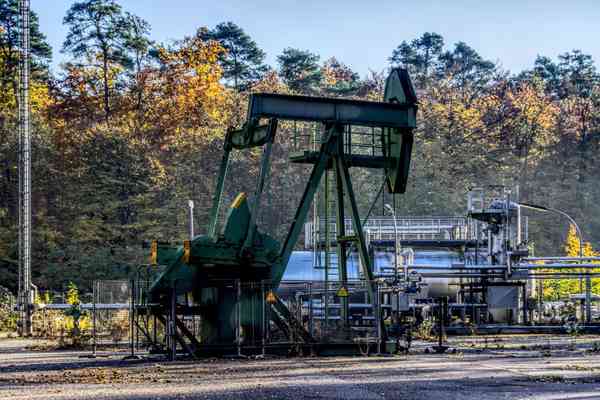
Zefiro Methane (WKN: A3DVHU | ISIN: CA98926D1069 | Ticker Symbol: Y6B) has positioned itself in a market that is less influenced by economic cycles and more by energy policy regulations. In addition, demand for the company's services is growing due to a significant backlog of infrastructure investment. The company's core business is the expert plugging of decommissioned and orphaned oil and gas wells in the US. This so-called niche market is actually larger than many assume. In the US alone, there are an estimated 2 million onshore wells that have not been properly sealed, and the necessary remediation costs are estimated at approximately USD 280 billion.
According to the research firm GBC, there are an additional 1.2 million undocumented wells, which are likely to increase demand even further. One thing is clear: even though the US federal government and individual states are promoting the plugging of abandoned and orphaned wells, this amounts to nothing more than seed funding. For investors, therefore, the key question is whether Zefiro Methane can establish itself as the market leader in this growth market and, following its initial acquisitions, translate this growth into sustainable cash flows.
Operationally, the company relies on an integrated platform through subsidiaries such as Plants & Goodwin and Appalachian Well Surveys, which covers key steps in the sustainable closure of wells—from methane measurement and planning to cementing, decommissioning, and reclamation. This vertical integration represents a competitive advantage in a service market that remains highly fragmented, as it can reduce interface risks and project timelines for clients. To further accelerate the company's growth, it recently expanded its capacity through the acquisition of five drilling rigs and associated equipment from Viking Well Service. According to the company, this is expected to increase annual revenue capacity by approximately USD 10 million and also supports expansion into what is now 13 US states.
At the same time, the issue of methane reduction is gaining political traction, which is increasing the demand for measurable and verifiable emission reductions.
Financially, the company's latest key figures point to a turnaround that the market is now slowly beginning to price in. According to GBC, revenue rose by 35.8% to USD 33.19 million in the first nine months of fiscal year 2025/26, while EBITDA improved to UDS 3.10 million from USD -5.52 million. The company also reported positive operating cash flow of USD 4.12 million and reduced its existing debt. For 2025/26, GBC expects USD 45.18 million in revenue and USD 3.73 million in EBITDA; for 2026/27, USD 57.92 million in revenue and UDS 10.02 million in EBITDA—figures that imply significant operational leverage once the new production facilities and workforce are operating at full capacity.
On the macroeconomic front, there is a second driver that transforms Zefiro from an "environmental services provider" into a pioneer in infrastructure expansion. Energy providers must expand and secure power supplies at sites for AI data centers. Before new power plants, grid connections, or hyperscale projects can be implemented, contaminated sites must first be remediated. This also applies to abandoned wells, which would otherwise lead to permit delays and thus pose a construction timeline risk. Zefiro already cites operational references for this, such as the remediation of nine wells in Pennsylvania. This serves to prepare for the conversion of a coal-fired power plant to gas to meet the energy demand of a data center. The company also points to a similar project in Louisiana worth USD 5 million, which was completed three weeks ahead of schedule.
In addition, the carbon credit business could help boost margins in the future. GBC sees a potential earnings boost here starting in the second half of 2026/27. Overall, Zefiro is a bet on a structurally growing market—one that, with the tailwind from regulation and the investment cycle surrounding energy grids and data centers, is also exposed to the typical scaling and financing risks of a small-cap company.
BHP Poised for Growth: Copper Becomes the New Profit Driver
BHP shares (WKN: 850524 | ISIN: AU000000BHP4 | Ticker: BHP) have had a strong first half of the year on the stock market. Since the start of the year, it has gained about 31%; over 12 months, the gain is as high as 53%. At a share price of approximately AUD 60.70, the Australian mining group has a market capitalization of about AUD 306 billion or USD 213 billion. Following the sharp rise, the share price has been trading sideways for nearly 80 days.
BHP's business model is fundamentally simple: the company mines raw materials in large mines, processes them, and sells them to industrial companies worldwide. Iron ore and coking coal are primarily used in steel production. Copper is used in power grids, vehicles, data centers, and renewable energy systems, among other applications. In the future, potash from Canada, which is used as a fertilizer in agriculture, will also be added to the mix.
How much BHP earns therefore depends heavily on production volumes, production costs, and the respective commodity prices. One important detail to note regarding the reports is that BHP's fiscal year runs from July 1 to June 30. The annual operating report published on July 16 already showed how much BHP produced and at what prices it sold its products during fiscal year 2026. However, it did not yet include a complete income statement. The full financial figures, including revenue, profit, and cash flow, will not be released until August 18.
Operationally, the fiscal year just ended was solid. BHP produced 1.953 million metric tons of copper, 3% less than the previous year, but nearly 2 million metric tons for the second consecutive year. Iron ore production rose by 1% to a record 264.7 million metric tons. The average realized copper price increased by 35% to USD 5.74 per pound, while the iron ore price rose by 3%. The most recent complete financial data available are therefore the half-year results published in February. They cover the period from July through December 2025, meaning the first half of fiscal year 2026. Revenue rose by 11% to USD 27.9 billion, and adjusted EBITDA increased by 25% to USD 15.5 billion. The margin reached 58.4%, and adjusted profit rose by 22% to USD 6.2 billion. For the first time, copper accounted for more than half of operating profit, at 51%. Free cash flow totaled USD 2.9 billion, and the interim dividend was USD 0.73 per share.
For the long term, BHP is investing in additional copper projects and the Jansen potash project. As of the end of June, the Jansen project was 84% complete and is scheduled to begin production in mid-2027. However, the costs of the first phase of expansion have risen to USD 8.4 billion. BHP therefore announced an impairment charge of approximately USD 2.3 billion. Another weak point: for 2027, BHP now expects only 1.65 to 1.80 million metric tons of copper due to lower ore grades at the Escondida mine.
From a technical analysis perspective, the stock is trading above the 20-, 100-, and 200-day moving averages but just below the 50-day moving average. A sustained breakout above AUD 61 to 62 could end the consolidation. For now, however, the full financial results on August 18 are likely to provide the next major catalyst. Then it will become clear how strongly higher copper prices have impacted the full-year results.
Rio Tinto is boosting free cash flow by a massive 75% thanks to a strong copper business. Zefiro Methane is significantly increasing revenue, in part by sealing old boreholes for AI data centers. BHP reported a significant rise in margins, with copper now accounting for more than half of the group's profit.
Conflict of interest
Pursuant to §85 of the German Securities Trading Act (WpHG), we point out that Apaton Finance GmbH as well as partners, authors or employees of Apaton Finance GmbH (hereinafter referred to as "Relevant Persons") currently hold or hold shares or other financial instruments of the aforementioned companies and speculate on their price developments. In this respect, they intend to sell or acquire shares or other financial instruments of the companies (hereinafter each referred to as a "Transaction"). Transactions may thereby influence the respective price of the shares or other financial instruments of the Company.
In this respect, there is a concrete conflict of interest in the reporting on the companies.
In addition, Apaton Finance GmbH is active in the context of the preparation and publication of the reporting in paid contractual relationships.
For this reason, there is also a concrete conflict of interest.
The above information on existing conflicts of interest applies to all types and forms of publication used by Apaton Finance GmbH for publications on companies.
Risk notice
Apaton Finance GmbH offers editors, agencies and companies the opportunity to publish commentaries, interviews, summaries, news and the like on news.financial. These contents are exclusively for the information of the readers and do not represent any call to action or recommendations, neither explicitly nor implicitly they are to be understood as an assurance of possible price developments. The contents do not replace individual expert investment advice and do not constitute an offer to sell the discussed share(s) or other financial instruments, nor an invitation to buy or sell such.
The content is expressly not a financial analysis, but a journalistic or advertising text. Readers or users who make investment decisions or carry out transactions on the basis of the information provided here do so entirely at their own risk. No contractual relationship is established between Apaton Finance GmbH and its readers or the users of its offers, as our information only refers to the company and not to the investment decision of the reader or user.
The acquisition of financial instruments involves high risks, which can lead to the total loss of the invested capital. The information published by Apaton Finance GmbH and its authors is based on careful research. Nevertheless, no liability is assumed for financial losses or a content-related guarantee for the topicality, correctness, appropriateness and completeness of the content provided here. Please also note our Terms of use.