October 6th, 2026 | 07:40 CEST
Commodities in Overdrive: BHP and Rio Tinto Cash In While Almonty Targets Critical Metals in Greenland
What investors are witnessing in the markets now amounts to an almost tectonic shift. Energy and commodity prices are surging, while interest rates have climbed to levels not seen in seven years. The East is embracing protectionism, while the US-led West is taking an increasingly assertive stance. In this capitalist imperialism of deep pockets, the US president's territorial claims over Greenland, administered by Denmark, have added another layer of geopolitical tension. These trends extend beyond the traditional mining business and are causing significant turmoil in futures markets. The geopolitical fault line runs right through the Arctic, where Greenland, thanks to gigantic deposits such as the Tanbreez project, is in the crosshairs of the Pentagon and Western security agencies. China continues to control large parts of the global supply chain, but the strategic agreement between Washington and Copenhagen is erecting a powerful barrier. At the same time, tungsten prices on the world market are soaring, outpacing almost all other critical minerals. This indispensable industrial metal, essential for the defense industry and the AI chip sector, is subject to drastic export restrictions. These supply bottlenecks are driving Western buyers to the brink of despair. A wild mix of megalomania, panic, and sabre-rattling. Where do the opportunities lie for investors with strong nerves?
time to read: 6 minutes | Author: André Will-Laudien
ISIN: ALMONTY INDUSTRIES INC. | CA0203987072 | NASDAQ: ALM , RIO TINTO PLC LS-_10 | GB0007188757 , CRITICAL METALS CORP | VGG2662B1031 | NASDAQ: CRML , BHP GROUP LTD. DL -_50 | AU000000BHP4
Table of contents:
Author

André Will-Laudien
Born in Munich, he first studied economics and graduated in business administration at the Ludwig-Maximilians-University in 1995. As he was involved with the stock market at a very early stage, he now has more than 30 years of experience in the capital markets.
Tag cloud
Shares cloud
Phase II Could Catapult Almonty to the Top of Western Production
We have reported on Almonty Industries quite frequently recently. But now a new era is beginning for the company. Tungsten is evolving from a specialty metal into a strategic building block of Western industrial and defense policy, as its exceptional hardness makes it virtually irreplaceable in a range of key products. Furthermore, Western governments are increasingly viewing dependence on China as a security risk. With its projects in South Korea, Portugal, Spain, and, in the future, Montana, Almonty Industries can make its full impact precisely at this intersection.
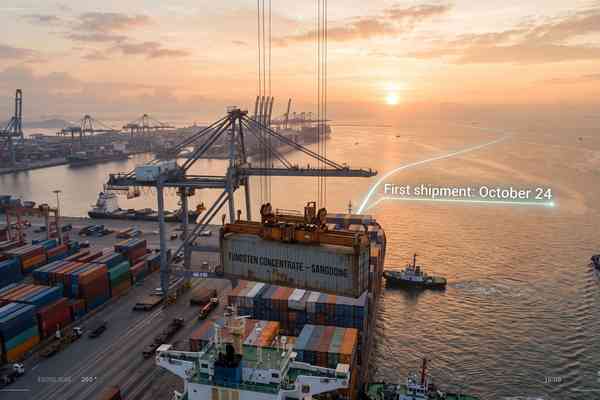
In Sangdong, South Korea, tungsten production resumed this year for the first time since 1993, after the processing plant received its final operating permit. Thus, a long-standing development project has become a real producer. The high level of security for future production is particularly valuable: More than 90% of Phase I volumes are secured through a long-term offtake agreement with Global Tungsten & Powders. For Almonty, this means significantly improved cash flow predictability while simultaneously reducing marketing risk during the ramp-up phase. While Phase I is ramping up, underground development for the second expansion phase is already underway. Almonty plans to begin Phase II in 2027 and aims to expand Sangdong's processing capacity to up to 1.2 million metric tons per year and increase tungsten production to more than 460,000 metric tonne units (MTUs). This could make Sangdong the largest currently operating tungsten mine outside of China. In Spain, tungsten is to be recovered from existing tailings at the former Los Santos operation. A long-term take-or-pay agreement with Wolfram Bergbau und Hütten, a subsidiary of the Sandvik Group, already establishes a defined sales channel for this purpose and covers approximately 1,720 metric tons of contained WO₃ from the waste rock piles. In addition, there are other options such as Panasqueira, Gentung, Valtreixal, and the molybdenum project located immediately adjacent to Sangdong.
The market has long since ceased to view Almonty as a typical junior mining developer, but rather as a potential strategic supplier of one of the rarest metals. The research firm Stifel has done the math: Revenue is expected to rise from approximately CAD 346 million in fiscal year 2026 to more than CAD 926 million in 2027. Even more spectacular is the operating performance Stifel anticipates: Adjusted EBITDA is projected to increase from approximately CAD 247 million in 2026 to just under CAD 793 million in 2027. Stifel explicitly bases its valuation on the structural transformation of the tungsten market, the planned expansion of production, and the possibility of valuing Almonty in the future more as a critical materials producer than as a traditional mining stock. Consequently, the firm initiates coverage with a "Buy" rating and a price target of USD 25, roughly double the current price. Technically, momentum has just turned positive again at the USD 12.70 level and is now driving the rebound higher.
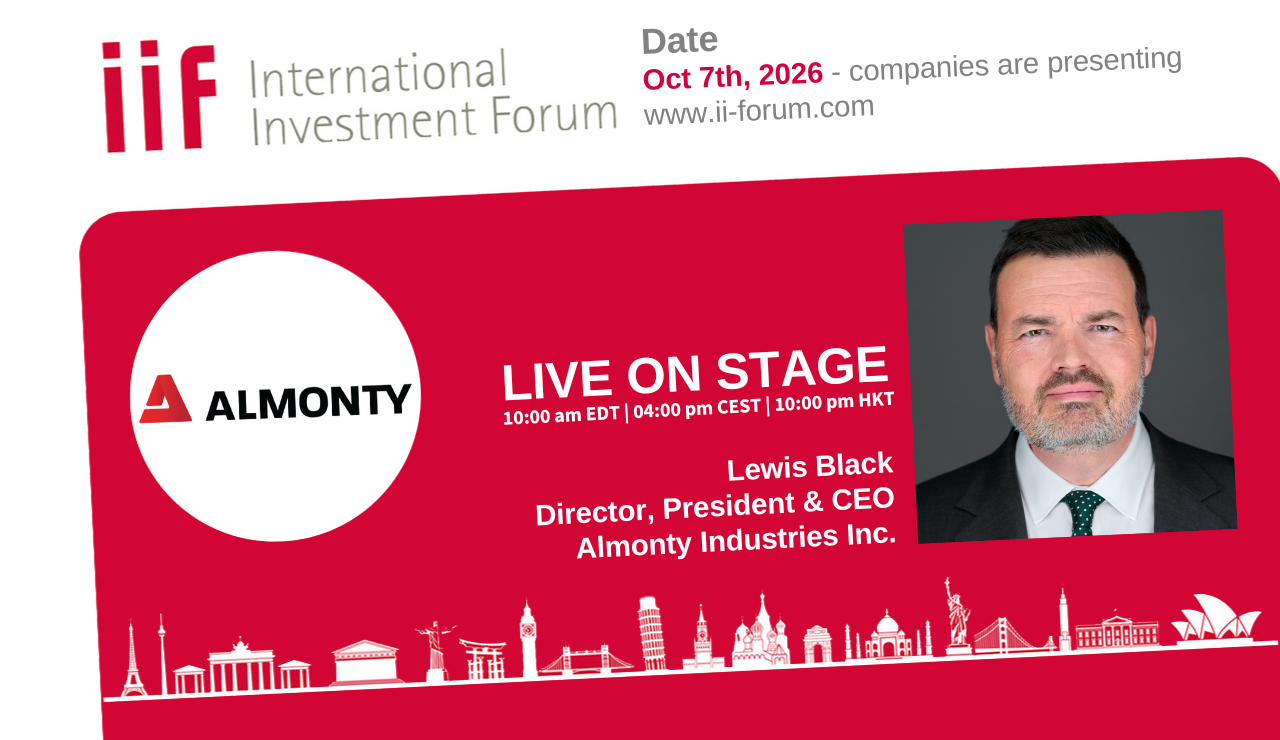
In an interview with IIF host Lyndsay Malchuk, CEO Lewis Black discusses Almonty's opportunities during these challenging times.
Critical Metals: Why the US and Denmark Are Betting on Greenland's Rare Earths
What is Donald Trump doing in Greenland? Critical Metals' strategy for Greenland offers some insight. The company operates the massive Tanbreez project on the island. The next stage in the global race for critical raw materials is now taking shape, with heavy rare earth elements moving further into the spotlight. On September 29, 2026, the Greenlandic government formally approved the exploitation and closure plan, providing the project with regulatory certainty for 24 years of operations extending well into the 2050s. The strategic advantage lies in the recovery of 19 critical elements, above all the magnet metals essential to Western defense industries and electric mobility, including neodymium, dysprosium, and terbium. Geopolitically, the project is receiving significant tailwinds from the latest security agreement between the US and Denmark, which aims to strengthen Arctic resource security and reduce dependence on China.
At the same time, the USD 835 million merger with European Lithium is entering the home stretch. Through the stock swap, Critical Metals will acquire the remaining 7.5% stake in Tanbreez, thereby becoming the sole, unrestricted owner of the Arctic deposit. At the same time, the deal will inject approximately USD 219 million in fresh liquidity from the Australian company's coffers into the new balance sheet to vigorously kick-start the capital-intensive mine start-up. After the Supreme Court of Western Australia gave the green light in September 2026 to convene the shareholders' meeting, the final vote by shareholders is scheduled for October 22, 2026. Immediately following the vote, the transaction is expected to be formally completed in November 2026, giving European Lithium shareholders a roughly 41% stake in the new, combined Nasdaq heavyweight. This merged powerhouse will henceforth bring together not only the Greenlandic rare-earth gem but also the fully approved Wolfsberg lithium project in Austria under a single, powerful corporate umbrella. Investors should keep this stock on their watchlist.
The 20th International Investment Forum takes place tomorrow. Click here to register.
BHP and Rio Tinto: When You Hold the Longer Cash Flow Lever
Where there is uncertainty, there are also winners! In any case, mining giants BHP Group and Rio Tinto are impressively demonstrating that, thanks to their first-class, long-lasting mineral reserves, they hold the upper hand in the global economy's cash flow. While smaller exploration companies struggle to secure financing amid Greenland's Arctic ice, the giants' highly efficient iron ore and copper deposits continue to pour billions into their coffers. The recently concluded 2025/26 fiscal year underscores this dominant position with hard, record-breaking figures. BHP catapulted its annual revenue up by 15% to a whopping USD 58.8 billion. At the same time, operating cash flow (EBITDA) jumped by 27% to USD 32.9 billion. This windfall enabled the company to boost its free cash flow by a staggering 83% to USD 9.8 billion. On the LSEG Refinitiv platform, following a 60% rise in the share price, 30% of all analysts still rate the stock a "Buy", though some have already downgraded it to "Neutral."
Rival Rio Tinto also delivered an absolutely stellar performance in the first half of 2026. Revenues for the British-Australian giant also climbed 15% to USD 31.0 billion. Driven by strong operating performance, free cash flow surged by 75% to USD 3.8 billion, while underlying EBITDA rose by 28% to USD 14.8 billion during the same period. This financial strength allows both companies to cover the massive investment costs of the energy transition with current revenues. BHP is looking ahead optimistically to the upcoming 2027 fiscal year and plans growth investments of around USD 11 billion, while copper production is set to ramp up to as much as 1.8 million metric tons. Rio Tinto, for its part, is using its well-stocked coffers to drive forward ambitious large-scale projects such as the Simandou iron ore mine and global lithium exploration. The party for these two giants is likely to continue for some time.
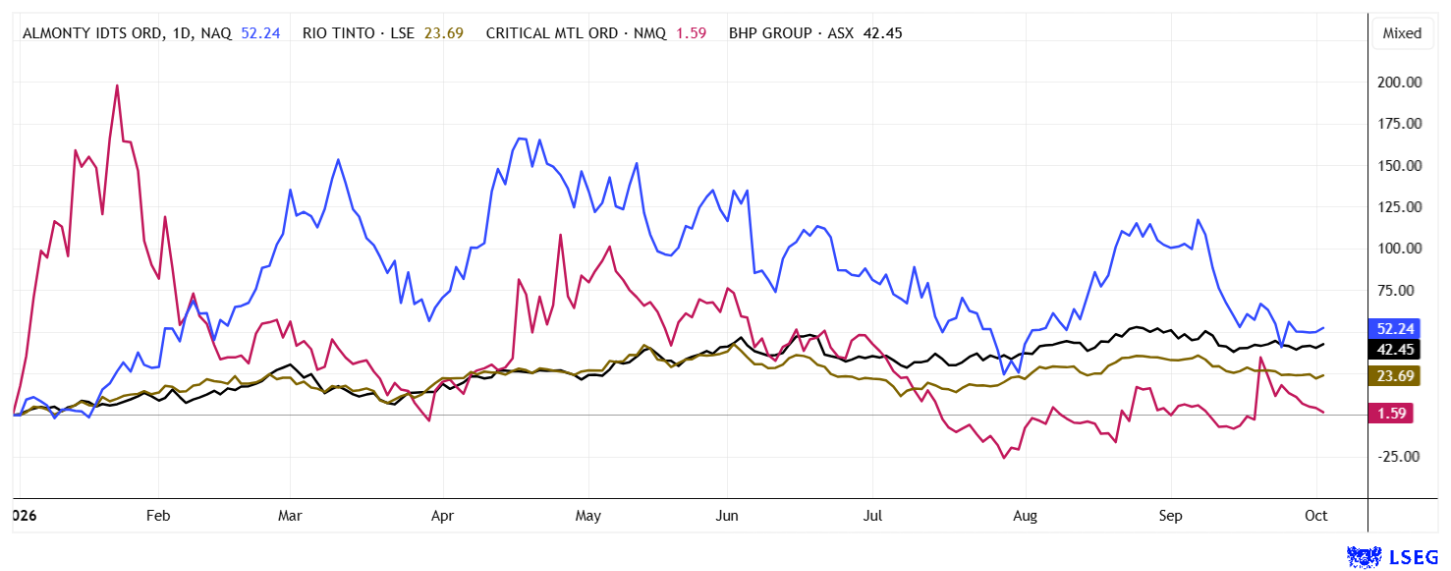
Volatility ahead! The sharp rise in interest rates in recent weeks is putting pressure on capital-intensive sectors across the stock market. This includes mining companies, which often must invest billions in operations to extract in-demand resources. While established names such as Almonty, Rio Tinto and BHP can provide more stable exposure to the sector, investors in Critical Metals Corp. face a much more speculative setup. Diversification is king!
Conflict of interest
Pursuant to §85 of the German Securities Trading Act (WpHG), we point out that Apaton Finance GmbH as well as partners, authors or employees of Apaton Finance GmbH (hereinafter referred to as "Relevant Persons") currently hold or hold shares or other financial instruments of the aforementioned companies and speculate on their price developments. In this respect, they intend to sell or acquire shares or other financial instruments of the companies (hereinafter each referred to as a "Transaction"). Transactions may thereby influence the respective price of the shares or other financial instruments of the Company.
In this respect, there is a concrete conflict of interest in the reporting on the companies.
In addition, Apaton Finance GmbH is active in the context of the preparation and publication of the reporting in paid contractual relationships.
For this reason, there is also a concrete conflict of interest.
The above information on existing conflicts of interest applies to all types and forms of publication used by Apaton Finance GmbH for publications on companies.
Risk notice
Apaton Finance GmbH offers editors, agencies and companies the opportunity to publish commentaries, interviews, summaries, news and the like on news.financial. These contents are exclusively for the information of the readers and do not represent any call to action or recommendations, neither explicitly nor implicitly they are to be understood as an assurance of possible price developments. The contents do not replace individual expert investment advice and do not constitute an offer to sell the discussed share(s) or other financial instruments, nor an invitation to buy or sell such.
The content is expressly not a financial analysis, but a journalistic or advertising text. Readers or users who make investment decisions or carry out transactions on the basis of the information provided here do so entirely at their own risk. No contractual relationship is established between Apaton Finance GmbH and its readers or the users of its offers, as our information only refers to the company and not to the investment decision of the reader or user.
The acquisition of financial instruments involves high risks, which can lead to the total loss of the invested capital. The information published by Apaton Finance GmbH and its authors is based on careful research. Nevertheless, no liability is assumed for financial losses or a content-related guarantee for the topicality, correctness, appropriateness and completeness of the content provided here. Please also note our Terms of use.