June 23rd, 2026 | 07:20 CEST
Emissions as a Profit Booster: The Business Models of Equinor and Linde—and How Zefiro Methane Excels In a Niche Market
Rising costs for renewable energy projects, shifting geopolitical conditions, and increasingly stringent emissions regulations are forcing energy companies to adapt. While utility companies' business models were once relatively conservative, success today depends on optimizing every aspect of operational performance—down to the smallest decimal point. In this context, emissions-related costs are becoming a key area of focus. Companies can not only reduce expenses but also generate financial benefits through effective emissions management. Greenhouse gas mitigation and carbon capture technologies have long since evolved into standalone, highly profitable business segments. We examine the market and highlight promising companies.
time to read: 3 minutes | Author: Nico Popp
ISIN: ZEFIRO METHANE CORP | CA98926D1069 | NEO: ZEFI , EQUINOR ASA NK 2_50 | NO0010096985 , LINDE PLC | IE000S9YS762
Table of contents:
Author

Nico Popp
At home in Southern Germany, the passionate stock exchange expert has been accompanying the capital markets for about twenty years. With a soft spot for smaller companies, he is constantly on the lookout for exciting investment stories.
Tag cloud
Shares cloud
Equinor: A Sharp U-Turn and a Focus on Returns
The Norwegian energy giant Equinor is responding to changing market conditions with a strategic shift. At the Capital Markets Day in New York, the Executive Board, led by CEO Anders Opedal, announced a departure from its previous goal of building 10-12 GW of installed renewable capacity by 2030. In light of rising prices along the supply chains and high lease rates, management now expects to reach only 6 to 7 GW by 2030. Instead, the company is increasing its hydrocarbon production targets for 2030 by 150,000 barrels per day to a total of 2.3 million barrels per day. To make its fossil fuel business profitable, Equinor is focusing on standardized subsea tie-in projects with a break-even price below USD 35 per barrel. In addition, logistical and economic challenges are hampering the decarbonization strategy, as demonstrated by the failure of the H2M Eemshaven hydrogen project in the Netherlands, announced in February 2026. According to the company, the project failed due to a lack of long-term offtake agreements and regulatory uncertainty: EU regulations favour green hydrogen over blue hydrogen, calling the project's economic viability into question.
Linde: Operational Strength and Reliable Project Pipelines
Linde, the world's leading industrial gases and engineering group, is demonstrating operational strength despite the challenging environment. In the first quarter of 2026, the company increased revenue by 8% to USD 8.78 billion and achieved an adjusted operating margin of 30%. Management forecasts adjusted earnings of USD 17.60 to 17.90 per share for the full year 2026, supported by a sale-of-gas backlog of USD 7.1 billion. The company systematically minimizes financial risks by entering into long-term contracts in the sale-of-gas segment. Technologically, Linde sets standards with large-scale projects such as a 24-MW PEM electrolysis plant at the Leuna chemical site and identical systems in Norway. With innovative post-combustion CCUS technologies, the Group achieves carbon capture rates of over 95% in some industrial applications. Figures like these make Linde a sought-after partner for major customers.
Zefiro Methane: Record Revenue in a Billion-Dollar Market
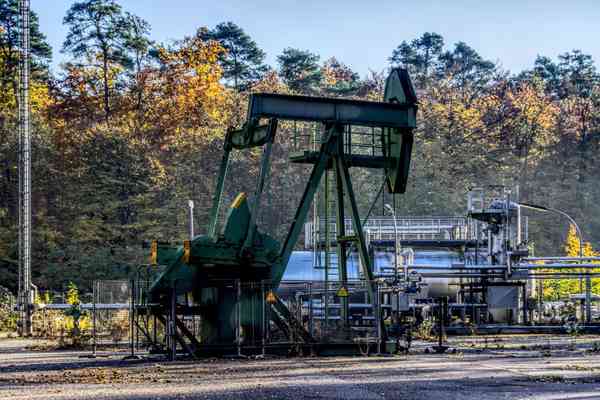
Zefiro Methane occupies a unique niche in the North American market by linking the physical plugging of abandoned and orphaned oil and gas wells with the generation of emissions credits. The company is currently undergoing a fundamental operational turnaround and reported record revenue of USD 33 million for the first nine months of fiscal year 2026, as well as positive adjusted EBITDA for the third consecutive quarter. Management estimates the total addressable market for the remediation of these abandoned wells in the US at a staggering USD 400 to 600 billion. This momentum is reinforced by the Global Methane Pledge, which aims to reduce global methane emissions by at least 30% by 2030. As recently as March, shareholders reaffirmed their confidence in the current management team led by CEO Catherine Flax with a majority of over 55 million votes at the annual general meeting. To continue this expansion, the Board of Directors appointed Correne Loeffler as the new Chief Financial Officer, effective June 1, 2026. The experienced executive had previously worked for the company.
Growth Shift Attracts Prominent Major Clients
Through the strategic acquisition of specialized equipment from service provider Viking Well Service for USD 4.3 million last month, Zefiro expanded its presence to 13 US states. The investment in new capacity immediately resulted in four new major corporate clients, including three publicly traded corporations with a combined market capitalization of over USD 140 billion. At the same time, Zefiro is moving forward with a long-term framework agreement worth USD 19.6 million with the Ohio Department of Natural Resources and is continuously expanding its leading role in emissions monitoring programs.
Zefiro: Significant Growth Potential in a Government-Supported Niche
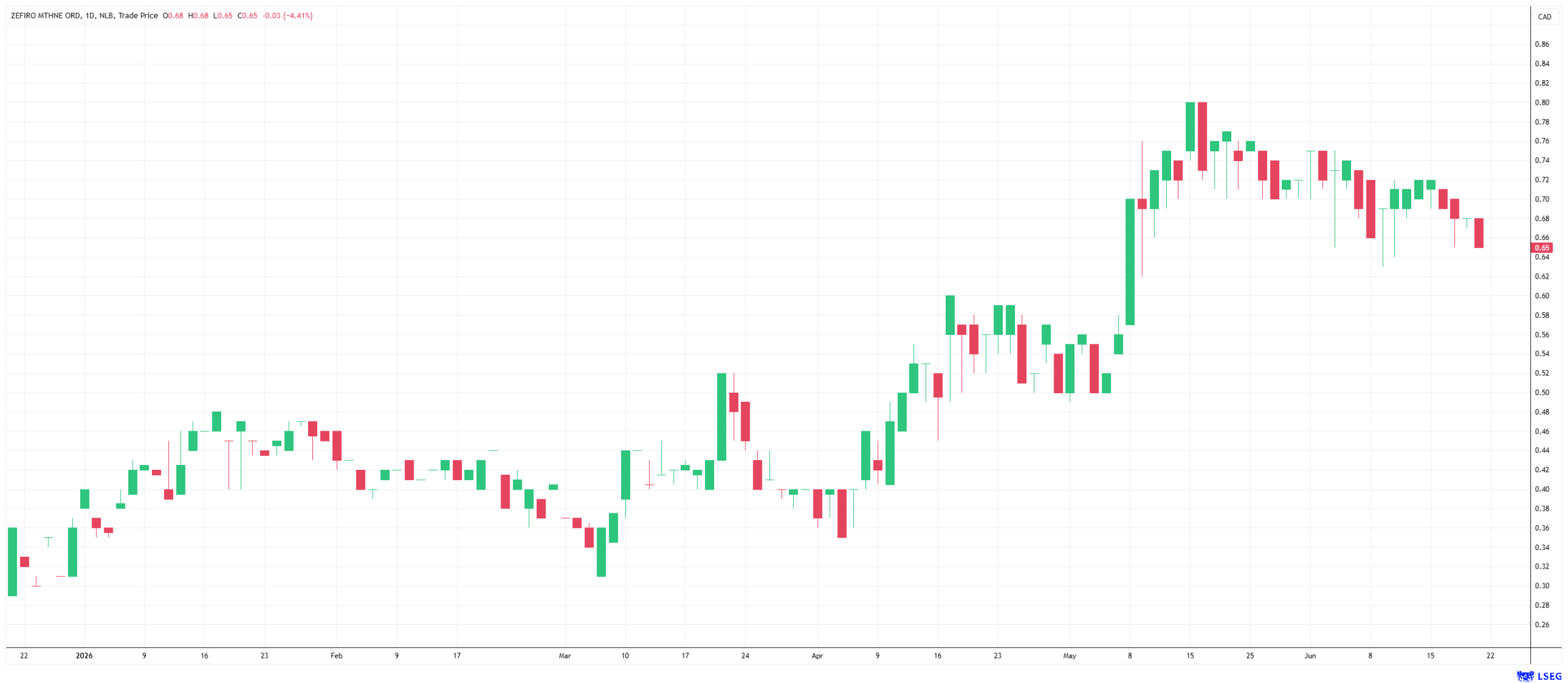
Comparing Zefiro's current position with the opportunities in the sector reveals enormous potential for scaling up. The industry must act, and Zefiro has the solution. While industry giants like Equinor and Linde struggle with large-scale projects, Zefiro operates in a government-subsidized and isolated growth market. Recent major contracts demonstrate that Zefiro can scale its business. Given the massive overall market for plugging abandoned wells, the company should be able to continue on its growth trajectory. This also makes the stock attractive—while Zefiro is a small-cap on the stock market, it stands out for its operational strength and significant potential. This is all the more true against the backdrop of the recent consolidation. If the stock weakens, Zefiro is worth considering.
Watch YouTube videoConflict of interest
Pursuant to §85 of the German Securities Trading Act (WpHG), we point out that Apaton Finance GmbH as well as partners, authors or employees of Apaton Finance GmbH (hereinafter referred to as "Relevant Persons") may hold shares or other financial instruments of the aforementioned companies in the future or may bet on rising or falling prices and thus a conflict of interest may arise in the future. The Relevant Persons reserve the right to buy or sell shares or other financial instruments of the Company at any time (hereinafter each a "Transaction"). Transactions may, under certain circumstances, influence the respective price of the shares or other financial instruments of the Company.
In addition, Apaton Finance GmbH is active in the context of the preparation and publication of the reporting in paid contractual relationships.
For this reason, there is a concrete conflict of interest.
The above information on existing conflicts of interest applies to all types and forms of publication used by Apaton Finance GmbH for publications on companies.
Risk notice
Apaton Finance GmbH offers editors, agencies and companies the opportunity to publish commentaries, interviews, summaries, news and the like on news.financial. These contents are exclusively for the information of the readers and do not represent any call to action or recommendations, neither explicitly nor implicitly they are to be understood as an assurance of possible price developments. The contents do not replace individual expert investment advice and do not constitute an offer to sell the discussed share(s) or other financial instruments, nor an invitation to buy or sell such.
The content is expressly not a financial analysis, but a journalistic or advertising text. Readers or users who make investment decisions or carry out transactions on the basis of the information provided here do so entirely at their own risk. No contractual relationship is established between Apaton Finance GmbH and its readers or the users of its offers, as our information only refers to the company and not to the investment decision of the reader or user.
The acquisition of financial instruments involves high risks, which can lead to the total loss of the invested capital. The information published by Apaton Finance GmbH and its authors is based on careful research. Nevertheless, no liability is assumed for financial losses or a content-related guarantee for the topicality, correctness, appropriateness and completeness of the content provided here. Please also note our Terms of use.