June 19th, 2026 | 08:40 CEST
Copper Is Hot! Analysts See Nearly 200% Upside for Power Metallic Mines – How Severe Is the Impact on BMW and BYD?
More and more studies are warning of a massive future copper shortage. Forecasts are becoming increasingly alarming, to the point where the International Energy Agency's estimate of a 5.9-million-ton supply gap by 2030 already appears conservative. Building a mine takes 15 to 20 years, and supply is struggling to keep pace with rapidly growing demand. The expansion of modern power grids, the rapid growth of data centers, AI, and the ongoing shift toward electric mobility are exacerbating the situation. This is already evident in the record-high prices of this industrial metal. While automakers such as BMW and BYD face increasing cost pressures, Power Metallic Mines appears to be on the winning side. The Canadian company controls one of the largest polymetallic deposits in North America, characterized by high-grade copper mineralization and first-class metallurgy. According to analysts, the shares could nearly triple in value in the future.
time to read: 4 minutes | Author: Carsten Mainitz
ISIN: POWER METALLIC MINES INC. | CA73929R1055 | TSXV: PNPN , OTCBB: PNPNF , BYD CO. LTD H YC 1 | CNE100000296 , BAY.MOTOREN WERKE VZO | DE0005190037
Table of contents:
Author

Carsten Mainitz
The native Rhineland-Palatinate has been a passionate market participant for more than 25 years. After studying business administration in Mannheim, he worked as a journalist, in equity sales and many years in equity research.
Tag cloud
Shares cloud
Power Metallic Mines: A Major Industry Player Comes On Board, with Numerous Catalysts Ahead
The market situation is playing massively in the Canadians' favour. A long-term and structural demand for copper is emerging. The catalysts are technology and electromobility. What sets it apart is a large, top-tier polymetallic asset in Canada that has the potential to become a key long-term supply source for Western industries.
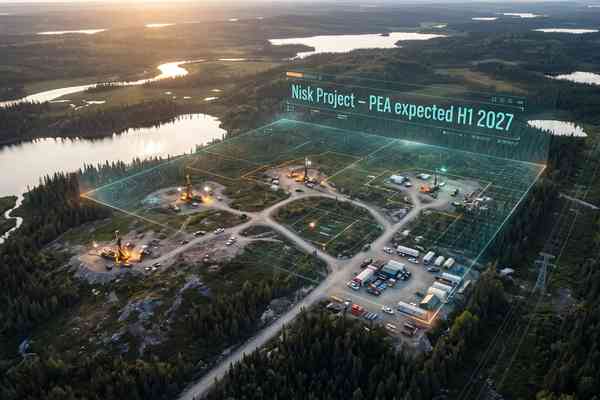
The NISK Project in Québec, Canada, covers 313 km² and has been significantly expanded in the past. Excellent drilling results have long dominated the news flow, but the first-class metallurgy with very high copper recovery rates also stands out. The discovery of high-grade copper mineralization in the NISK and Lion zones and their expansion define the project's profile. But the promising Tiger target area is also in the spotlight. In addition to copper, the zones yield significant mineralization of platinum, palladium, gold, and silver.
The ongoing drilling program will certainly yield important news. The key catalysts that could lead to a significant jump in valuation are the initial mineral resource estimate expected this summer and the preliminary economic assessment (PEA) to be announced in December. These data will provide more robust valuation metrics for the project and the company. It would not be surprising if the projected project values were significantly higher than the current market capitalization of CAD 260 million. The anticipated listing on the Nasdaq should also provide a positive boost.
The company recently completed a capital increase of CAD 28.2 million at a price of CAD 1.25 per share. A particular highlight is the entry of renowned commodities investor Eric Sprott. The net proceeds from the capital raise are to be used primarily for the further development of the NISK project and the exploration license in Saudi Arabia.
The stock is currently trading at CAD 1.10, slightly below the placement price of the latest offering. Eric Sprott's substantial investment can be seen as a real seal of approval. Analysts at GBC have set a price target of CAD 3!
https://www.youtube.com/watch?v=47K2ZeQN2ac&t=2s
BMW: Severe Profit Warning Also a Signal for Industry
The Munich-based company's latest profit warning has put pressure on stock prices across the entire sector. This is understandable, as the Bavarian automaker had previously held its ground relatively well in a difficult market environment. Investors now expect similar news from Mercedes & Co. The stock has now lost nearly 40% since the start of the year.
BMW significantly lowered its annual targets due to the crisis in the Chinese auto market and the consequences of the war in the Middle East. The EBIT margin is now projected to be just 3%. The previous range was 4 to 6%. That means the upper end of the range has been cut in half! Guidance for free cash flow was also slashed dramatically from EUR 4.5 billion to EUR 2.5 billion—it is no wonder the stock fell by more than 10% at times.
Analysts lowered their price targets but concluded that the shares are worth buying again at the current level of EUR 60. Experts at Deutsche Bank set a price target of EUR 90, while JPMorgan is slightly more cautious at EUR 82.
BYD: A Global Leader, But…
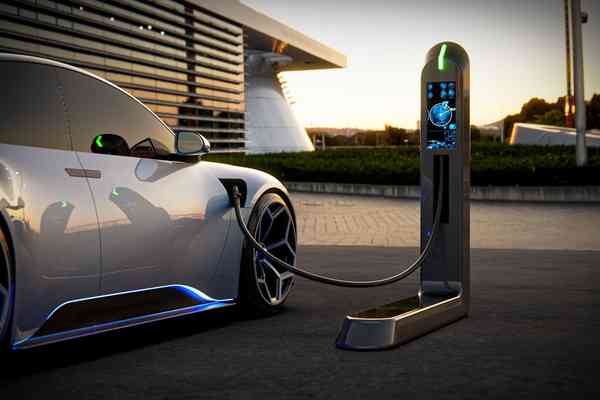
What does the rise in copper prices mean for electric vehicle manufacturers? A typical electric vehicle contains an estimated 70 to 90 kg of this industrial metal. If copper prices rise by USD 1,000 per metric ton, a vehicle's material costs increase by USD 70 to 90. This shows that while this cost component is rising, the impact remains modest. The challenges for Chinese companies lie elsewhere.
Fierce competition, marked by aggressive price wars in their home market, has been ongoing for some time. This is also reflected in the financial figures, as was recently evident from the quarterly data. Consequently, the push toward internationalization is being accelerated. Business is booming outside China, with Europe standing out in particular. But Africa is also showing tremendous momentum. There, the Chinese now dominate 35% of the market, up from just 4% the previous year.
In the current fiscal year, BYD aims to sell 1.3 million vehicles outside the People's Republic. That would represent a 25% increase. The company recently confirmed that its new plant in Hungary is scheduled to begin operations in the fourth quarter. This will allow it to circumvent EU tariffs on Chinese vehicles.
A major advantage for the Chinese company is its strategic positioning, featuring a broad value chain that includes in-house battery production and storage systems. From a valuation perspective, the shares appear attractive. The P/E ratio for 2026 is 16.1, and 12.7 for 2027. Analysts are bullish and see upside potential of over 50% for the stock.
For emerging copper producers like Power Metallic Mines, rising copper prices are ideal. Several catalysts should drive the stock higher in the coming months. Analysts estimate nearly 200% upside potential for the stock. The automotive industry faces a number of challenges. BYD is favoured by analysts, with 50% upside. BMW has shocked the market. Following the price drop, "Buy" recommendations are now piling up.
Conflict of interest
Pursuant to §85 of the German Securities Trading Act (WpHG), we point out that Apaton Finance GmbH as well as partners, authors or employees of Apaton Finance GmbH (hereinafter referred to as "Relevant Persons") may hold shares or other financial instruments of the aforementioned companies in the future or may bet on rising or falling prices and thus a conflict of interest may arise in the future. The Relevant Persons reserve the right to buy or sell shares or other financial instruments of the Company at any time (hereinafter each a "Transaction"). Transactions may, under certain circumstances, influence the respective price of the shares or other financial instruments of the Company.
In addition, Apaton Finance GmbH is active in the context of the preparation and publication of the reporting in paid contractual relationships.
For this reason, there is a concrete conflict of interest.
The above information on existing conflicts of interest applies to all types and forms of publication used by Apaton Finance GmbH for publications on companies.
Risk notice
Apaton Finance GmbH offers editors, agencies and companies the opportunity to publish commentaries, interviews, summaries, news and the like on news.financial. These contents are exclusively for the information of the readers and do not represent any call to action or recommendations, neither explicitly nor implicitly they are to be understood as an assurance of possible price developments. The contents do not replace individual expert investment advice and do not constitute an offer to sell the discussed share(s) or other financial instruments, nor an invitation to buy or sell such.
The content is expressly not a financial analysis, but a journalistic or advertising text. Readers or users who make investment decisions or carry out transactions on the basis of the information provided here do so entirely at their own risk. No contractual relationship is established between Apaton Finance GmbH and its readers or the users of its offers, as our information only refers to the company and not to the investment decision of the reader or user.
The acquisition of financial instruments involves high risks, which can lead to the total loss of the invested capital. The information published by Apaton Finance GmbH and its authors is based on careful research. Nevertheless, no liability is assumed for financial losses or a content-related guarantee for the topicality, correctness, appropriateness and completeness of the content provided here. Please also note our Terms of use.