June 11th, 2026 | 07:15 CEST
TOURMALINE OIL, MONTAUK RENEWABLES, AND ZEFIRO METHANE: WHO IS PROFITING FROM THE INVISIBLE CLIMATE KILLER?
Methane is significantly more potent than CO₂ as a greenhouse gas. Politicians worldwide are responding by imposing increasingly strict regulations on industry. Three companies have set their sights on the invisible climate killer: Tourmaline Oil turns emission savings into hard cash, Montauk Renewables converts landfill gas into clean energy, and Zefiro Methane plugs abandoned wells. Those who manage to stop or prevent the release of this potent greenhouse gas are rewarded by the government and the market with CO₂ credits. These certificates are worth hard cash. Traditional industrial and oil companies are scrambling for them to avoid their own emissions penalties.
time to read: 8 minutes | Author: Jens Castner
ISIN: ZEFIRO METHANE CORP | CA98926D1069 | NEO: ZEFI , TOURMALINE OIL CORP. | CA89156V1067 , MONTAUK RENEWABLES INC | US61218C1036 | NASDAQ: MNTK
Table of contents:
Author

Jens Castner
The Nuremberg native brings over three decades of capital markets experience, backed by a career shaped by deep market insight and a genuine passion for investing. His journey began in 1994 through an investment club among colleagues – a formative experience that sparked a lifelong dedication to identifying compelling investment opportunities.
Following senior editorial roles at Nürnberger Nachrichten, €uro am Sonntag, and €uro, he went on to serve as Editor-in-Chief of the renowned investor magazine Börse Online from 2014, where he played a key role in shaping high-quality financial journalism for a broad investor audience.
Tag cloud
Shares cloud
TOURMALINE OIL: PUTTING AN END TO GAS FLARING
To understand how the game of methane and CO₂ credits works in practice, one must first look at the traditional energy sector—and thus at Tourmaline Oil. While the name suggests an oil producer, the natural gas business is far more significant. Here, the company is the market leader in Canada. A vast network of its own pipelines and processing facilities reduces operating costs. It also enables Tourmaline to supply the US directly, for example to Chicago and California. In some cases, the gas is also pumped directly to terminals on the Gulf of Mexico to be shipped as liquefied natural gas (LNG) to Europe and Asia—regions where significantly better prices can be achieved than in North America.
For Tourmaline, emissions management is not just a green afterthought, but simply a means of risk mitigation to ensure profitable growth in today's regulatory environment. Unlike traditional oil and gas producers, the management team led by CEO Mike Rose relies on state-of-the-art technologies designed to minimize greenhouse gas emissions. The strategy is multi-pronged. Using sophisticated infrared sensors and optical gas monitoring, the company detects uncontrolled, invisible leaks in pipelines and valves and seals them immediately. Instead of needlessly flaring off the associated gas produced during oil extraction, Tourmaline captures it, purifies it, and uses it either for its own energy supply or for sale. In addition, the Calgary-based company is investing in projects such as carbon capture (CO₂ capture) at natural gas compressors, which are often funded by government programs like Emissions Reduction Alberta. Furthermore, drilling rigs and fracking fleets are being gradually converted to run on the company's own, cleaner-burning natural gas. Since 2017, this has saved 240 million litres of diesel, directly avoiding 160,000 tons of CO₂ emissions. And since 2020, Tourmaline Oil has reduced its greenhouse gas emissions by more than 25% and promises significant further reductions by 2027.
CONTINUOUS EXPANSION, UNCERTAIN FOLLOW-UP
This pioneering role pays off directly in the income statement. Since Tourmaline significantly undercuts Canada's strict emissions caps, the company generates certified CO₂ credits. First, through direct cost savings: Canada imposes a steadily rising CO₂ tax. By reducing greenhouse gas emissions, the company saves millions in taxes and penalties year after year. Second, surplus credits can be sold at a profit to other corporations that fail to meet their own climate targets—though this plays only a minor role, as the company uses its CO₂ quota for its own expansion, as evidenced by the strategic acquisitions of Bonavista Energy (2023) and Crew Energy (2024). This move strengthened the company's dominant position in Alberta's so-called Deep Basin and secured over 700 new, high-quality drilling sites in British Columbia's Montney region.
Since the acquisitions are largely financed through treasury shares, CEO Rose is regarded as a master of consolidation. Debt is low, and special dividends are paid regularly, resulting in exceptionally high dividend yields during years with high gas prices. The only downside: the CEO has been in office since 2008, and his succession remains unresolved. This is causing uncertainty among his supporters, which is why the share is stuck in a sideways trend between CAD 57 and CAD 68. The share is currently trading at CAD 63 in Toronto and just under EUR 40 in Germany. This corresponds to a market capitalization of just over EUR 15 billion and a price-to-earnings (P/E) ratio of about 12 for the current year, which appears quite moderate. While major price jumps are not to be expected here, steadily rising dividends are. For defensively oriented value investors, the Canadian cash flow king remains a first-class core investment in the energy sector.
MONTAUK RENEWABLES: HOW STINKING GAS BECOMES CLEAN ENERGY
Those who prefer to tackle the methane problem at the source rather than drilling for it underground will find the perfect alternative in Montauk Renewables. While traditional gas producers must go to great lengths to curb emissions, this US company has made capturing this climate-killer its sole business model. Headquartered in Pittsburgh, Pennsylvania, the firm captures harmful methane gases where they are produced in large quantities every day: at massive landfills and in industrial agriculture. Instead of allowing the potent greenhouse gas to escape unused into the atmosphere, Montauk extracts the raw gas using complex extraction systems. In modern filtration plants, it is purified to the point where it becomes renewable natural gas of fossil-fuel quality. Montauk feeds this green gas directly into the US natural gas grid. In addition, the company has developed a patented process to convert manure and organic waste into alternative liquid fuels with low emissions. This liquid methanol is marketed as a clean biofuel to the shipping, logistics, and transportation sectors, as well as to the chemical industry.
The revenue model, which relies almost entirely on government-regulated certificates, demonstrates how this business is rewarded. For every unit of renewable natural gas, the company generates so-called RINs (Renewable Identification Numbers)—tradable certificates verifying the use of renewable fuels. The financial leverage is considerable: US refineries and fuel importers are legally required to purchase these certificates on the open market to meet their own environmental quotas. Otherwise, they face hefty fines. Since Montauk produces the gas anyway, the sale of these RINs is a massive profit driver: if certificate prices rise, profits skyrocket without significant additional costs.
OPERATIONAL HEADWINDS AND HOPE FROM MANURE
The first-quarter figures show that this business is not without its setbacks either. They reflect the tough operational headwinds Montauk Renewables is currently facing. While total revenue rose from USD 42.6 million to USD 46.4 million compared to the same period last year, soaring operating costs pushed the operating result into the red at USD 1.6 million. Only thanks to income from a new joint venture was the company barely able to break even. After a local energy supplier unexpectedly announced it would no longer feed green gas into its pipeline network, it led to special write-downs on decommissioned facilities. Now, the company faces enormous investment pressure. In the first quarter alone, USD 33.1 million was invested in the large-scale Montauk Ag Renewables project in North Carolina, which is intended to generate the first commercial revenue from renewable electricity production using agricultural waste—particularly manure.
The commercial success of this project is therefore the big bet for investors. At the current price of USD 1.68, the Nasdaq-listed stock has a P/E ratio of 15 for the current year, which will drop into the single digits by 2027 if analysts' estimates are met—that is, if the manure project generates the expected returns. Since hitting a historic low of USD 1.08 in March, the stock has been on a recovery track from a technical analysis perspective. The market capitalization of approximately USD 236 million leaves ample upside potential if the project succeeds. Montauk has a nearly pure circular business model in the spirit of sustainable management—but one that also comes with specific risks.
ZEFIRO METHANE: THE HUNT FOR THE ORPHANED MILLIONS
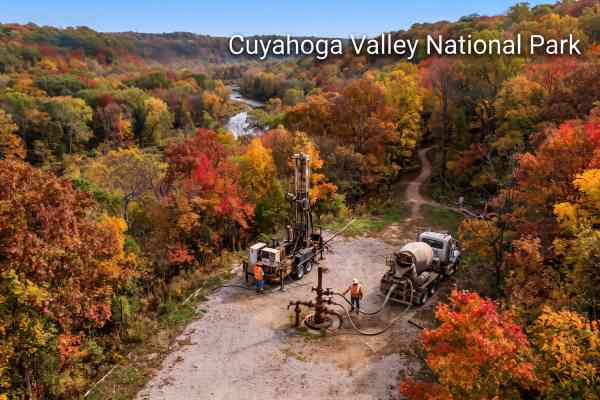
The situation is quite different for Zefiro Methane. The Canadian company acts as a remediator of an ecological time bomb: millions of abandoned, so-called orphaned oil and gas wells in the US are releasing methane into the atmosphere uncontrollably. Zefiro does not own any energy facilities. Its business model is based purely on environmental services. Through its US subsidiary, Plants & Goodwin (P&G), a long-established company with over 50 years of experience in well plugging, Zefiro has the necessary operational clout. The decisive tailwind comes from the government. The US government has allocated USD 4.7 billion through its infrastructure program (IIJA) to plug abandoned wells. Zefiro, or rather P&G, has already secured around 25% of these government contracts in its core regions—a stable, predictable foundation.
However, the major driver of share price growth here also lies in the market for voluntary carbon credits. Zefiro measures methane emissions before and after sealing a well. The prevented climate damage is certified by the renowned American Carbon Registry (ACR) and sold through pre-contracts to international trading firms, including Mercuria Energy and EDF Trading. Since this market is just emerging, Zefiro is sitting on a potential gold mine. The total volume of the US market for abandoned wells is estimated at USD 400-600 billion. The latest figures demonstrate just how dynamic operational growth is: In the first nine months of the current fiscal year 2026, Zefiro achieved record revenue of USD 33.2 million—a 36% increase over the same period last year. Additionally, the company reported positive adjusted EBITDA for the third consecutive time—remarkable given that the winter half-year is traditionally weak due to weather conditions.
NEW MARKETS, NEW LEADERSHIP, NEW GROWTH POTENTIAL
The expansion is fully on track. With the acquisition of Viking Well Service equipment and drilling rigs, Zefiro has expanded its operational presence, thereby entering five new US states as markets. In addition, P&G can deploy two additional mobile drilling rigs for a major customer in the US natural gas industry. A third rig, to be deployed in West Virginia and Kentucky, was only made available thanks to the Viking acquisition, as the existing fleet was already operating at full capacity. The expanded fleet is already bearing fruit. Zefiro has just secured four new major clients from the energy sector, including three publicly traded corporations with a combined market capitalization of more than USD 140 billion. The work—sealing production, gas storage, injection, and brine wells—is primarily taking place in Ohio, where P&G has just signed a three-year contract with the Department of Natural Resources worth USD 19.6 million. In addition, Zefiro is expanding its operations to Indiana for the first time, bringing its total presence to 13 US states. P&G has already hired 20 employees for the new contracts, with at least 20 more positions to follow. Management expects that the Viking acquisition and the resulting expansion of the customer base will generate approximately USD 10 million in additional annual revenue.
In terms of upside potential, Zefiro Methane is certainly the most promising stock of the trio—though by no means risk-free due to its low market capitalization of just over CAD 60 million. The core business stands on solid ground thanks to government funding and new contracts. And the real value driver—the business with voluntary CO₂ credits—is still in its infancy. When the price rally, which recently stalled at around CAD 0.70, picks up speed again will depend on the flow of news—at any rate, there has been no shortage of success stories lately. The share price (currently EUR 0.42 in Germany) certainly leaves some room for upside, especially since the future billion-dollar market is just beginning to take shape.
Conflict of interest
Pursuant to §85 of the German Securities Trading Act (WpHG), we point out that Apaton Finance GmbH as well as partners, authors or employees of Apaton Finance GmbH (hereinafter referred to as "Relevant Persons") may hold shares or other financial instruments of the aforementioned companies in the future or may bet on rising or falling prices and thus a conflict of interest may arise in the future. The Relevant Persons reserve the right to buy or sell shares or other financial instruments of the Company at any time (hereinafter each a "Transaction"). Transactions may, under certain circumstances, influence the respective price of the shares or other financial instruments of the Company.
In addition, Apaton Finance GmbH is active in the context of the preparation and publication of the reporting in paid contractual relationships.
For this reason, there is a concrete conflict of interest.
The above information on existing conflicts of interest applies to all types and forms of publication used by Apaton Finance GmbH for publications on companies.
Risk notice
Apaton Finance GmbH offers editors, agencies and companies the opportunity to publish commentaries, interviews, summaries, news and the like on news.financial. These contents are exclusively for the information of the readers and do not represent any call to action or recommendations, neither explicitly nor implicitly they are to be understood as an assurance of possible price developments. The contents do not replace individual expert investment advice and do not constitute an offer to sell the discussed share(s) or other financial instruments, nor an invitation to buy or sell such.
The content is expressly not a financial analysis, but a journalistic or advertising text. Readers or users who make investment decisions or carry out transactions on the basis of the information provided here do so entirely at their own risk. No contractual relationship is established between Apaton Finance GmbH and its readers or the users of its offers, as our information only refers to the company and not to the investment decision of the reader or user.
The acquisition of financial instruments involves high risks, which can lead to the total loss of the invested capital. The information published by Apaton Finance GmbH and its authors is based on careful research. Nevertheless, no liability is assumed for financial losses or a content-related guarantee for the topicality, correctness, appropriateness and completeness of the content provided here. Please also note our Terms of use.