August 31st, 2023 | 09:05 CEST
Strategic turning points in Chemicals, Automotive and Energy: Investment opportunities with Defense Metals, Volkswagen and BASF
Rare earths are becoming increasingly important due to digitalization, especially for the electronics industry. Defense Metals, a company from Canada, is focusing on the extraction of rare earths at the Wicheeda project. Geotechnical investigations are progressing rapidly in order to develop the valuable raw material. Volkswagen reports an impressive 17.9% increase in car sales in July. Nevertheless, the Company is lowering its annual sales forecast due to growing competition in China. Germany's energy transition is affecting major corporations like BASF. The US company Cheniere Energy will supply BASF with liquefied gas in the future. To adapt to the new market conditions, BASF has successfully completed the spin-off of its mobile exhaust catalyst and precious metal services businesses. The new site surprises.
time to read: 1 minutes
|
Author:
Juliane Zielonka
ISIN:
DEFENSE METALS CORP. | CA2446331035 , VOLKSWAGEN AG VZO O.N. | DE0007664039 , BASF SE NA O.N. | DE000BASF111
Table of contents:
Author

Juliane Zielonka
Born in Bielefeld, she studied German, English and psychology. The emergence of the Internet in the early '90s led her from university to training in graphic design and marketing communications. After years of agency work in corporate branding, she switched to publishing and learned her editorial craft at Hubert Burda Media.
Tag cloud
Shares cloud
Defense Metals moves ahead rapidly on the Wicheeda rare earths project
In an increasingly digitalized world, rare earths are a precious commodity. The leading consumer is the electronics industry, among others. Rare earths are used in many electronic devices such as smartphones, tablets, computers, televisions and other high-tech equipment. So far, China has been the world's largest producer of rare earths. But in the wake of geopolitical changes brought about by the BRICS nations, it requires producing countries that uphold democratic values: Canada.
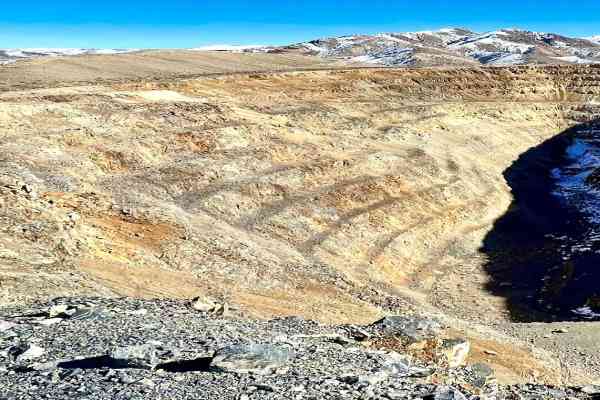
The Company located there Defense Metals specializes in rare earth mining. Defense Metals' Wicheeda project covers 6,759 hectares and is located about 80 km northeast of Prince George in British Columbia. It is easily accessible by gravel roads and is close to infrastructure such as power lines and gas pipelines. Proximity to the Canadian National Railway and major highways provides easy access to port facilities in Prince Rupert, the nearest major port for the Asian market. Geotechnical investigations for the site infrastructure are progressing rapidly.
Craig Taylor, CEO of Defense Metals, is delighted with the progress, "*It is great to see our technical consultant teams making significant progress on the Wicheeda project investigations. *Defense Metals has assembled a world-class team of experts with both the experience and technical skills to advance this project to the pre-feasibility study stage.**"
The 2021 Preliminary Economic Assessment Report for the Wicheeda REE Project shows a solid after-tax net present value of USD 517 million and a rate of return of 18%. This is based on an open pit operation with a strip ratio of 1.75:1, a processing capacity of 1.8 Mtpa, and an annual average production of 25,423 tonnes of rare earth oxides over a mine life of 16 years.
The planned geotechnical investigations for the site infrastructure include excavated test pits and sonic overburden drilling. These are being used to preliminarily characterize the shallow bedrock and bedrock foundations for possible future locations of waste rock, mineral stockpiles, contact water ponds, crusher, processing plants and tailings storage.
To date, 13 test pits and 4 sonic overburden geotechnical holes have been drilled to analyze the surficial material conditions in the proposed excavation locations. The investigations resulted in shallow overburden conditions (no overburden or <1 meter overburden depth) for the test pits with depths ranging from 1 to 5 m. The drilled sonic overburden holes extend from 7 m to over 36.6 m depth to bedrock in areas with thicker material. **An initial overburden ratio of 0.63:1 in Phase I will provide rapid access to high-grade surface mineralization in the first year and achieve repayment of the initial USD 440 million capital within 5 years.
Volkswagen: Strong passenger car registrations in Europe despite challenges
Rare earths are also vital for the production of permanent magnets used in electric motors, generators and other automotive, renewable energy and electromobility applications. The automotive sector is defying the pandemic-related impacts and supply shortages, as revealed by data from the European Automobile Manufacturers Association (ACEA) on Wednesday. Thanks to generous subsidies in many European Union countries, electric vehicles (EVs) are taking the market by storm, with a whopping 60.6% increase. Volkswagen recorded a 17.9% increase in its sales in July.
Approximately a quarter of all vehicles sold in the EU are full hybrids. Plug-in hybrids, which have both an internal combustion engine and a powerful battery, capture 7.9% of the market. Petrol and diesel engines together account for just under 50% of sales. The former frontrunners, diesel vehicles, which accounted for more than half of new car sales in 2015, now represent a modest share of just over 14% in July.
But aside from all the promising numbers, investors should not overlook what the Group did in July regarding the high competitive pressure from China. The Wolfsburg-based company revised its annual sales forecast downward while announcing measures to strengthen its financial position in the second half of the year. The sales forecast was lowered from the original 9.5 million vehicles to a range of 9 and 9.5 million vehicles. According to CFO Arno Antlitz, this decrease is attributed to lower sales figures in China in the first half of the year.
To remain competitive, Volkswagen intends to make its brands more efficient. The "performance programs" already underway are expected to show initial results this year, as the Group takes rising competition in China seriously and plans to act quickly by German standards.
German energy transition drives BASF to restructure
Germany's current energy policy is forcing major corporations like BASF to take unusual measures. US-based Cheniere Energy announced Tuesday that it will supply BASF AG with 0.8 million metric tons of liquefied natural gas (LNG) per year in the future. In the face of Western sanctions against Russia, the US has established itself as the world's largest LNG exporter.
Supplies will begin in mid-2026 and increase to about 0.8 million tons per year once the appropriate facilities have been expanded to accommodate them. The LNG supply agreement extends until 2043.
This makes it all the more understandable that BASF is reorganizing its Business structures. For example, the Company has successfully spun off its mobile exhaust catalysts and precious metals services businesses. The new independent unit is called BASF Environmental Catalyst and Metal Solutions (ECMS) and is headquartered in Iselin, New Jersey, USA. This is where the LNG comes from and where part of the Company is now based.
The spin-off was completed as planned within 18 months. ECMS now operates with its own legal structures, IT systems and services. The Company operates in 15 countries with over 4,500 employees and 20 production sites. ECMS remains part of the Catalysts division in BASF's Surface Technologies segment. The stock is currently trading at EUR 45.98.
Defense Metals is rapidly advancing its rare earths production at the Wicheeda deposit to meet growing demand in the electronics industry. Volkswagen posts strong new car registrations in Europe while strategically adjusting to meet increasing competition in China. BASF is responding to the energy transition and adapting to the latest market conditions by reorganizing its business structure and adapting to receiving LNG supplies from the US.
Conflict of interest
Pursuant to §85 of the German Securities Trading Act (WpHG), we point out that Apaton Finance GmbH as well as partners, authors or employees of Apaton Finance GmbH (hereinafter referred to as "Relevant Persons") may hold shares or other financial instruments of the aforementioned companies in the future or may bet on rising or falling prices and thus a conflict of interest may arise in the future. The Relevant Persons reserve the right to buy or sell shares or other financial instruments of the Company at any time (hereinafter each a "Transaction"). Transactions may, under certain circumstances, influence the respective price of the shares or other financial instruments of the Company.
In addition, Apaton Finance GmbH is active in the context of the preparation and publication of the reporting in paid contractual relationships.
For this reason, there is a concrete conflict of interest.
The above information on existing conflicts of interest applies to all types and forms of publication used by Apaton Finance GmbH for publications on companies.
Risk notice
Apaton Finance GmbH offers editors, agencies and companies the opportunity to publish commentaries, interviews, summaries, news and the like on news.financial. These contents are exclusively for the information of the readers and do not represent any call to action or recommendations, neither explicitly nor implicitly they are to be understood as an assurance of possible price developments. The contents do not replace individual expert investment advice and do not constitute an offer to sell the discussed share(s) or other financial instruments, nor an invitation to buy or sell such.
The content is expressly not a financial analysis, but a journalistic or advertising text. Readers or users who make investment decisions or carry out transactions on the basis of the information provided here do so entirely at their own risk. No contractual relationship is established between Apaton Finance GmbH and its readers or the users of its offers, as our information only refers to the company and not to the investment decision of the reader or user.
The acquisition of financial instruments involves high risks, which can lead to the total loss of the invested capital. The information published by Apaton Finance GmbH and its authors is based on careful research. Nevertheless, no liability is assumed for financial losses or a content-related guarantee for the topicality, correctness, appropriateness and completeness of the content provided here. Please also note our Terms of use.