September 3rd, 2026 | 08:20 CEST
Roadmap Instead of Guesswork: Finexity, Lahontan Gold and BMW on a Clear Path to the Future
Promises about the future are what drive the stock market. But they are not always credible. Some companies, however, openly lay out their roadmaps—with clearly defined milestones rather than mere hope. Three examples illustrate just how different this can look: Finexity, a Hamburg-based fintech company reinventing securities trading; Lahontan Gold, a Canadian exploration company on the verge of entering production; and German blue-chip BMW. The Munich-based automaker is defining a "Neue Klasse" (New Class) not just on the road. Investors should keep all three stocks on their radar.
time to read: 8 minutes | Author: Jens Castner
ISIN: LAHONTAN GOLD CORP | CA50732M1014 | TSXV: LG , OTCQB: LGCXF , BAY.MOTOREN WERKE AG ST | DE0005190003 , FINEXITY AG | DE000A40ET88
Table of contents:
Author
Jens Castner
The Nuremberg native brings over three decades of capital markets experience, backed by a career shaped by deep market insight and a genuine passion for investing. His journey began in 1994 through an investment club among colleagues – a formative experience that sparked a lifelong dedication to identifying compelling investment opportunities.
Following senior editorial roles at Nürnberger Nachrichten, €uro am Sonntag, and €uro, he went on to serve as Editor-in-Chief of the renowned investor magazine Börse Online from 2014, where he played a key role in shaping high-quality financial journalism for a broad investor audience.
Tag cloud
Shares cloud
Finexity: The Securities Market is Going Digital
Michael Ost's presentation at the Equity Forum's autumn conference last Tuesday caught everyone's attention: "By 2040, half of all securities will be tokenized," explained the deputy CEO of Finexity to analysts, investors and members of the press in Frankfurt. A bold claim, yet the Hamburg-based fintech group is already building the infrastructure for this future. At its core, tokenization involves converting traditional securities into digital form, which are then processed via blockchains. That sounds revolutionary, but in practice it is anything but mysterious. Ost sums it up as follows: "Shares remain shares, bonds remain bonds – just as a book is still a book. Only the distribution channel changes, as once happened with books thanks to Amazon." Instead of centrally managed registers, future transactions will be processed via decentralized networks. The infrastructure behind the scenes will become more transparent, faster and more cost-effective.
Finexity, through its subsidiary Nundara, has been operating a trading platform for tokenized bonds since 2021, featuring newly issued bonds that are actually traded. The Hamburg-based company has a clear roadmap: the first funds are to be tokenized in early 2027, followed immediately by shares. By mid-2028, the company expects to secure a licence as a regulated European trading venue for all types of securities – while simultaneously establishing an almost identical model in the United Arab Emirates.
The business model rests on four pillars. Nundara forms the technical backbone, providing the infrastructure for issuance, trading and settlement. The subsidiary nolivius advises issuers and other capital market participants on capital structure, security design and business transformation. VolksInvest opens the world of tokenized securities to retail investors, much like a modern broker. And Effecta acts as a regulated distribution platform for over 45 affiliated placement partners, without requiring them to hold their own licences. For investors, the new world of securities trading promises a range of benefits. 24/7 trading is no longer a distant dream; furthermore, both conventional and tokenized securities can be held in the same custody account. For the established financial sector, this marks a turning point – banks, brokers and stock exchanges will have to engage intensively with Finexity's technology in future. Ost sums it up succinctly: "We have the end-to-end solution for everything."
The target figures underline the ambitions. Finexity aims to grow from its current turnover of EUR 8 million to EUR 70 million within three years. This is not wishful thinking, but the result of concrete milestones. Should the plan to multiply turnover succeed, the share price, currently at EUR 34.40, would have plenty of room for growth, given a market capitalization of just EUR 45.8 million. Analysts at NuWays have set a target price of EUR 64.00, while GBC Research has set one as high as EUR 81.11. The technology is ready. The task now is to establish it in the mass market.
Lahontan Gold: From Drill Hole to Gold Bar
While Finexity is building the infrastructure for the future, Lahontan Gold is building the future on tried-and-tested infrastructure. And it is doing so with a roadmap that is at least as concrete. The Canadian company intends to reactivate the historic Santa Fe Mine in the US state of Nevada, a so-called brownfield project, meaning one that has already been in operation. This is the key to speed and cost-efficiency. Between 1988 and 1995, Santa Fe already produced approximately 359,000 ounces of gold and 702,000 ounces of silver. The infrastructure is still in place today. Electricity, water, road access and local workers – all of these are available. A greenfield project, a completely new development, would take years and cost many times as much. In other words: Lahontan is saving time and money.
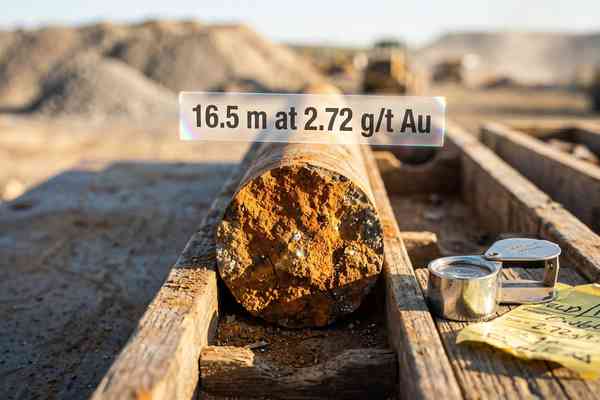
The updated Preliminary Economic Assessment (PEA) is due to be submitted as early as September. The independent consultants KCA and RESPEC are analyzing the mine design and process flow and optimizing the crushing capacity. Lahontan will then submit the Mine Plan of Operations to the Federal Bureau of Land Management. Permit procedures at state and federal level are already running in parallel: geochemical characterization, groundwater modelling, drilling programs – 2,569 m across 11 boreholes have already been completed. Construction is set to begin in 2027. The first gold bars are due to be cast by the end of 2027, or early 2028 at the latest. According to CEO Kimberly Ann, the project is "a classic brownfield reactivation, which benefits from existing infrastructure and technical expertise, thereby leading to lower capital costs, a shorter development timeframe and significantly lower execution risk than comparable greenfield projects." An interview with IIF presenter Lyndsay Malchuk and Lahontan CEO Kimberly Ann can be found below:
The latest mineral resource estimate from August demonstrates the project's substance. The total resource, optimized for open-cast mining, is 22% higher than in the previous study, an increase of 435,000 ounces of gold equivalent. The indicated resource now totals 1.195 million ounces of gold equivalent at an average grade of 0.72 g/t, while the inferred resource stands at 1.190 million ounces at 0.61 g/t. In Nevada, this is highly profitable: heap leaching, the process of dousing the rock with a dilute cyanide solution to extract the precious metal, makes mining economically viable even at gold grades as low as 0.21 g/t. Santa Fe is well above that.
And it gets even better: around 200,000 ounces of gold lie exposed on the surface of the old heap leach tailings, which can potentially be processed particularly cost-effectively. At the current gold price of over USD 4,000 per ounce, this corresponds to a market value of more than USD 800 million. The initial PEA put the project value of the main mine alone at USD 200 million – at that time it was based on an assumed gold price of USD 2,705. At today's price, the new PEA will prove significantly more attractive. Lahontan's current market capitalization stands at the equivalent of around USD 123 million – a fraction of what can be mined with minimal effort. As soon as the permits are in place and construction can begin in 2027, the reactivation will become a reality – and a re-rating will therefore be inevitable sooner or later, especially as Lahontan has further high-grade gold veins in its portfolio. The low share price of just CAD 0.38 (currently EUR 0.24 in Germany) is unlikely to be set in stone.
BMW: Neue Klasse (New Class), New Upside Potential
Another, even more prominent example of a company with a clear strategic direction for the future is BMW. Although a cost-cutting program has been approved, involving the socially responsible reduction of 8,000 jobs, while the workforce at Volkswagen is on tenterhooks ahead of tomorrow's supervisory board meeting, the focus in Munich is neither on plant closures nor on strategic discussions that should have been resolved long ago. The transformation is already underway – keyword: Neue Klasse. BMW's main plant in Munich, the heart of the brand, will cease production of internal combustion engine vehicles entirely from the end of 2027. After that, only fully electric vehicles will roll off the production line there. At the same time, BMW is modernizing its US plant in Spartanburg and expanding production in the US and the United Arab Emirates. Oliver Zipse, the predecessor of CEO Milan Nedeljković, who has been in office since May, was already convinced: "The Neue Klasse is BMW - and BMW is the Neue Klasse." While parts of the industry are accused of playing a game with a stacked deck, the Munich-based automaker is reshuffling the cards. The difference lies not in the market situation, but in the clarity of the plan.
The BMW iX3 has been rolling off the production line since 2025 - the first model in the Neue Klasse, BMW's architecture for the future. Now the acceleration phase begins. By the end of 2027, BMW will launch six further Neue Klasse models. In August 2026, series production began on the all-electric BMW i3 – the electric equivalent of the legendary 3 Series. High demand meant that the start of orders was brought forward to June. The BMW i3 50 xDrive starts at EUR 65,900 and delivers 469 PS with a range of up to 906 km – that is benchmark quality. The i3 Touring, the estate version, will follow in mid-2027. The compact iX1 SUV will launch at the end of 2027. The sporty flagship, the first all-electric BMW M with up to 1,360 PS, may be unveiled later this year. And the iX4 SUV coupé is set to hit the roads in mid to late 2027.
What makes this special is that BMW is simultaneously rolling out the technologies of the Neue Klasse across more than 40 model variants – not only pure-electric vehicles, but also plug-in hybrids and traditional internal combustion engines will feature the new 800-volt architecture, the revolutionary Panoramic iDrive head-up display, and the new design language. The technology lies at the core, regardless of the powertrain. Analysts are rewarding this clarity. The average target price stands at EUR 77.25, while the current share price is around EUR 61.30. Goldman Sachs and Bernstein Research each see BMW reaching EUR 82, while Deutsche Bank even believes the EUR 90 mark is achievable once again. This demonstrates confidence in a car manufacturer that knows where it is heading – and communicates this to the capital market.
Conclusion: Roadmaps Instead of Fantasies
Three companies, three sectors, one common denominator: Finexity, Lahontan Gold and BMW are not stringing investors along with vague visions; instead, they are backing their ambitions with clearly defined milestones and timelines. Finexity has specific licensing targets through 2028, Lahontan is approaching its planned production start week by week, and BMW has already launched its model offensive rather than merely announcing it. For investors, the message is clear: a roadmap is no substitute for a valuation – but it does make the valuation verifiable. And that is precisely what sets these three stocks apart from so many stock market promises that never materialize.
Conflict of interest
Pursuant to §85 of the German Securities Trading Act (WpHG), we point out that Apaton Finance GmbH as well as partners, authors or employees of Apaton Finance GmbH (hereinafter referred to as "Relevant Persons") may hold shares or other financial instruments of the aforementioned companies in the future or may bet on rising or falling prices and thus a conflict of interest may arise in the future. The Relevant Persons reserve the right to buy or sell shares or other financial instruments of the Company at any time (hereinafter each a "Transaction"). Transactions may, under certain circumstances, influence the respective price of the shares or other financial instruments of the Company.
In addition, Apaton Finance GmbH is active in the context of the preparation and publication of the reporting in paid contractual relationships.
For this reason, there is a concrete conflict of interest.
The above information on existing conflicts of interest applies to all types and forms of publication used by Apaton Finance GmbH for publications on companies.
Risk notice
Apaton Finance GmbH offers editors, agencies and companies the opportunity to publish commentaries, interviews, summaries, news and the like on news.financial. These contents are exclusively for the information of the readers and do not represent any call to action or recommendations, neither explicitly nor implicitly they are to be understood as an assurance of possible price developments. The contents do not replace individual expert investment advice and do not constitute an offer to sell the discussed share(s) or other financial instruments, nor an invitation to buy or sell such.
The content is expressly not a financial analysis, but a journalistic or advertising text. Readers or users who make investment decisions or carry out transactions on the basis of the information provided here do so entirely at their own risk. No contractual relationship is established between Apaton Finance GmbH and its readers or the users of its offers, as our information only refers to the company and not to the investment decision of the reader or user.
The acquisition of financial instruments involves high risks, which can lead to the total loss of the invested capital. The information published by Apaton Finance GmbH and its authors is based on careful research. Nevertheless, no liability is assumed for financial losses or a content-related guarantee for the topicality, correctness, appropriateness and completeness of the content provided here. Please also note our Terms of use.