May 25th, 2026 | 08:10 CEST
Rheinmetall, Antimony Resources, and RENK Group: Your Gateway to the Defence Boom and Its Lucrative Supply Chain
Created and published on behalf of Antimony Resources Corp.
Billions are flowing into Europe's defence sector—but behind the impressive order books lies a risk: the shortage of critical raw materials. While tanks and transmission systems are the obvious winners of the rearmament wave, the invisible foundation of many defence technologies is coming under increasing pressure. A strategic metal whose supply chains are dominated by China could become the Achilles' heel of the entire industry. From the established defence conglomerate Rheinmetall to the raw materials explorer Antimony Resources and the specialized drivetrain manufacturer RENK Group, they all have one thing in common: they are benefiting from the defence boom.
time to read: 5 minutes | Author: Armin Schulz
ISIN: RHEINMETALL AG | DE0007030009 , RENK AG O.N. | DE000RENK730 , ANTIMONY RESOURCES CORP | CA0369271014 | CSE: ATMY , OTCQB: ATMYF
Table of contents:
Author

Armin Schulz
Born in Mönchengladbach, he studied business administration in the Netherlands. In the course of his studies he came into contact with the stock exchange for the first time. He has more than 25 years of experience in stock market business.
Tag cloud
Shares cloud
Rheinmetall: Between a Quarterly Dip and Strategic Expansion
The first quarter was mixed for the Düsseldorf-based defence conglomerate. While revenue and operating profit rose by 8% and 17%, respectively, they fell significantly short of analyst estimates, at just under EUR 1.94 billion and EUR 224 million, respectively. This is due to delivery delays into the second quarter. Currently, trucks and ammunition parts worth around EUR 300 million that have already been produced are awaiting delivery. The operating margin nevertheless improved to 11.6%, a sign of better capacity utilization and cost control.
The actual value driver remains the order book. The order backlog climbed to EUR 73 billion, including, for the first time, EUR 5.5 billion from the integrated naval division. Although operating free cash flow slipped to minus EUR 285 million, this is not a cause for alarm. The Group is strategically building up inventory to secure its ambitious annual targets of up to EUR 14.5 billion in revenue with a margin of around 19%. Management is sticking to this forecast, thereby demonstrating confidence in its own production capabilities.
Strategically, Rheinmetall demonstrates a keen sense for future-oriented fields. A new partnership with Deutsche Telekom aims to create a joint defence shield against drones and sabotage. In Hamburg, series production of the Kraken K3 Scout unmanned naval system is getting underway, while a joint venture with Destinus is set to bring cruise missile and ballistic missile production to Germany. Added to this are billion-euro contracts for loitering munitions and digital soldier systems for the German Armed Forces. The course has been set for the coming years. Now it is all about operational implementation. The share is currently trading at around EUR 1,221.60
Antimony Resources: Drilling Successes Spark Interest
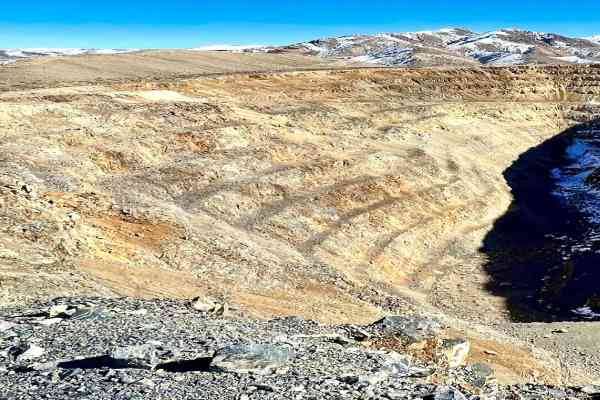
Antimony is indispensable in military technology—it is found in ammunition, night-vision devices, and flame-retardant tent tarps. After China drastically reduced its exports in 2024, the US is desperately searching for new sources. This is exactly where the Bald Hill antimony project in New Brunswick comes into play. The latest drill results from May 2026 are turning heads. In the Main Zone, the team encountered grades of nearly 27% antimony over narrow intervals, as well as several meters with grades exceeding 6%. Particularly exciting: the mineralization extends to a depth of 400 m and remains open on all sides. This points to an exceptionally robust system.
Parallel to the Main Zone, the crew discovered a separate, westward-trending structure known as the Marcus-West Zone. In addition, three further targets—the Marcus, Central, and South Zones—are awaiting drilling, with mineralization already identified at surface. The most recent soil sampling campaign, approximately 3 km to the south, also yielded antimony values reaching 40 times the reference value. The team subsequently expanded its concession area. The company is operating three drill rigs simultaneously. A total drilling program of 19,000 m is planned, including 13,000 m for the expansion of the Main Zone and 6,000 m for the exploration of the new target areas. Funding for this is secured, thanks to CAD 10 million raised last year plus warrants.
Preparations for the Environmental Impact Assessment (EIA) are underway in parallel with the drilling. A local consulting firm is currently developing a roadmap for the authorities. Initial discussions with the New Brunswick provincial government have been promising. The goal is to submit the application documents in late 2026 or early 2027. The project is small enough to move forward quickly. The estimated investment costs of CAD 200 million to reach production are rather modest in the mining industry. It remains to be seen whether the upcoming drill results from the West Zone will yield similar grades to those of the Main Zone. The next drill results could determine whether Bald Hill can truly establish itself as one of North America's highest-grade antimony deposits. The share is currently trading at around CAD 0.83.
RENK Group: Defence Business Growing in Importance
Times have changed radically for defence suppliers. The RENK Group, the Augsburg-based transmission specialist with over 150 years of experience, is the perfect example of this. Around 75% of revenue now comes from the defence business. By the end of the decade, this figure is expected to reach 90% organically. The reason is obvious. NATO countries are massively increasing their military budgets. The Vehicle Mobility Solutions division, which supplies transmissions for the Leopard 2, Puma, and other combat vehicles, benefits most from this. In the first quarter of 2026 alone, RENK recorded order intake of EUR 478 million in this segment, an increase of 21%.
What sets RENK apart from many competitors is its high-margin aftermarket business. Around 40% of revenue comes from spare parts, overhauls, and maintenance. Every new transmission sold generates three to four times that volume in follow-on revenue over its lifecycle. The total order backlog stands at a robust EUR 6.9 billion, roughly five times annual revenue. Added to this are EUR 11.5 billion in identified pipeline projects. Management aims to further increase the aftermarket share—a smart move, as margins here are significantly more attractive than in new production.
In May, the German-French defence group KNDS, a strategic investor and major customer of RENK, caused a stir. Through an accelerated placement process, 5.8 million shares were sold, reducing KNDS's stake in RENK from just under 16% to about 10%. The proceeds of EUR 262 million are intended to strengthen KNDS's own financial position ahead of its IPO. At the same time, Fidelity acquired a stake of just over 3%. Operationally, the focus remains on the future. RENK is supplying propulsion components for an unmanned surface vessel for a NATO member state and will present a heavy unmanned ground vehicle at Eurosatory 2026 in collaboration with Patria. The course has been set for autonomous systems. Currently, a share costs EUR 48.96.
The defence sector in Europe remains intact—but its long-term success hinges on vulnerable supply chains. Rheinmetall is countering operational setbacks and delivery delays with record orders and strategic partnerships. Antimony Resources is delivering promising drilling data and could break the West's dependence on Chinese antimony. RENK Group is focusing on high-margin aftermarket business and is benefiting directly from NATO's rearmament drive. Those who bet on the entire value chain, from raw materials to propulsion, are best positioned to capitalize on the boom.
Conflict of interest
Pursuant to §85 of the German Securities Trading Act (WpHG), we point out that Apaton Finance GmbH as well as partners, authors or employees of Apaton Finance GmbH (hereinafter referred to as "Relevant Persons") currently hold or hold shares or other financial instruments of the aforementioned companies and speculate on their price developments. In this respect, they intend to sell or acquire shares or other financial instruments of the companies (hereinafter each referred to as a "Transaction"). Transactions may thereby influence the respective price of the shares or other financial instruments of the Company.
In this respect, there is a concrete conflict of interest in the reporting on the companies.
In addition, Apaton Finance GmbH is active in the context of the preparation and publication of the reporting in paid contractual relationships.
For this reason, there is also a concrete conflict of interest.
The above information on existing conflicts of interest applies to all types and forms of publication used by Apaton Finance GmbH for publications on companies.
Risk notice
Apaton Finance GmbH offers editors, agencies and companies the opportunity to publish commentaries, interviews, summaries, news and the like on news.financial. These contents are exclusively for the information of the readers and do not represent any call to action or recommendations, neither explicitly nor implicitly they are to be understood as an assurance of possible price developments. The contents do not replace individual expert investment advice and do not constitute an offer to sell the discussed share(s) or other financial instruments, nor an invitation to buy or sell such.
The content is expressly not a financial analysis, but a journalistic or advertising text. Readers or users who make investment decisions or carry out transactions on the basis of the information provided here do so entirely at their own risk. No contractual relationship is established between Apaton Finance GmbH and its readers or the users of its offers, as our information only refers to the company and not to the investment decision of the reader or user.
The acquisition of financial instruments involves high risks, which can lead to the total loss of the invested capital. The information published by Apaton Finance GmbH and its authors is based on careful research. Nevertheless, no liability is assumed for financial losses or a content-related guarantee for the topicality, correctness, appropriateness and completeness of the content provided here. Please also note our Terms of use.