
Robotics
Commented by Armin Schulz on October 14th, 2026 | 05:44 CEST
SpaceX, First Hydrogen, Siemens: Space, Drones and Robotics Are Key Themes for Investors
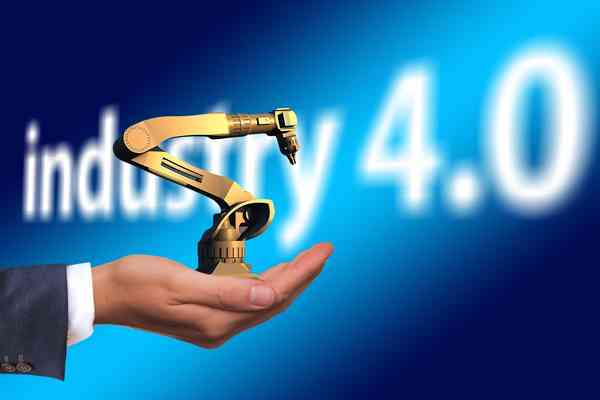
Space, drones and robotics are likely to become increasingly important in the coming years. On September 24, the International Federation of Robotics (IFR) reported a record stock of 5 million industrial robots, while on September 28, Starship reached Earth orbit for the first time. The two developments are more closely connected than they might initially appear. Deploying drones or robots in factories requires connectivity, propulsion systems and software to control the entire operation. From space to the factory floor, the foundations for the next phase of technological development are being laid. We therefore take a closer look at SpaceX, First Hydrogen and Siemens.
Read
Commented by Tarik Dede on October 5th, 2026 | 07:25 CEST
Bucking the Market Trend: Opportunities at Mercedes, First Hydrogen and Barrick Mining
The Nasdaq 100 hit a new all-time high last week. The tech index is driven primarily by AI stocks, leading to astonishing valuations. For example, the combined value of all publicly traded German stocks currently amounts to about 52% of the market capitalization of AI champion Nvidia, as one analyst calculated. However, some sectors are currently underperforming. For investors who like to take a contrarian approach, this presents opportunities—for example, in the automotive and gold sectors or in hydrogen stocks. That is why today we are taking a look at the stocks of Mercedes, First Hydrogen and Barrick Mining.
Read
Commented by Carsten Mainitz on October 2nd, 2026 | 10:00 CEST
Massively Underrated! The Next Robotics Wave Is Coming – First Hydrogen, BMW and Schaeffler Are Getting in Position!
Hydrogen, AI, and robotics are transforming mobility and opening up new business opportunities. While BMW is advancing the use of humanoid robots in its own production facilities, Schaeffler is developing key components for the next generation of robotics. The developments at First Hydrogen are particularly exciting. The Canadian company is evolving from a hydrogen commercial vehicle specialist into a provider of unmanned ground vehicles and robotics, targeting a market with enormous potential. Change creates opportunity. Who will put the most horsepower on the road by the end of the year?
Read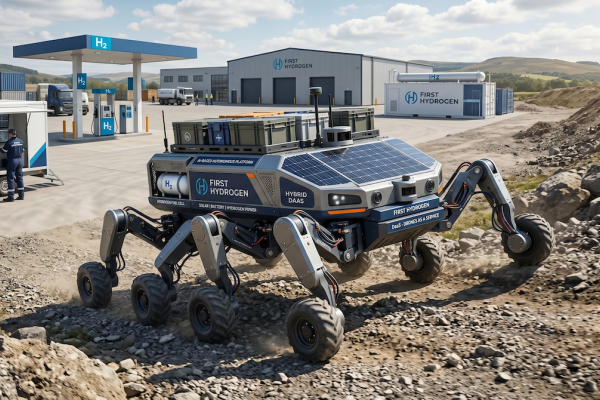
Commented by Fabian Lorenz on September 30th, 2026 | 07:05 CEST
Missed DroneShield's 500% Rally? The Next Drone Revolution Is Coming – First Hydrogen Set for a Revaluation!
Are we on the verge of the next drone revolution? Last year, investors were able to earn more than 500% at times with stocks like DroneShield. Now, unmanned systems are increasingly taking over the ground as well. The war in Ukraine shows just how quickly UGVs are evolving from logistical aids into offensive weapon systems. The market potential is enormous. On the stock market, the ground drone revolution has so far been treated as little more than a standalone theme. This is likely to change soon and drive up First Hydrogen's shares. After securing exclusive global patent rights in 2026 for the further development and commercialization of a patented AI-powered UGV platform, the company recently unveiled its first model. With a current market capitalization of just around EUR 22 million, it may only be a matter of time before the stock undergoes a major revaluation.
Read
Commented by Nico Popp on September 29th, 2026 | 07:00 CEST
Operation Vivaldi Is Changing the Nature of Warfare: First Hydrogen Follows Ukraine's Lead and Joins the Arms Race
Modern warfare is changing every week. This is exemplified on the battlefields of Ukraine, where, in recent weeks as part of Operation Vivaldi, heavy drones have deployed remote-controlled kamikaze ground robots more than 10 km behind enemy lines. The processes behind this latest Ukrainian offensive are compressing conventional innovation cycles from years to weeks and days, rewriting the rules of the game for the defence industry. Amid this arms race, significant opportunities are opening up for technology companies that approach innovation with the same drive as Ukraine's startups and its units on the front lines. Those that deliver highly flexible, comprehensive solutions from a single source are likely to lead the drone market of the future. We take a closer look at the latest developments at First Hydrogen.
Read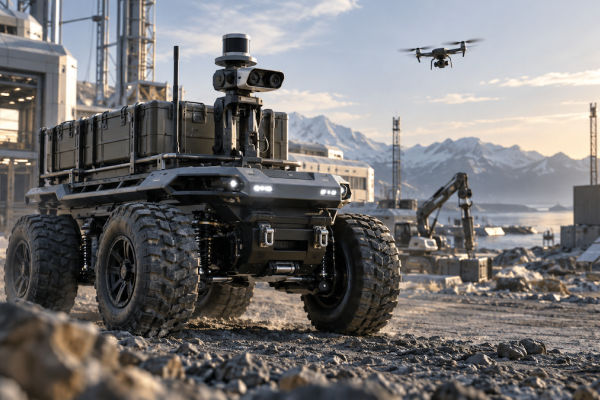
Commented by Fabian Lorenz on September 15th, 2026 | 07:40 CEST
Panic at DroneShield! AI Power Behind Bloom Energy Stock! Robotics Newcomer First Hydrogen Targets Trillion-Dollar Market!
Is panic now setting in at DroneShield—both within the company and among its shareholders? In any case, the stock's downward trend shows no signs of ending. In such an environment, a CFO change can quickly lead to the next price debacle. That is why DroneShield has paired the personnel change with a strong operational announcement. However, this did not provide any positive momentum for the stock. Investors are also waiting for a positive price reaction from First Hydrogen. The company continues to move full steam ahead as it enters the robotics and autonomous systems market. It has secured the worldwide exclusive rights to further develop and commercialize a mobile, AI-powered ground robotics platform. In addition, First Hydrogen is acquiring a majority stake in a robotics specialist. The market for humanoid robots alone has trillion-dollar potential. Bloom Energy's stock has recently staged an impressive comeback, surging sharply within just a few days. Investors continue to bet that AI will drive up energy consumption.
Read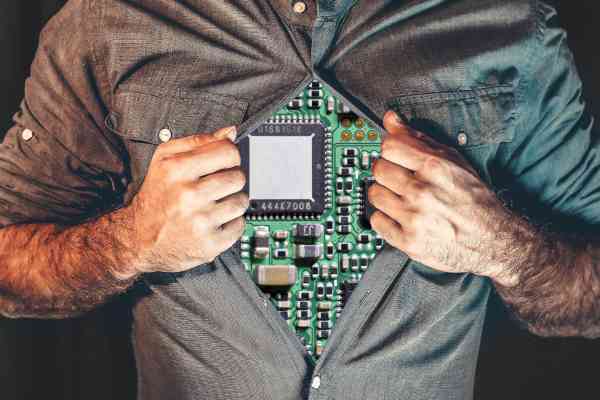
Commented by Armin Schulz on September 7th, 2026 | 08:00 CEST
Siemens, First Hydrogen and SpaceX Aim to Profit from the USD 200 Billion Tech Supercycle Driven by AI, Robotics and Space
We are heading into a new economic era shaped by three interconnected megatrends: artificial intelligence, robotics and the exploration of space. While AI provides the cognitive framework, robotics translates this intelligence into physical actions, and space is emerging as the ultimate source of raw materials, energy and data bandwidth. Together, these technologies will not merely automate processes; they will shape the industries of tomorrow. Analysts estimate that investment in this AI-driven hardware offensive could reach up to USD 200 billion. As an investor, you cannot afford to miss this trend. We therefore take a closer look at the strategies of Siemens, First Hydrogen and SpaceX.
Read
Commented by Stefan Feulner on September 1st, 2026 | 07:30 CEST
Ballard Power, First Hydrogen, ElringKlinger: Is Hydrogen Poised for a Fresh Start?
After years of billion-dollar investments and grand promises, the hydrogen industry must finally deliver. What matters now is no longer new letters of intent, but applications that will work in everyday life and that can be scaled economically. Fuel cells are now making their way into heavy-duty transportation, providers are bundling technology and hydrogen supply, and new areas of application are emerging beyond traditional vehicles. For investors, this could mark the beginning of a new phase. It is no longer merely the vision that matters, but rather who is actually turning hydrogen into a business.
Read
Commented by André Will-Laudien on August 27th, 2026 | 07:25 CEST
AI, E-Mobility and Robotics: 150% Upside? Mercedes-Benz, BYD, XPeng and Strategic Resources in Focus
The profound convergence of artificial intelligence, robotics, and e-mobility is completely redefining today's industrial landscape. This technological revolution is being led by visionary companies that are deliberately upending conventional industry norms. For example, the Chinese pioneer XPeng is strategically transforming its business model toward "Physical AI" to enable vehicles to merge with humanoid robots in perfect symbiosis in the future. At the same time, global industry leader BYD is pushing into the European market with an unprecedented scaling offensive, while established luxury manufacturers like Mercedes-Benz are building an emotional bridge between high-performance software and legendary driving culture. Yet amid this rapid race for technological supremacy, one fundamental truth is often overlooked: without securing the underlying raw material supply chains, the entire high-tech machinery comes to a standstill. This is where the raw materials specialist Strategic Resources Inc. positions itself: with its Canadian BlackRock project, the company already has a key approved mine. It is worth taking a closer look at the numbers.
Read
Commented by Matthias Schomber on August 26th, 2026 | 07:05 CEST
Thrills and Opportunities in the Markets: Why Infineon, XPeng and Desert Gold Could Make Waves Now
Futuristic visions and fundamental security converge in one place: the stock market. The global AI boom demands ever more powerful computing capabilities, and semiconductor companies like Infineon are essentially providing the silicon brain behind this technological revolution. Electric vehicle manufacturers like XPeng are already ushering in and igniting the next stage. The company is defying the fierce price war and aims to usher in the era of humanoid robots with spectacular billion-dollar moves in robotics. But the faster this high-tech spiral spins, the more pressing the question becomes of finding the right shield for one's investment portfolio should something go wrong in this world. We have known just how fragile this system is — not just since the mortgage crisis; history repeats itself every few years or decades. This is precisely where gold comes into play as the ultimate crisis currency and timeless hedge. In the desert sands of West Africa, Desert Gold may be on the verge of causing a minor sensation. The exploration company is on the cusp of becoming an active gold producer. In this exclusive report, discover how the highly explosive mix of artificial intelligence, humanoid robot hype, and tangible asset protection not only makes your portfolio "storm-proof" but also equips it with enormous upside potential.
Read