April 29th, 2026 | 11:00 CEST
Industrial Energy Transition: Air Liquide, Forgent, and SME Favorite A.H.T. Syngas
Today, more than ever, the industrial climate transition requires a technological mix of suitable infrastructure and highly efficient, decentralized gasification solutions. This need is further exacerbated by the current geopolitical situation and the ongoing energy crisis resulting from the Iran conflict. Since the disruption of shipping through the Strait of Hormuz has led to a significant loss of global liquefied natural gas supply, companies are desperately seeking alternatives to secure their energy supply. According to forecasts by the International Energy Agency (IEA), fossil fuel procurement costs will remain high, further increasing the urgency of industrial decarbonization. In this market environment, a two-way split is emerging. While market leader Air Liquide offers suitable solutions for heavy industry through the establishment of hydrogen hubs and CO₂ capture, specialized providers are competing for the enormous opportunities in the energy utilization of waste and other residual materials. We present the opportunities.
time to read: 3 minutes | Author: Nico Popp
ISIN: A.H.T. SYNGAS TECH. EO 1 | NL0010872388 , AIR LIQUIDE INH. EO 5_50 | FR0000120073 , EQTEC EO-_001 | IE00BH3XCL94
Table of contents:
Author

Nico Popp
At home in Southern Germany, the passionate stock exchange expert has been accompanying the capital markets for about twenty years. With a soft spot for smaller companies, he is constantly on the lookout for exciting investment stories.
Tag cloud
Shares cloud
Gases for Industry: Decentralized Solutions Gain Momentum
For large-scale solutions, Forgent—which no longer operates under the name EQTEC following a rebranding in February—focuses on complex solutions for converting waste into synthesis gas for large industrial plants. A.H.T. Syngas Technology, on the other hand, uses a modular design focused solely on decentralized energy self-sufficiency for small- and medium-sized enterprises. In particular, A.H.T.'s expansion in Poland, launched in March, is currently striking a chord, as local biomass potential is being harnessed there to make small and medium-sized enterprises independent of fluctuating natural gas prices. For investors, this creates an exciting landscape, with A.H.T. in particular offering strong arguments. We will first examine the situation in heavy industry and then discuss solutions for the broader market.
Air Liquide as the Backbone of Heavy Industry
Air Liquide embodies the traditional infrastructure approach to the energy transition. The French company leverages its scale and financial strength to offer integrated solutions, often structured around decades-long supply contracts. At the heart of the strategy are massive hydrogen hubs and carbon capture facilities, such as the planned Holcim cement plant in Belgium, which is expected to capture over 1 million tons of CO₂ annually. Financially, the group is extremely robust, reporting consolidated revenue of just under EUR 6.8 billion for the first quarter of 2026. At the same time, the gas specialist is benefiting from the global expansion of artificial intelligence (AI). As Barclays analysts point out, Air Liquide is a structural beneficiary of infrastructure expansion for data centers, as industrial gases are indispensable for cooling and semiconductor manufacturing.
Forgent: Complex Gasification and New Raw Material Assets
In the field of industrial circular economy, Forgent is targeting large industrial plants and waste-to-energy projects. The company's patented gasification technology enables project developers to convert complex waste streams into high-quality synthesis gas for electricity and heat generation. However, since plant construction often involves long lead times, CEO James Parsons announced a strategic expansion this spring. In addition to gasification, the company is now making targeted investments in resource-based assets, such as the Green Rock project in Western Australia, to extract critical metals like copper and gold. According to management, this strategic diversification is intended to accelerate cash flows and ensure financial stability, while the core gasification business is expected to continue maturing as a long-term value driver.
A.H.T. Syngas: Decentralized Energy Self-Sufficiency for Small and Medium-Sized Businesses
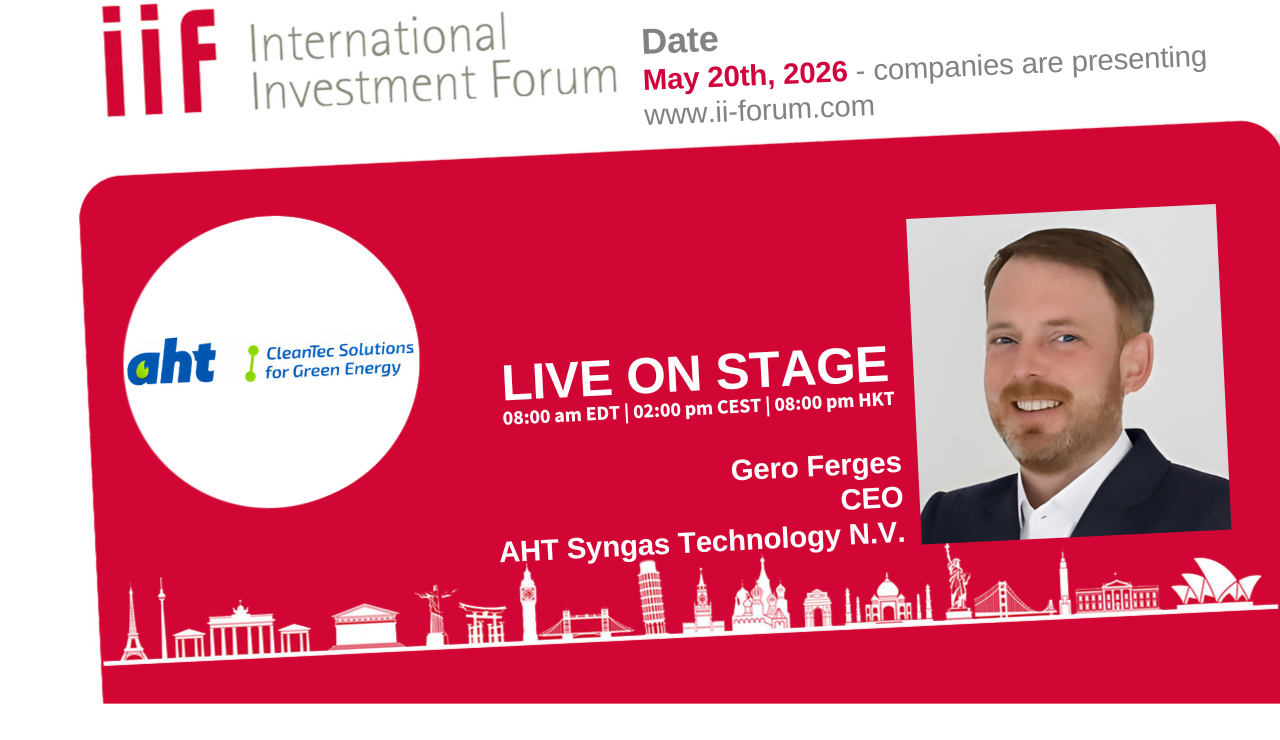
While Air Liquide supplies large corporations and Forgent focuses on more complex large-scale plants, A.H.T. Syngas Technology, as a specialist, focuses on decentralized energy self-sufficiency for small and medium-sized businesses. A.H.T.'s plants use biogenic residues to generate process heat or electricity directly at the point of consumption via a patented process. This modular approach frees energy-intensive businesses from their dependence on centralized natural gas grids. A strategic milestone in this regard is the partnership with the Polish project developer INNOTEC, announced in March. Poland has vast biogenic resources from agriculture, but is under significant pressure to replace fossil fuel imports in the near term. According to CEO Gero Ferges, the current project pipeline for this collaboration enables immediate, very rapid growth. Management expects the first projects from the Polish expansion to be realized as early as this year, with an order volume exceeding EUR 10 million, impressively underscoring the technological maturity and market viability of the concept.
Decentralized Niche as a Yield Lever
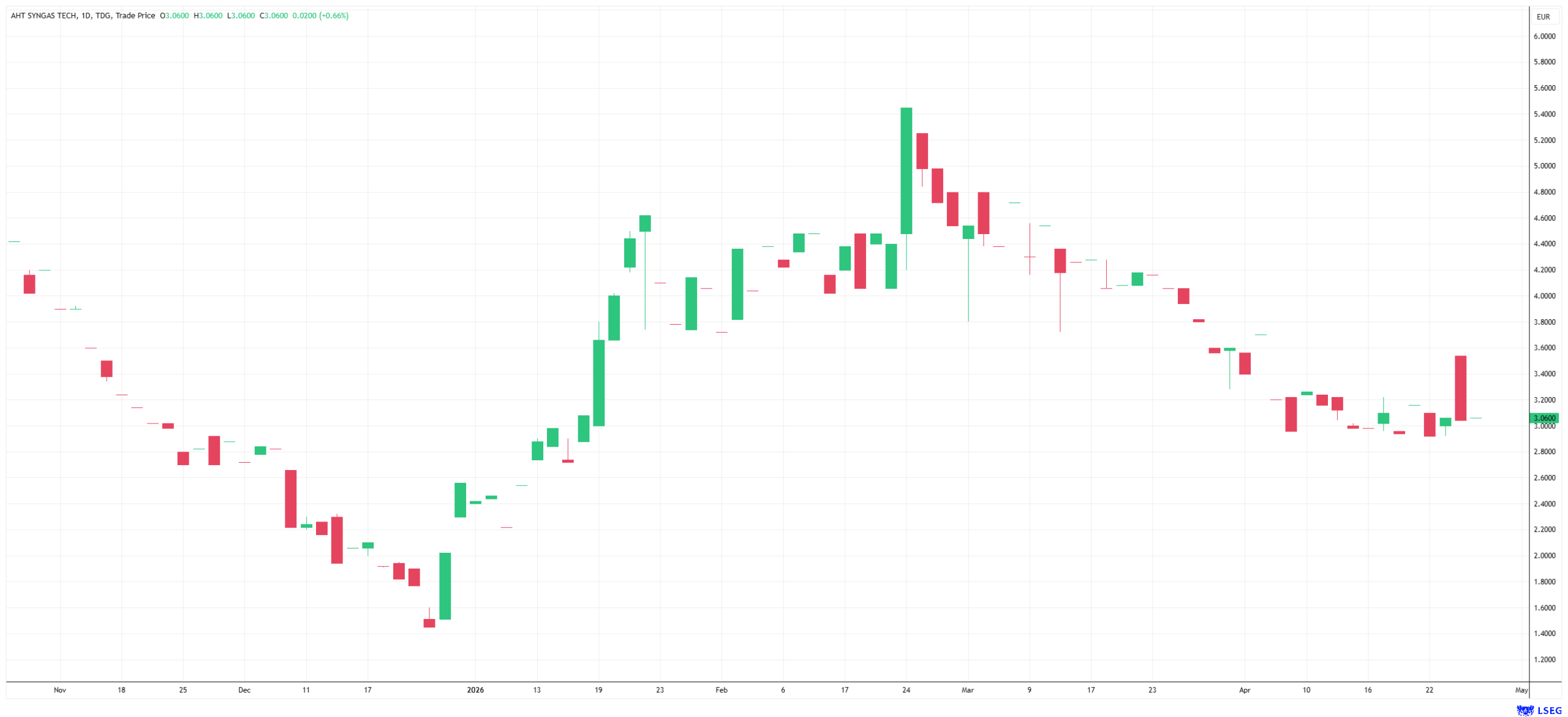
The industrial energy transition is not merely a competition between individual technologies, but requires the interplay of complementary solutions. Air Liquide is the defensively positioned core investment for long-term trends in heavy industry. As a turnaround candidate, Forgent offers a combination of waste recycling and the development of new raw material assets. So far, however, the business has not yet gained momentum. From an investor's perspective, A.H.T. Syngas offers the most compelling growth story in the circular economy niche. With a market capitalization of less than EUR 10 million, the company's scaling potential is still barely recognized by the stock market. Experts at GBC Research are rewarding the expected return to profitability and the smart expansion into Eastern Europe with a price target of EUR 8.50, offering significant upside from current levels. Investors looking to capitalize on the growing importance of the local circular economy and the urgent need for energy self-sufficiency among European SMEs will find A.H.T. Syngas an exciting investment opportunity.
Conflict of interest
Pursuant to §85 of the German Securities Trading Act (WpHG), we point out that Apaton Finance GmbH as well as partners, authors or employees of Apaton Finance GmbH (hereinafter referred to as "Relevant Persons") may hold shares or other financial instruments of the aforementioned companies in the future or may bet on rising or falling prices and thus a conflict of interest may arise in the future. The Relevant Persons reserve the right to buy or sell shares or other financial instruments of the Company at any time (hereinafter each a "Transaction"). Transactions may, under certain circumstances, influence the respective price of the shares or other financial instruments of the Company.
In addition, Apaton Finance GmbH is active in the context of the preparation and publication of the reporting in paid contractual relationships.
For this reason, there is a concrete conflict of interest.
The above information on existing conflicts of interest applies to all types and forms of publication used by Apaton Finance GmbH for publications on companies.
Risk notice
Apaton Finance GmbH offers editors, agencies and companies the opportunity to publish commentaries, interviews, summaries, news and the like on news.financial. These contents are exclusively for the information of the readers and do not represent any call to action or recommendations, neither explicitly nor implicitly they are to be understood as an assurance of possible price developments. The contents do not replace individual expert investment advice and do not constitute an offer to sell the discussed share(s) or other financial instruments, nor an invitation to buy or sell such.
The content is expressly not a financial analysis, but a journalistic or advertising text. Readers or users who make investment decisions or carry out transactions on the basis of the information provided here do so entirely at their own risk. No contractual relationship is established between Apaton Finance GmbH and its readers or the users of its offers, as our information only refers to the company and not to the investment decision of the reader or user.
The acquisition of financial instruments involves high risks, which can lead to the total loss of the invested capital. The information published by Apaton Finance GmbH and its authors is based on careful research. Nevertheless, no liability is assumed for financial losses or a content-related guarantee for the topicality, correctness, appropriateness and completeness of the content provided here. Please also note our Terms of use.