September 16th, 2026 | 06:45 CEST
Transformation of the Steel Industry: Rio Tinto and Salzgitter Juggle Projects, Strategic Resources Impresses Researchers
No steel, no infrastructure. From massive bridges and sprawling wind farms to the striking skylines of the world’s major cities—steel is used everywhere. Yet this essential building material comes with a heavy environmental footprint. Current developments, as well as studies and research, show that the industry is facing a radical transformation. Traditional coal-fired blast furnaces have had their day. To protect the climate, new technologies are essential. We look at the latest trends and the companies involved, and highlight opportunities for investors.
time to read: 4 minutes | Author: Nico Popp
ISIN: STRATEGIC RES INC. | CA86277X4093 | TSXV: SR , RIO TINTO PLC LS-_10 | GB0007188757 , SALZGITTER AG O.N. | DE0006202005
Table of contents:
Author

Nico Popp
At home in Southern Germany, the passionate stock exchange expert has been accompanying the capital markets for about twenty years. With a soft spot for smaller companies, he is constantly on the lookout for exciting investment stories.
Tag cloud
Shares cloud
Rio Tinto: Strategic Realignment Beyond Old Certainties
Rio Tinto is feeling the pressure to transform firsthand. Internal analyses show that downstream emissions from steel mills it supplies account for a full 69% of its Scope 3 emissions. As a result, Rio Tinto is consistently pushing forward with the development of the massive Simandou deposit in West Africa and is investing significant capital. The deposit is expected to produce 120 million metric tonnes of high-purity iron ore annually in the future to eventually supply modern direct reduction plants. But no transformation comes without setbacks. The in-house BioIron process failed due to technical hurdles, prompting Rio Tinto to pause further development of the BioIron furnace design, while the underlying research continues with partners such as the University of Nottingham. Plan B is now the Zesty technology from partner Calix. Rio Tinto allocated USD 23 million for the construction of an initial demonstration plant. Now it is time to keep our fingers crossed. This technological pivot shows that even large corporations sometimes have to improvise or rethink their approach during the transformation.
Salzgitter and the Harsh Reality of Transformation
Among steelmakers, the German company Salzgitter is feeling the pressure of international competition. The Lower Saxony-based company aims to completely decarbonize its production by 2033 through the comprehensive SALCOS program. As things stand, around EUR 2.3 billion is being invested in the first phase of expansion, of which the government is now contributing approximately EUR 1.3 billion in subsidies. While this may seem like a comfortable cushion, high energy costs and weak sales markets are forcing the company onto the defensive. To preserve liquidity, management has postponed investments. The premium prices for "green" steel are causing Salzgitter headaches. Depending on the study and the time frame, climate-neutral steel costs between about 10% and, in some earlier forecasts, over 100% more than conventional steel. Without hydrogen that is both widely available and affordable, the numbers simply do not add up. Salzgitter is walking a fine line between environmental vision and economic survival.
Strategic Resources: The Bottleneck as an Opportunity
Strategic Resources is positioning itself at this intersection of ore mining and modern steel production. Market experts at Macquarie warn of a structural shortage of DR-grade pellets. By 2027, global demand for these high-purity feedstocks for "green" steel could exceed 180 million metric tonnes. Since only a few mines offer ore with the necessary purity, a bottleneck is emerging that affects the entire industry. Strategic Resources plans to address this with its BlackRock project in the Canadian province of Québec. However, the mine is not the top priority. Instead, the team is first building a pelletizing plant directly at the deep-water port of Port Saguenay. For now, the required concentrates will come from third-party suppliers. With initial investment costs of USD 470 million, the young company is targeting an annual production of 4.0 million metric tonnes of the specialty pellets. In practice, the business model promises generous margins. With a premium of USD 70 per metric tonne, annual operating income of USD 173 million is within reach. According to the company, the after-tax internal rate of return (IRR) is 25.0%, while operating costs are only USD 16.31 per metric tonne. Thanks to its direct connection to Hydro-Québec's hydroelectric grid, the Canadian company is also significantly reducing its environmental footprint. At the same time, the year-round navigable waterway allows for the use of massive Panamax-class freighters. This would enable the highly sought-after material to be transported very cost-effectively to electric arc furnaces in the US and Europe.
Projects in Europe and a Stock in Wait-and-See Mode
In addition to its focus on its Canadian home market, Strategic Resources is also extending its reach into Europe. Amid geopolitical conflicts and blocked maritime trade routes, the company is positioning itself as a cornerstone of Western supply security. At the same time, the junior mining company is actively involved in cutting-edge Scandinavian research. As part of the prestigious "FutSteel" research project, the renowned University of Oulu in Finland is collaborating with Swedish heavyweight SSAB in the field of hydrogen. Strategic Resources is contributing high-quality magnetite concentrate from its own Mustavaara project in Finland to these test series. This collaboration demonstrates that Strategic Resources' concentrates serve their purpose and can meet the steel industry's high standards.
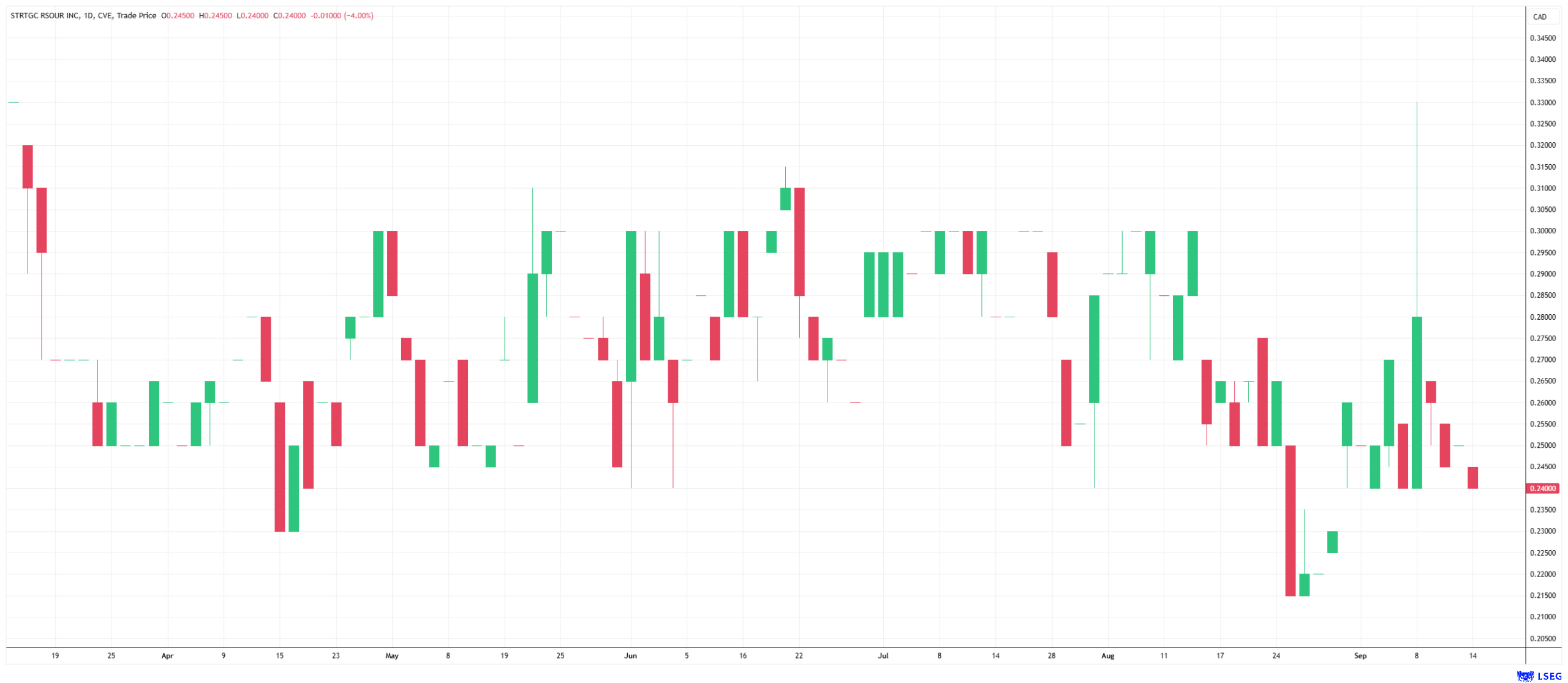
Strategic Resources has traded sideways in recent months. This trend is typical for smaller companies on the verge of major investments and entering a new phase. Once the first supply agreements with Western steel producers are signed and on the table, the market could view Strategic Resources very differently. Until then, the stock remains a hidden gem that also carries risks—the situations at Rio Tinto and Salzgitter show that much is possible in the midst of transformation. Investors in innovative solution providers for the steel industry must keep this in mind.
Watch YouTube videoConflict of interest
Pursuant to §85 of the German Securities Trading Act (WpHG), we point out that Apaton Finance GmbH as well as partners, authors or employees of Apaton Finance GmbH (hereinafter referred to as "Relevant Persons") may hold shares or other financial instruments of the aforementioned companies in the future or may bet on rising or falling prices and thus a conflict of interest may arise in the future. The Relevant Persons reserve the right to buy or sell shares or other financial instruments of the Company at any time (hereinafter each a "Transaction"). Transactions may, under certain circumstances, influence the respective price of the shares or other financial instruments of the Company.
In addition, Apaton Finance GmbH is active in the context of the preparation and publication of the reporting in paid contractual relationships.
For this reason, there is a concrete conflict of interest.
The above information on existing conflicts of interest applies to all types and forms of publication used by Apaton Finance GmbH for publications on companies.
Risk notice
Apaton Finance GmbH offers editors, agencies and companies the opportunity to publish commentaries, interviews, summaries, news and the like on news.financial. These contents are exclusively for the information of the readers and do not represent any call to action or recommendations, neither explicitly nor implicitly they are to be understood as an assurance of possible price developments. The contents do not replace individual expert investment advice and do not constitute an offer to sell the discussed share(s) or other financial instruments, nor an invitation to buy or sell such.
The content is expressly not a financial analysis, but a journalistic or advertising text. Readers or users who make investment decisions or carry out transactions on the basis of the information provided here do so entirely at their own risk. No contractual relationship is established between Apaton Finance GmbH and its readers or the users of its offers, as our information only refers to the company and not to the investment decision of the reader or user.
The acquisition of financial instruments involves high risks, which can lead to the total loss of the invested capital. The information published by Apaton Finance GmbH and its authors is based on careful research. Nevertheless, no liability is assumed for financial losses or a content-related guarantee for the topicality, correctness, appropriateness and completeness of the content provided here. Please also note our Terms of use.