April 27th, 2026 | 07:30 CEST
TOXIC WASTE, NUCLEAR WASTE, METHANE: HOW CLEAN HARBORS, STUDSVIK, AND ZEFIRO METHANE ARE MAKING MONEY OFF THE SINS OF THE PAST
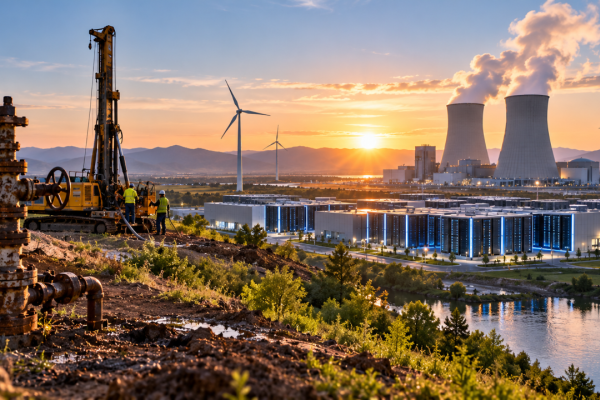
For decades, environmental protection was largely treated as a cost burden for industry. But while the global debate focuses on CO₂ reduction, another structurally attractive niche is gaining traction: the remediation of legacy contamination. Companies that tackle the contaminated sites left behind by the chemical, nuclear, and oil industries occupy one of the most stable growth markets of our time. Leading the way: US giant Clean Harbors, Swedish specialist Studsvik, and Canadian innovator Zefiro Methane.
time to read: 5 minutes | Author: Jens Castner
ISIN: ZEFIRO METHANE CORP | CA98926D1069 | NEO: ZEFI , CLEAN HARBORS DL-_01 | US1844961078 , STUDSVIK AB SK 1 | SE0000653230
Table of contents:
Author

Jens Castner
The Nuremberg native brings over three decades of capital markets experience, backed by a career shaped by deep market insight and a genuine passion for investing. His journey began in 1994 through an investment club among colleagues – a formative experience that sparked a lifelong dedication to identifying compelling investment opportunities.
Following senior editorial roles at Nürnberger Nachrichten, €uro am Sonntag, and €uro, he went on to serve as Editor-in-Chief of the renowned investor magazine Börse Online from 2014, where he played a key role in shaping high-quality financial journalism for a broad investor audience.
Tag cloud
Shares cloud
CLEAN HARBORS: PROFITING FROM THE ST. FLORIAN PRINCIPLE
When a chemical plant leaks or a freight train carrying toxic substances derails in the US, there is usually only one number people call: Clean Harbors. The US giant is considered the backbone of hazardous waste disposal. In a world of strict regulations, the Norwell, Massachusetts-based company holds the rare permits for toxic waste incinerators and specialized landfills. The so-called NIMBY effect protects the business model from competition. NIMBY stands for "not in my backyard" and describes what is known in Germany as the St. Florian principle: citizens' resistance to the construction of landfills or disposal facilities in their vicinity. For existing providers like Clean Harbors, this is an advantage: Since hardly any new facilities are being approved, they have a near-monopoly.
This is reflected in the valuation. With a market capitalization of over USD 16 billion, it is nearly two and a half times its annual revenue, and the price-to-earnings (P/E) ratio based on estimates for 2026 and 2027 is well over 30. The seemingly insurmountable moat, the crisis-resistant business model, the dominant market position, and the profits that have been rising for years, with few exceptions, come at a price. As the name implies, Clean Harbors is something of a safe haven in the industry—at least as long as nothing goes wrong. Between 1995 and 2020, there were several allegations of environmental violations, all of which, however, were settled through court settlements.
STUDSVIK: THE RADIANT INTERGENERATIONAL CHALLENGE
The example of Studsvik shows what can happen to highly valued stocks when expectations are missed. Following the release of first-quarter results last week, the stock price dropped by 16%. The 58% plunge in earnings per share to SEK 0.55 caught investors off guard. Although analysts still expect slight earnings growth for the full year to SEK 4.66 per share (previous year: SEK 4.54), even if that is achieved, the P/E ratio will be well above 50.
The Swedish company earns this valuation through its unique position. Studsvik serves as a technological leader in the decommissioning of nuclear facilities. The company's headquarters are located in Nyköping, about 100 km southwest of Stockholm on the Baltic Sea coast. This location has been a major center of Swedish nuclear energy research since the 1940s and, consequently, houses the group's specialized laboratories. Using patented processes, Studsvik engineers decontaminate contaminated components and drastically reduce the volume of radioactive waste. This hidden champion thus occupies a niche with high barriers to entry due to its technological edge and long-term contracts—low-cost competitors stand no chance. Nevertheless, the ambitious valuation poses a considerable risk, as the reaction to the latest results has shown. The market capitalization of SEK 2.4 billion, about EUR 224 million, is nearly three times the revenue expected for this year.
ZEFIRO METHANE: THE DISRUPTOR WITH THE GREEN CERTIFICATE
The market reacted quite differently to the preliminary figures from Zefiro Methane. The stock, which had been trading in a range between EUR 0.15 and 0.28 on German exchanges since early January, broke out to the upside and briefly reached a new yearly high of EUR 0.39. In the past quarter, revenue rose by more than 50% to USD 11 million. Although the first quarter is typically the weakest due to weather conditions, the Vancouver-based company has thus once again surpassed the revenue from the previous quarter (USD 10.1 million). Management plans to release profit figures only with the final quarterly report in mid-May. However, since earnings before interest, taxes, depreciation, and amortization (EBITDA) were already significantly positive in the final quarter of 2025, it is clear that the company is on the verge of breaking even exactly two years after its IPO. Analysts expect a positive net result starting in the summer quarter, which ends on September 30.
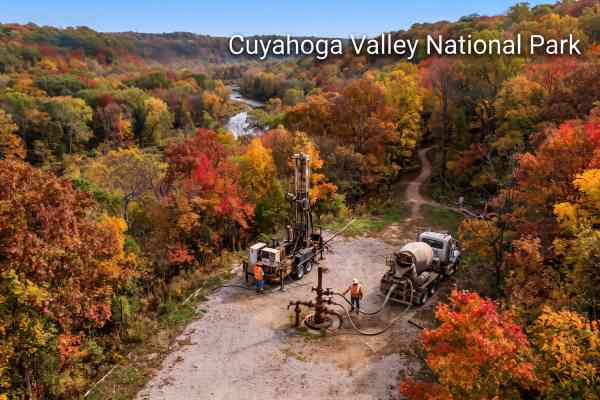
The environmental problem that Zefiro aims to solve, together with its wholly-owned US subsidiary Plant & Goodwin, is that of abandoned oil and gas wells in the US (known as '"orphan wells"), which emit the climate-damaging gas methane. There are 2.2 million such wells in the US alone, spread across 26 states. The critical issue is that methane is at least 25 times more harmful to the climate than carbon dioxide. Sealing all known wells in the US would cost over USD 600 billion—a massive market potential. Although Zefiro faces competition here from world-renowned oilfield service providers such as Halliburton and Baker Hughes, thanks to Plant & Goodwin's 50 years of experience and the exclusive US rights to the technology of Radial Casing Solutions (RCS)—a company in which Zefiro also holds a stake—it is certain that this still relatively small specialist will secure a growing slice of the pie. The most important RCS product is the REED device (Radial Elastomer Expansion Device), a patented tool that hydraulically expands casings in the borehole to mechanically seal methane leaks. Just last week, Zefiro reported generating its first revenue from REED technology; in addition, two strategic investors from Europe have invested a total of CAD 4.5 million in the company, enabling further acquisitions.
In addition to its bread-and-butter business, plugging wells on behalf of clients, the company is active in trading CO₂ offset credits. Several senior managers, including CEO Catherine Flax, previously held leadership positions in the emissions trading division of the US bank JPMorgan. The sale of emissions credits generates additional revenue potential of up to USD 1 million per well. Since the cost of remediating a well averages around USD 75,000, Zefiro calculates gross margins of up to 90% for methane-rich sources. In Ohio, Plant & Goodwin has already rendered 13 of 37 wells harmless as part of a major contract in the past quarter. Additional programs are underway there; furthermore, the Zefiro subsidiary received official approval in January to launch a project in Louisiana worth over USD 5 million. The combination of traditional craftsmanship with modern emissions trading makes the remediation work highly scalable.
CONTAMINATED SITES AS INVESTMENT OPPORTUNITIES – BUT AT WHAT PRICE?
Clean Harbors offers irreplaceable infrastructure with stable cash flows as a core investment; Studsvik is considered a largely undiscovered hidden champion of the nuclear age; and Zefiro is poised to eliminate the climate damage caused by the oil industry's legacy. All three stocks—even Studsvik, despite the recent price drop—are on relatively stable upward trends over the course of the year. In terms of valuation based on the price-to-sales (P/S) ratio, Zefiro, with a value below one, is something of a bargain in this trio. However, it remains to be seen whether the break-even point will actually be reached this year.
Conflict of interest
Pursuant to §85 of the German Securities Trading Act (WpHG), we point out that Apaton Finance GmbH as well as partners, authors or employees of Apaton Finance GmbH (hereinafter referred to as "Relevant Persons") may hold shares or other financial instruments of the aforementioned companies in the future or may bet on rising or falling prices and thus a conflict of interest may arise in the future. The Relevant Persons reserve the right to buy or sell shares or other financial instruments of the Company at any time (hereinafter each a "Transaction"). Transactions may, under certain circumstances, influence the respective price of the shares or other financial instruments of the Company.
In addition, Apaton Finance GmbH is active in the context of the preparation and publication of the reporting in paid contractual relationships.
For this reason, there is a concrete conflict of interest.
The above information on existing conflicts of interest applies to all types and forms of publication used by Apaton Finance GmbH for publications on companies.
Risk notice
Apaton Finance GmbH offers editors, agencies and companies the opportunity to publish commentaries, interviews, summaries, news and the like on news.financial. These contents are exclusively for the information of the readers and do not represent any call to action or recommendations, neither explicitly nor implicitly they are to be understood as an assurance of possible price developments. The contents do not replace individual expert investment advice and do not constitute an offer to sell the discussed share(s) or other financial instruments, nor an invitation to buy or sell such.
The content is expressly not a financial analysis, but a journalistic or advertising text. Readers or users who make investment decisions or carry out transactions on the basis of the information provided here do so entirely at their own risk. No contractual relationship is established between Apaton Finance GmbH and its readers or the users of its offers, as our information only refers to the company and not to the investment decision of the reader or user.
The acquisition of financial instruments involves high risks, which can lead to the total loss of the invested capital. The information published by Apaton Finance GmbH and its authors is based on careful research. Nevertheless, no liability is assumed for financial losses or a content-related guarantee for the topicality, correctness, appropriateness and completeness of the content provided here. Please also note our Terms of use.