February 5th, 2026 | 08:20 CET
The Next Commodity Price Surge: How Rio Tinto, Globex Mining, and Glencore Are Positioned for the Supercycle
Commodity markets are undergoing a historic turning point. While precious metals are shining as safe havens, the energy transition continues to drive lithium demand. But the real pressure point lies in critical raw materials such as antimony or tungsten, whose supply is extremely strained due to geopolitical conflicts. This fragmentation of the supercycle is creating unique opportunities for strategically positioned companies. Three key players are ready to benefit: Rio Tinto, Globex Mining, and Glencore.
time to read: 4 minutes | Author: Armin Schulz
ISIN: RIO TINTO PLC LS-_10 | GB0007188757 , GLOBEX MINING ENTPRS INC. | CA3799005093 , GLENCORE PLC DL -_01 | JE00B4T3BW64
Table of contents:
Author

Armin Schulz
Born in Mönchengladbach, he studied business administration in the Netherlands. In the course of his studies he came into contact with the stock exchange for the first time. He has more than 25 years of experience in stock market business.
Tag cloud
Shares cloud
Rio Tinto – Strong operational and strategic partnerships
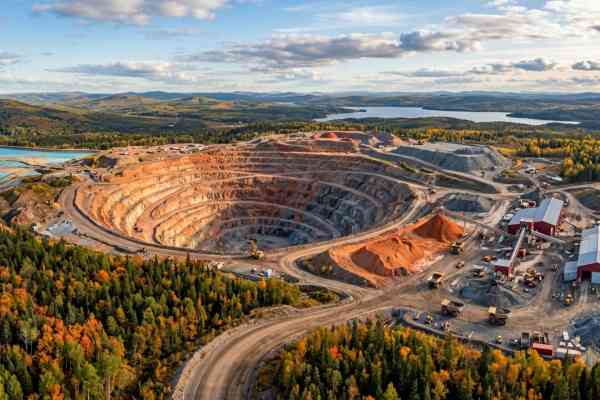
Mining group Rio Tinto is starting the new year with robust operating figures. In the last quarter of the previous year, the company reported record iron ore production in the Pilbara region and a significant increase in copper production. This was driven primarily by the continued expansion of underground operations at the Oyu Tolgoi mine in Mongolia. This solid performance underscores the group's operational strength in its core areas and provides a solid foundation in a volatile commodities environment.
At the same time, strategic considerations are dominating the headlines. The focus is on talks with commodities giant Glencore about a possible merger. Analyses suggest that the negotiations are complex and that reaching an agreement will take time. In particular, the valuation of Glencore's copper division, which has struggled with operational setbacks in recent years, presents an obstacle. In addition, the final deal structure could entail regulatory requirements, for example, from Chinese authorities.
At the same time, Rio Tinto is pursuing other strategic initiatives. The company confirmed a partnership with the Aluminum Corporation of China to jointly acquire control of Brazilian aluminum producer CBA. In addition, a cooperation agreement was reached with BHP to jointly develop ore deposits in the Pilbara region and thus use infrastructure more efficiently. These steps demonstrate a pragmatic approach to consolidating and expanding the business through partnerships and targeted investments. The stock is currently trading at EUR 82.42.
Globex Mining – Commodity investing beyond the drill holes
In an industry known for its hunger for capital and constant dilution of shares, the Canadian company Globex Mining is pursuing a remarkable counter-course. Instead of financing high risks with equity capital like typical exploration companies, it acts as a project generator. Its business model is based on the acquisition, technical enhancement, and subsequent search for partners for mineral properties. Partners assume all exploration financing and risk. In return, Globex receives cash payments, shares in the partners, and often retains long-term royalties on future production. This cycle generates revenue and strengthens the balance sheet without the need to constantly issue new shares.
The result of this discipline is a balance sheet that is rare in the junior sector: over CAD 40 million in cash and zero debt. This financial strength allows the company to act countercyclically and acquire projects at favorable prices during weak market phases. The company focuses exclusively on politically stable regions such as Canada and the US in order to avoid existential risks. This financial robustness is at the heart of the anti-dilution strategy. It frees management from the pressure of having to raise new capital at any price, and allows them to wait patiently for the right opportunities while partners drive exploration work forward.
The company holds nearly 270 projects covering a wide range of commodities. This diversification is currently showing strength as prices for several metals are rising sharply. Three examples stand out. In the strategic metal antimony, essential for armour, flame retardants and electronics, Globex secured a project called Bald Hill early on and is benefiting in this case from Antimony Resources, which is driving exploration forward. In the booming lithium sector, an extensive resource was recently confirmed on a royalty property. At the same time, classic precious metal projects in the established Abitibi Belt are delivering promising drill results. For investors, this model offers indirect, risk-diversified participation in several commodity trends simultaneously. The stock is currently trading at CAD 2.53.
Glencore - Venezuela's oil: Who benefits on the US Gulf Coast?
Recent developments surrounding Venezuelan oil are drawing attention to the specialized refineries on the US Gulf Coast. For historical reasons, their facilities are designed for heavy, acidic crude oil, which is precisely the type that Venezuela supplies. Light oil from domestic sources, on the other hand, is often exported. For companies such as Valero, Marathon, and Phillips 66, a legalized flow of oil from Venezuela could therefore represent a tailor-made and economical source of raw materials. They have the infrastructure to process this complex product and are likely to benefit from a more stable supply.
At the center of the action is commodities giant Glencore. The company is not only a leading oil trader, but also has the logistical capacity to transport heavy oil. Currently, however, other issues are causing a stir. Once again, there are concrete rumors of a merger with mining giant Rio Tinto. Such a combination would create the world's largest mining group, with a strong focus on copper, a metal of outstanding importance for the energy transition. The negotiations are complex, not least because of Glencore's coal division and possible antitrust concerns, particularly from China.
Regardless of the merger or Venezuelan oil, Glencore offers an impressive foothold. The company is vertically integrated, from mining to transportation, and generates solid cash flows from a diversified mix of metals and agricultural commodities. The possible entry of a US consortium into its copper projects in Congo also underscores the strategic value of its assets. For investors seeking broad exposure to commodities, Glencore remains a fundamental bet on global industrial processes, even if short-term M&A speculation may increase volatility. The share price is currently trading at EUR 6.019.
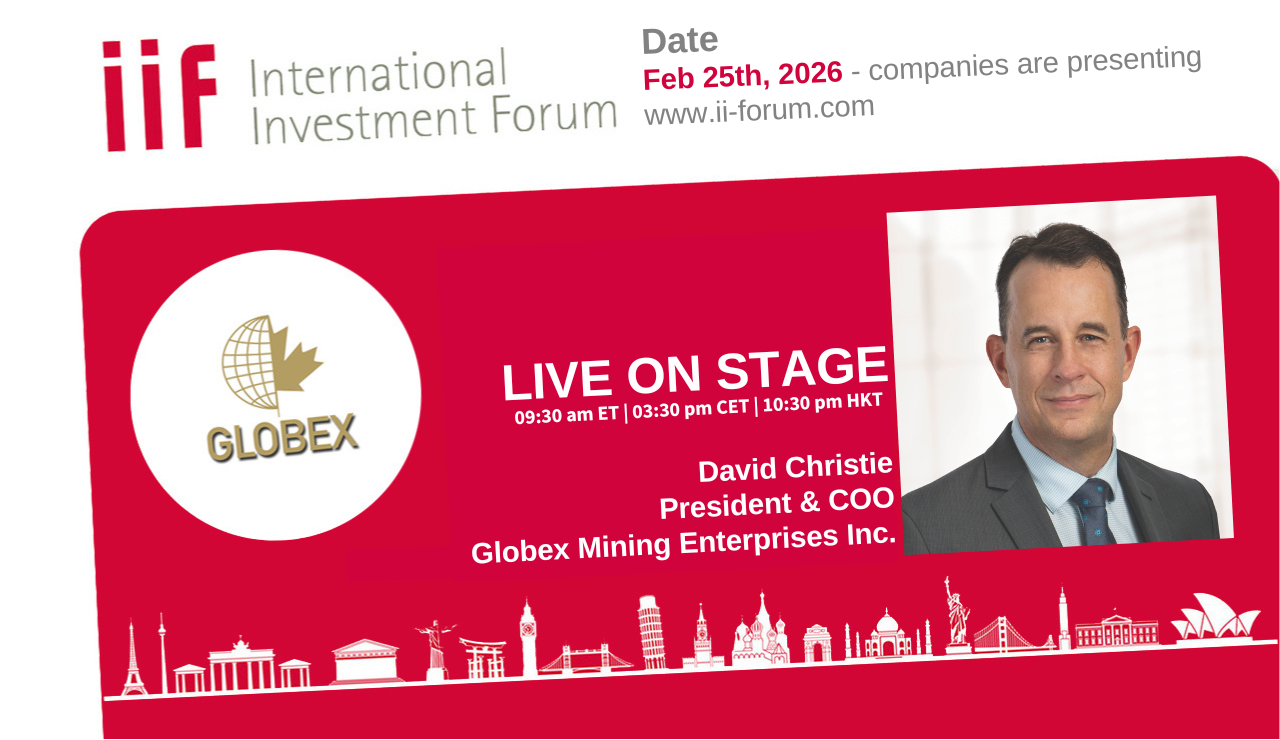
The fragmentation of the supercycle requires strategic positioning. Rio Tinto relies on operational strength and strategic partnerships for its growth. Globex Mining scores with a large commodity portfolio, a risk-minimizing royalty model, and a robust balance sheet. Despite merger rumors, Glencore remains a fundamental bet on broad commodity markets and trading. For investors, these different approaches each offer a targeted opportunity to profit from the tight supply situation for commodities.
Conflict of interest
Pursuant to §85 of the German Securities Trading Act (WpHG), we point out that Apaton Finance GmbH as well as partners, authors or employees of Apaton Finance GmbH (hereinafter referred to as "Relevant Persons") currently hold or hold shares or other financial instruments of the aforementioned companies and speculate on their price developments. In this respect, they intend to sell or acquire shares or other financial instruments of the companies (hereinafter each referred to as a "Transaction"). Transactions may thereby influence the respective price of the shares or other financial instruments of the Company.
In this respect, there is a concrete conflict of interest in the reporting on the companies.
In addition, Apaton Finance GmbH is active in the context of the preparation and publication of the reporting in paid contractual relationships.
For this reason, there is also a concrete conflict of interest.
The above information on existing conflicts of interest applies to all types and forms of publication used by Apaton Finance GmbH for publications on companies.
Risk notice
Apaton Finance GmbH offers editors, agencies and companies the opportunity to publish commentaries, interviews, summaries, news and the like on news.financial. These contents are exclusively for the information of the readers and do not represent any call to action or recommendations, neither explicitly nor implicitly they are to be understood as an assurance of possible price developments. The contents do not replace individual expert investment advice and do not constitute an offer to sell the discussed share(s) or other financial instruments, nor an invitation to buy or sell such.
The content is expressly not a financial analysis, but a journalistic or advertising text. Readers or users who make investment decisions or carry out transactions on the basis of the information provided here do so entirely at their own risk. No contractual relationship is established between Apaton Finance GmbH and its readers or the users of its offers, as our information only refers to the company and not to the investment decision of the reader or user.
The acquisition of financial instruments involves high risks, which can lead to the total loss of the invested capital. The information published by Apaton Finance GmbH and its authors is based on careful research. Nevertheless, no liability is assumed for financial losses or a content-related guarantee for the topicality, correctness, appropriateness and completeness of the content provided here. Please also note our Terms of use.