August 6th, 2026 | 07:15 CEST
The Green Gold of Contaminated Sites: Zefiro Methane Reaps What BP and Shell Have Sown
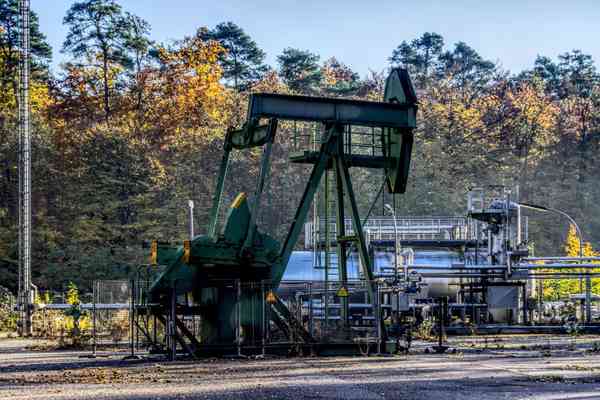
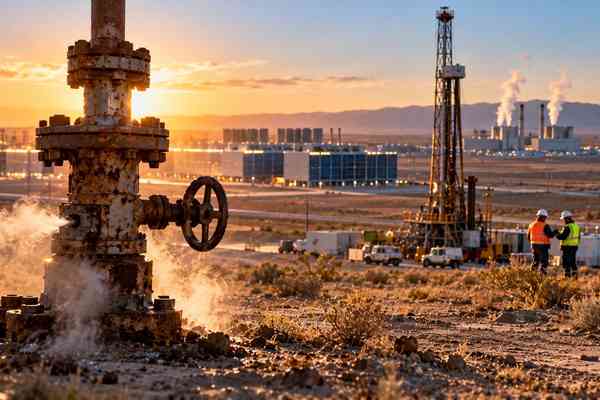
Invisible, highly dangerous to the climate, and strictly regulated. Methane is increasingly becoming the focus of political and financial markets. Meanwhile, European oil and gas giants Shell and BP are weathering global economic concerns, geopolitical turmoil, and rising sustainability requirements. With their recently released second-quarter figures, both companies are reaffirming their role as reliable cash machines. For investors, this means well-filled coffers for dividends and share buybacks. Greentech specialist Zefiro Methane, on the other hand, is tackling a massive problem that the industry has created and transforming it into a highly profitable business model. Over two million abandoned oil and gas wells (orphan wells) are emitting methane uncontrollably in the US alone. Methane is responsible for about 30% of global temperature rise and has a warming effect approximately 80 times stronger than carbon dioxide over a 20-year period. Government programs worth billions are addressing the problem. Zefiro Methane has positioned itself excellently in this market, which is valued at approximately USD 500 billion. According to analysts, the shares have upside potential of over 200%.
time to read: 4 minutes | Author: Carsten Mainitz
ISIN: ZEFIRO METHANE CORP | CA98926D1069 | NEO: ZEFI , BP PLC DL-_25 | GB0007980591 , Shell PLC | GB00BP6MXD84
Table of contents:
Author

Carsten Mainitz
The native Rhineland-Palatinate has been a passionate market participant for more than 25 years. After studying business administration in Mannheim, he worked as a journalist, in equity sales and many years in equity research.
Tag cloud
Shares cloud
Zefiro Methane: Hidden Champion in a USD 500 Billion Market
Over two million abandoned and orphaned oil and gas wells are emitting methane uncontrollably in the US. Methane is responsible for about 30% of global temperature rise and has a warming effect approximately 80 times stronger than carbon dioxide over a 20-year period. The gas is therefore considered the fastest lever in climate policy for getting global warming under control.
In the US alone, there is a massive backlog of abandoned wells. An estimated two million inactive, improperly sealed oil and gas wells, as well as presumably over one million unmapped abandoned wells, are continuously emitting methane. The cost of remediation to address this logistical, technical, and environmental disaster is estimated at approximately USD 500 million. Policymakers have launched multi-billion-dollar funding programs, such as the US government's Infrastructure Investment and Jobs Act, to help address the issue.
The greentech specialist is transforming this enormous environmental problem into a highly profitable business model and, as an integrated service provider, covers the entire value chain. Zefiro identifies, measures, and plugs decommissioned and abandoned wells.
Through its subsidiary Plants & Goodwin, the Canadian company has established a strong position and reputation in the US and is successful in winning a significant portion of the bids.
With the recent acquisition of assets from Viking Well Service, Zefiro has made a strategically astute move in several respects. The company not only secured additional equipment fleets and much-needed specialized personnel, but also strengthened its footprint, laying the foundation for accelerated expansion. It now operates across 13 US states, significantly broadening its market reach and operational capabilities.
However, the real driver of returns, which will become highly significant in the medium term, is the monetization model based on carbon credits. Zefiro is a pioneer in generating these emission credits, which result from the reduction or avoidance of climate-damaging emissions. Last year, the company completed its first sale of CO₂ offset certificates to EDF Trading under the American Carbon Registry's (ACR) recognized Orphan Well Methodology.
The recently announced collaboration with the Well Done Foundation is strategically valuable and sets a new direction. The foundation has selected Zefiro as its preferred service provider for the decommissioning of abandoned oil and gas wells in the US. The first contract covers 10 wells in the state of Oklahoma, with approximately 60 more wells to follow. The Well Done Foundation is one of the best-known players in industry and is active in 18 states.
Since a management restructuring in the summer of 2025, the Canadian company has been on a steep growth and profitability trajectory. In the first nine months of fiscal year 2025/26, Zefiro increased revenue by 36% to USD 33 million. EBITDA made an impressive turnaround into the black, reaching USD 3.1 million after a loss of USD 5.5 million in the prior year.
Analysts at GBC are bullish on the stock and have set a price target of USD 1.50 or CAD 2.12. The analysts expect EBITDA to at least triple to over USD 12 million over the next three fiscal years. The current share price of around CAD 0.60 thus indicates upside potential of more than 200%.
Shell: Strong Profits and Shareholder-Friendly Use of Funds
Driven by high realized prices and strong earnings in the refining and trading businesses, the group's adjusted profit climbed to USD 9.8 billion in the second quarter. Shell stands out with its dominant LNG portfolio. Since liquefied natural gas remains in demand worldwide as a transition fuel, particularly attractive margins are in store here.
Operating cash flow (CFFO) reached USD 21.4 billion. Over the past 12 months, the company has distributed 44% of its CFFO to shareholders. The quarterly dividend was maintained at USD 0.3906 per share. Shell announced another USD 3 billion share buyback program for the current quarter. This marks the 19th consecutive quarter in which the group has repurchased at least USD 3 billion worth of its own shares.
With P/E ratios of 8 and 9.4, the company has moderate P/E ratios for the current and upcoming fiscal years. In addition, the attractive fundamental valuation is combined with a dividend yield of over 3%. On average, analysts estimate 12% upside for the stock.
BP: Good Overall Package
Profits are also soaring at the British company. In the second quarter, earnings rose to USD 5.7 billion. In addition to significantly improved refining margins, higher oil and gas prices had a positive impact. Operating cash flow climbed to USD 10.9 billion. Shareholders are benefiting from a 4% increase in the quarterly dividend to 8.66 US cents.
Unlike Shell, BP must place greater emphasis on its balance sheet and maintaining healthy financial ratios. Net debt was reduced by USD 3 billion to USD 22.3 billion in the past quarter. BP also continued to systematically divest non-core activities.
Despite significant share price gains in the past and a 20% return since January, the shares offer an attractive dividend yield of around 5%. Analysts predict the stock has upside potential of 14% over the next 12 months. The P/E ratios of 7.3 and 9.9 for 2026 and 2027, respectively, are not overly expensive.
Both Shell and BP have sharply recalibrated their strategies in recent years—moving away from hasty, low-return renewable energy projects toward maximum discipline in the traditional oil and gas business. Now, profits are surging for both companies, and shareholders are benefiting from attractive dividend payouts and share buybacks. Zefiro is positioning itself as a hidden champion in a sector that is gradually gaining importance and represents a market worth USD 500 billion. According to analysts, the shares have upside potential of over 200%.
Conflict of interest
Pursuant to §85 of the German Securities Trading Act (WpHG), we point out that Apaton Finance GmbH as well as partners, authors or employees of Apaton Finance GmbH (hereinafter referred to as "Relevant Persons") may hold shares or other financial instruments of the aforementioned companies in the future or may bet on rising or falling prices and thus a conflict of interest may arise in the future. The Relevant Persons reserve the right to buy or sell shares or other financial instruments of the Company at any time (hereinafter each a "Transaction"). Transactions may, under certain circumstances, influence the respective price of the shares or other financial instruments of the Company.
In addition, Apaton Finance GmbH is active in the context of the preparation and publication of the reporting in paid contractual relationships.
For this reason, there is a concrete conflict of interest.
The above information on existing conflicts of interest applies to all types and forms of publication used by Apaton Finance GmbH for publications on companies.
Risk notice
Apaton Finance GmbH offers editors, agencies and companies the opportunity to publish commentaries, interviews, summaries, news and the like on news.financial. These contents are exclusively for the information of the readers and do not represent any call to action or recommendations, neither explicitly nor implicitly they are to be understood as an assurance of possible price developments. The contents do not replace individual expert investment advice and do not constitute an offer to sell the discussed share(s) or other financial instruments, nor an invitation to buy or sell such.
The content is expressly not a financial analysis, but a journalistic or advertising text. Readers or users who make investment decisions or carry out transactions on the basis of the information provided here do so entirely at their own risk. No contractual relationship is established between Apaton Finance GmbH and its readers or the users of its offers, as our information only refers to the company and not to the investment decision of the reader or user.
The acquisition of financial instruments involves high risks, which can lead to the total loss of the invested capital. The information published by Apaton Finance GmbH and its authors is based on careful research. Nevertheless, no liability is assumed for financial losses or a content-related guarantee for the topicality, correctness, appropriateness and completeness of the content provided here. Please also note our Terms of use.