
geopolitics

Commented by Armin Schulz on May 25th, 2026 | 08:10 CEST
Rheinmetall, Antimony Resources, and RENK Group: Your Gateway to the Defence Boom and Its Lucrative Supply Chain
Created and published on behalf of Antimony Resources Corp.
Billions are flowing into Europe's defence sector—but behind the impressive order books lies a risk: the shortage of critical raw materials. While tanks and transmission systems are the obvious winners of the rearmament wave, the invisible foundation of many defence technologies is coming under increasing pressure. A strategic metal whose supply chains are dominated by China could become the Achilles' heel of the entire industry. From the established defence conglomerate Rheinmetall to the raw materials explorer Antimony Resources and the specialized drivetrain manufacturer RENK Group, they all have one thing in common: they are benefiting from the defence boom.
Read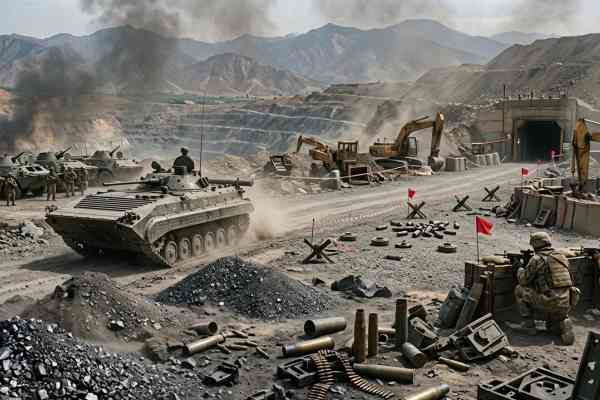
Commented by Tarik Dede on May 22nd, 2026 | 06:40 CEST
Tungsten Market: High Tech and Weapons Drive Prices, Bank of America Boosts Almonty Industries!
China's dominance in raw materials, the geopolitical rivalry with the United States, and the conflict in the Persian Gulf are currently reshaping the geopolitical landscape. The West urgently needs to reduce its dependence on China for critical raw materials, although a complete decoupling is unlikely in the foreseeable future. Metals such as tungsten are at the center of this shift, as they are indispensable in the defence industry. This is driven not only by China's market control but also by Europe's ongoing rearmament efforts. Almonty Industries is in pole position in this context. The Canadian company operates one of the world's few large-scale tungsten mines in South Korea and could be among the first to provide relief through more secure supply chains. Analysts at Bank of America have recently reiterated their "Buy" recommendation, as the major growth surge in revenues and earnings is expected to begin only now.
Read
Commented by Fabian Lorenz on May 20th, 2026 | 08:20 CEST
Drones over Moscow! Soon over Florida too? Profit from the Drone Rally 2.0 with Volatus Aerospace
Are we witnessing the beginning of a Drone Rally 2.0 on the stock market? Over the weekend, footage of Ukrainian drones flying over Moscow made headlines around the world. Until now, the airspace surrounding the Russian capital had been considered among the most heavily protected in the world. In the US, concerns are growing that Iranian drones could reach Donald Trump's residence in Florida from Cuba. Against this geopolitical backdrop, Volatus Aerospace is igniting its next phase of growth. While many defence and drone stocks have recently corrected significantly, Volatus Aerospace has demonstrated remarkable relative strength. At the same time, the Canadian company's revenue growth is set to accelerate significantly starting this quarter. NATO-related contracts, defence training programs, proprietary software solutions, and the establishment of Canadian drone production could catapult Volatus into an entirely new league.
Read
Commented by Fabian Lorenz on May 20th, 2026 | 08:10 CEST
Is This Gold Gem the Investment Opportunity of the Year? Lahontan Gold Set to Become a Producer!
As the gold price continues to consolidate, this gold gem may present the investment opportunity of the year. Lahontan Gold is aiming to make history in the coming months by advancing toward gold production in Nevada. In its latest investor presentation, management confirmed that preparations for mine construction remain fully on track. In addition, a new resource estimate is expected to be released in the coming weeks. If projections from major banks such as Goldman Sachs are correct, the gold price could soon regain upward momentum, with some forecasts suggesting levels above USD 5,000 by the end of 2026. This is being driven in part by stronger-than-expected central bank gold purchases. With potential production costs of around USD 1,200 per ounce, Lahontan Gold could benefit significantly. At current levels, the stock still appears attractively valued.
Read
Commented by Matthias Schomber on May 19th, 2026 | 07:35 CEST
556 Drones in One Night: Why the World Needs Volatus Aerospace
In a single night, Ukraine launched more than 550 drones into Russian territory. This marks the heaviest attack on the Moscow region since the beginning of the war. In the Middle East, a drone strikes a nuclear power plant in the UAE, Saudi Arabia intercepts unmanned aerial vehicles over its airspace, and Latvia nearly plunges into a government crisis due to inadequate drone defence. The message is therefore unmistakable: drones have fundamentally changed the global order—and likely permanently so. In this shifted geopolitical landscape, a Canadian company is quietly positioning itself as an increasingly relevant player in this fast-growing market. Volatus Aerospace combines military drone technology with civilian applications. The share price may be approaching a decisive technical turning point, and those who are not paying attention now may risk missing an important opportunity.
Read
Commented by Fabian Lorenz on May 19th, 2026 | 07:25 CEST
BUY RECOMMENDATIONS for RENK and Desert Gold! SHOCK for Evotec!
While gold prices are weakening, Desert Gold shares are in a clear uptrend. And if analysts are to be believed, a tenfold increase is possible. Desert Gold is set to become a gold producer in just a few months and generate strong cash flows. And it does not matter whether gold is trading at USD 4,000 or USD 6,000 per ounce. RENK stock has been upgraded to "Buy." Not because the future outlook has improved, but because the price has plummeted. This means the valuation now offers upside potential again. The growth prospects are quite positive. Meanwhile, analysts have recently noted a lack of growth prospects at Evotec. For many, "Project Horizon" focuses too heavily on cost reduction. But growth is precisely what is expected from a biotech company. And now, the restructuring costs are also to be financed through a convertible bond.
Read
Commented by Armin Schulz on May 19th, 2026 | 07:00 CEST
This Metal Is Found in Many Weapons, AI Chips, and High-Tech Devices! Almonty Industries Meets Exploding Demand
Imagine a metal that is used in every modern weapon, powers every AI chip, and whose price has increased sixfold within a year. This strategic raw material is called tungsten. China controls more than 80% of global supply. This is precisely where a gap in the market is opening up, and Almonty Industries is systematically filling it. The company's story is not a short-term bet on geopolitical conflicts. Almonty Industries will continue to perform even after the world's wars end. CEO Lewis Black has built the company patiently and with long-term vision. Now the results of that work are beginning to materialize.
Read
Commented by Matthias Schomber on May 18th, 2026 | 07:40 CEST
Almonty Industries Reports 221% Revenue Growth – Tungsten Positions the Company as a Strategic Western Supplier
An extremely rare metal is moving increasingly into focus as geopolitical tensions rise and defence spending accelerates worldwide. Without tungsten, neither modern defence systems nor forward-looking industries can exist today. In this environment, Almonty Industries has positioned itself as one of the West's only true suppliers outside China. The company's latest figures underline this strategic positioning. Revenue growth of more than 200% has attracted growing market attention. While the stock remains near an important technical breakout zone following a broader consolidation phase, the underlying growth story continues to develop in the background. Analysts increasingly view the company less as a speculative resource play and more as an emerging strategic producer with long-term relevance to Western supply chains. Investors seeking to understand why this strategic heavyweight in the tungsten sector could be poised for another upward move in the market may find some of the key answers in the following article.
Read
Commented by Nico Popp on May 18th, 2026 | 06:55 CEST
West Africa: A Gold Hotspot! What Makes This Region Unique - Desert Gold, Barrick Mining, Endeavour Mining
Without control over high-grade deposits, mines cannot operate sustainably in the long run – this holds true even in the promising West African gold belt. While many market participants are distracted by short-term geopolitical headlines and view countries like Mali rather critically, experienced players focus on geology and grades as the decisive factors. In the current market environment, momentum is shifting away from speculative projects and toward advanced properties with significant potential for future production. As the world's leading growth region, West Africa is at the center of this trend, with the Senegal-Mali Shear Zone (SMSZ) standing out in particular for its geology. We highlight three exciting companies and take a closer look at one promising gold prospector.
Read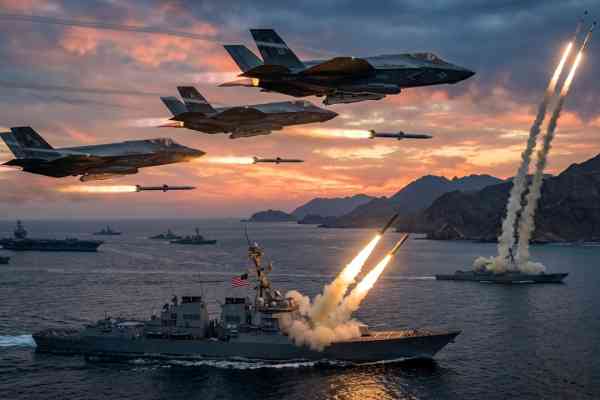
Commented by Tarik Dede on May 15th, 2026 | 09:35 CEST
Empty Stockpiles: The US Military Must Rearm — A Golden Opportunity for Lynas Rare Earths, Antimony Resources, and Lockheed Martin
Prepared and published on behalf of Antimony Resources Corp.
Just a few days ago, Democratic US Senator Mark Kelly of Arizona dropped a political bombshell in Washington. In an interview on CBS's "Face the Nation" last Sunday, Kelly criticized the current state of the US military. According to him, stockpiles have been completely "bled dry" as a consequence of the Gulf conflict. The politician described his impressions following a briefing by the US Department of Defense. According to Kelly, ammunition stockpiles—particularly Tomahawk missiles, Patriot air defence systems, and SM-3 interceptor missiles—have been severely depleted, calling the situation "shocking." The extensive strikes against Iran have reportedly reduced inventories to such an extent that the national security of the United States could now be at risk. Rebuilding these stockpiles, Kelly warned, could take years. This, in turn, could leave the US vulnerable in potential future conflicts, particularly in the Pacific region. With these remarks, Mark Kelly articulated concerns that many observers have been discussing for weeks. According to this assessment, the US military has significantly reduced key inventories in a short period of time due to the conflict with Iran, potentially affecting operational readiness—especially concerning possible future tensions involving China, which had already been identified as a strategic challenge to US global leadership under the administrations of Barack Obama and Joe Biden. This is also likely to have consequences in light of current President Donald Trump's visit to China.
Read