
Sustainability
Commented by Nico Popp on August 3rd, 2026 | 07:35 CEST
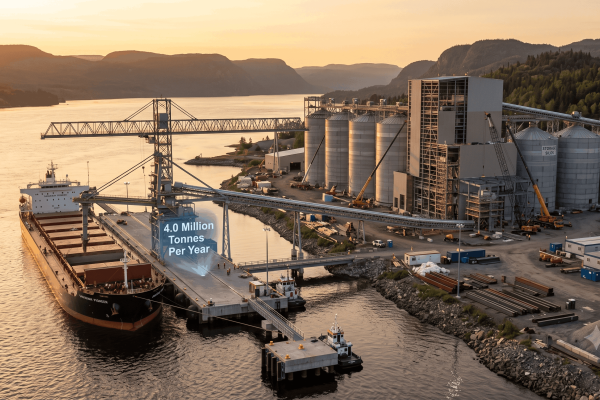
Green Steel Marks a Turning Point: How Rio Tinto and Champion Iron Are Struggling with Logistics – Strategic Resources as a Beacon of Hope
When steel mills are running at full capacity, the industry is satisfied—at least that was the case for many decades. Nowadays, however, what exactly goes into the furnaces is becoming increasingly important. The transition to low-emission steel is increasingly challenging traditional supply chains. Companies that want to produce sustainably and "green" today need clean raw materials. The major players in the steel industry have already recognized this. Raw material producers must therefore also rethink their approach. Innovative companies from Canada have recognized the signs of the times and are fully committed to meeting the steel industry's new requirements. We shine a spotlight on this development and introduce some exciting companies.
Read
Commented by Armin Schulz on August 3rd, 2026 | 07:30 CEST
Hydrogen Reality 2026: Nel ASA and A.H.T. Syngas Step Up as BP Pulls Back
The industrialization of hydrogen is heading toward a decisive turning point. While the major oil multinationals are surprisingly cutting back on their billion-dollar green projects, demand for clean energy remains strong. Investors need to rethink their strategies. The future of energy will not be shaped by the former pioneers, but by specialized technology companies and niche players who now want to seize the opportunity at hand. We examine this landscape more closely, taking a closer look at Nel ASA as a pioneer in electrolysis technology, A.H.T. Syngas as a creative niche provider of decentralized hydrogen solutions, and BP as the energy giant that is pulling back.
Read
Commented by Tarik Dede on August 3rd, 2026 | 07:10 CEST
Invest Sustainably and Earn Dividends with Iberdrola, RE Royalties, and Enel
Recent market volatility, particularly in the semiconductor sector, has made life challenging for many investors. When stocks gain or lose double-digit percentages in a single trading day without any company-specific news, market mechanics are often the driving force. Investors seeking a steadier approach may prefer companies with a track record of paying attractive and sustainable dividends. This is especially true in the renewable energy sector, where wind, solar, and hydroelectric power continue to benefit from rapidly growing global energy demand. That is why today we are taking a closer look at three companies that combine sustainable business models with attractive dividend yields: Iberdrola, RE Royalties, and Enel.
Read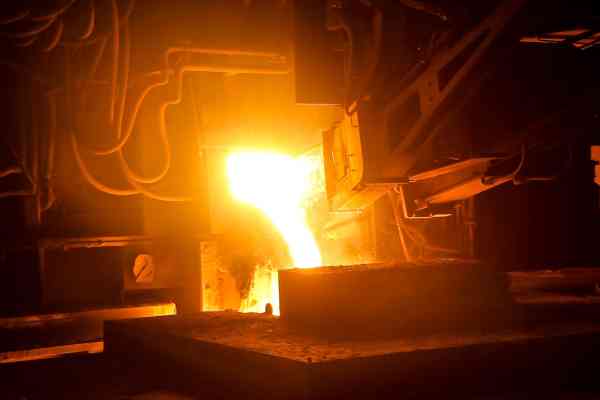
Commented by Armin Schulz on July 31st, 2026 | 07:10 CEST
Forget Hydrogen: Mercedes-Benz, Strategic Resources, and Rio Tinto Show Where the Real Money Lies
The steel industry is undergoing its most profound transformation since the blast furnace era. Steel production generates more greenhouse gases than global air and maritime traffic combined. While other sectors are already driving their own transformations, the steel industry's transition is still in its infancy. But it is precisely this delay that holds enormous potential. With the EU CO₂ border adjustment mechanism set to take effect in 2026 and rising permit prices, early investments in hydrogen-based processes will secure future market advantages. The crucial question is no longer whether, but who will control the scarce resources of green production. As an automotive giant, Mercedes-Benz secures the off-take; Strategic Resources enables direct reduction with vanadium-rich ore; and Rio Tinto is reshaping the global raw materials base through the Simandou project.
Read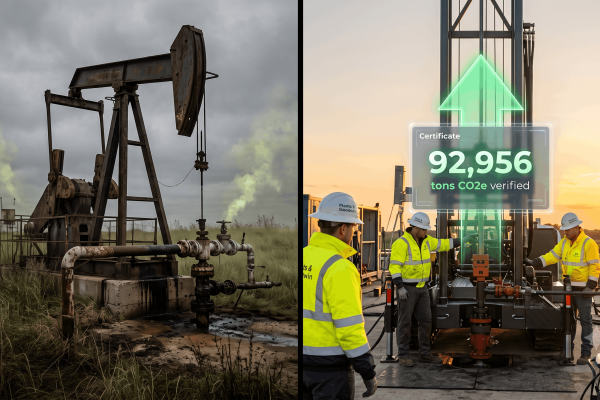
Commented by Nico Popp on July 30th, 2026 | 09:30 CEST
SpaceX's Environmental Mess, Occidental Petroleum's Battle Against Windmills, and Zefiro Methane's Billion-Dollar Opportunity
When SpaceX's rockets soar toward orbit, the public gazes spellbound at the evening sky. The fact that rocket launches release enormous amounts of greenhouse gases is only noted critically in passing. Yet even SpaceX is doing everything it can to reduce its environmental footprint. There is still plenty of potential for savings right here on Earth. Plugging abandoned and orphaned wells from the oil and gas industry is one such opportunity. If these avoided emissions are systematically tracked and converted into carbon credits, this would build a bridge between the traditional oil and gas industry and the space sector. We shed light on this development and show where investors can look for opportunities.
Read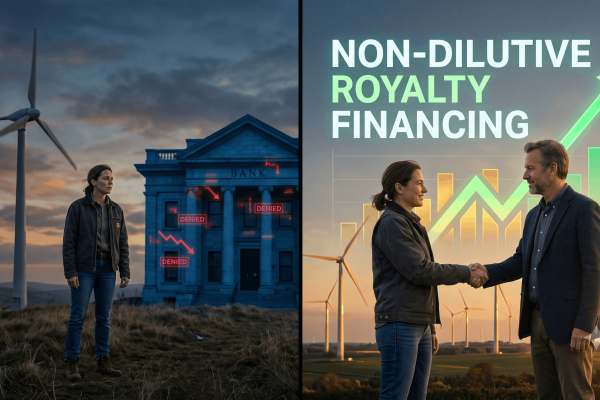
Commented by Nico Popp on July 29th, 2026 | 07:05 CEST
Big Money in Sustainability – SAP and Siemens Energy Are Raking It In – RE Royalties Delivers a 10% Dividend
The transition to clean electricity is not failing for lack of will, but because of the enormous practical hurdles. While the rise of artificial intelligence is fueling demand for green energy, existing power grids worldwide are reaching their limits. At the same time, smaller project developers in this niche are grappling with financing and regulatory issues, while industrial conglomerates are required to disclose their carbon footprints with ever-greater transparency. Investors looking to capitalize on this complex situation must understand the various players and the challenges they face. We provide an overview and introduce a little-known hidden gem.
Read
Commented by Stefan Feulner on May 1st, 2026 | 07:05 CEST
Symrise, A.H.T. Syngas, Bloom Energy - Energy Shift Drives Huge Opportunities
Geopolitical tensions, skyrocketing energy prices, and the global industrial transformation are creating new momentum in the markets. While defensive consumer segments demonstrate stability even in a crisis environment, decentralized energy solutions and hydrogen technologies are increasingly coming into focus. At the same time, the AI boom is driving electricity demand skyward and opening up entirely new growth areas for alternative energy providers. The combination of structural demand growth, technological advances, and geopolitical pressure is creating an environment in which entire industries could be facing a revaluation.
Read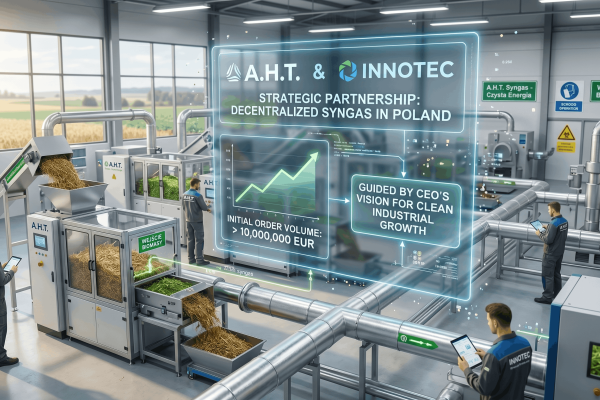
Commented by Nico Popp on April 29th, 2026 | 11:00 CEST
Industrial Energy Transition: Air Liquide, Forgent, and SME Favorite A.H.T. Syngas
Today, more than ever, the industrial climate transition requires a technological mix of suitable infrastructure and highly efficient, decentralized gasification solutions. This need is further exacerbated by the current geopolitical situation and the ongoing energy crisis resulting from the Iran conflict. Since the disruption of shipping through the Strait of Hormuz has led to a significant loss of global liquefied natural gas supply, companies are desperately seeking alternatives to secure their energy supply. According to forecasts by the International Energy Agency (IEA), fossil fuel procurement costs will remain high, further increasing the urgency of industrial decarbonization. In this market environment, a two-way split is emerging. While market leader Air Liquide offers suitable solutions for heavy industry through the establishment of hydrogen hubs and CO₂ capture, specialized providers are competing for the enormous opportunities in the energy utilization of waste and other residual materials. We present the opportunities.
Read
Commented by Mario Hose on April 27th, 2026 | 07:55 CEST
Mustard Power as a Growth Turbo! Agricultural Giants vs Green Rebels: Evaluating the Return Potential of Bayer, KWS Saat, and MustGrow Biologics
The global population continues to grow relentlessly, while the amount of arable land available per capita is shrinking. In this challenging environment, companies working on solutions to secure our food supply are taking center stage. But while the industry’s major players, such as Bayer or KWS Saat, grapple with regulatory hurdles and a rigid market landscape, innovative players like MustGrow Biologics could disrupt the field from behind. The key question for investors is no longer just who sells the most seeds, but increasingly who offers the smartest solutions for healthy soil. In this report, we examine the current situation at Bayer, where a major court ruling in the US is imminent. We also take a closer look at seed specialist KWS Saat, as well as a smaller but dynamic challenger, MustGrow, that could be on the verge of a technical breakout. All three stocks have the potential for exceptional performance. Read on to find out why the power of nature, in particular, could play a decisive role in the future—and may ultimately tip the scales.
Read
Commented by André Will-Laudien on April 27th, 2026 | 07:40 CEST
Rockets, Returns, Recycling: Investors Sense Geopolitical Tailwinds for Nel ASA, RE Royalties, and Tomra Systems
In an environment of political instability and growing uncertainty, one thing is clear: investments in sustainability are no longer merely an ESG issue, but a geopolitical and economic imperative. This is because dependence on fossil fuels is increasingly perceived as a strategic risk. Accordingly, pressure is mounting to prioritize alternative energy sources and sustainable infrastructure. This opens up a structural growth market for investors that extends far beyond short-term crisis responses. Companies across the value chain are in the spotlight, benefiting to varying degrees from this transformation. While RE Royalties, as a financier of sustainable projects, relies on stable cash flows from renewable energy plants, Tomra Systems addresses key resource issues of the future with recycling and circular economy solutions. Nel ASA, in turn, embodies the hope for a hydrogen economy, though it is still grappling with the typical challenges of a nascent industry. We do the math.
Read