April 1st, 2026 | 07:10 CEST
Power Metallic Mines: The Company Backed by Commodity Leaders
Three major commodity investors have invested in Power Metallic Mines: Robert Friedland, Rob McEwen, and Gina Rinehart. But this Canadian copper explorer is not just one of the most attractive stocks in the sector because of these big names. The recent decline in the stock price amid the war in the Gulf offers strategic investors the chance to buy in at a lower level. And the copper market remains hot: AI demand, the trend toward electrification, batteries, and the renewal of power infrastructure are driving demand. At the same time, the global supply of copper remains weak.
time to read: 4 minutes
|
Author:
Tarik Dede
ISIN:
POWER METALLIC MINES INC. | CA73929R1055 | TSXV: PNPN , OTCBB: PNPNF
Table of contents:
Author

Tarik Dede
Even as a high school student in northern Germany, he developed a strong interest in the “Neuer Markt” and the dynamics of the equity markets. Small- and mid-cap companies were at the center of his focus from the very beginning. After completing his training as a certified bank clerk, he deepened his economic expertise through formal studies in economics as well as through various positions within Frankfurt’s financial sector. Today, he has been actively involved in the capital markets for more than 25 years, both professionally and as a private investor.
Tag cloud
Shares cloud
Three Commodity Giants in One Company
It is not often that three well-known commodity legends invest in a single company. Robert Friedland, Rob McEwen, and Gina Rinehart have done just that. Friedland is one of the most successful discoverers in the commodities industry. Among other things, he founded Turquoise Hill Resources and is co-chairman of Ivanhoe Mines, which today operates one of the highest-grade copper mines in the world in the Democratic Republic of the Congo. McEwen, in turn, became known as the founder of Goldcorp, which Newmont acquired for many billions, and today serves as Chairman of McEwen Mining. Last but not least, Gina Rinehart, Australia's wealthiest woman, is on board. She has led Hancock Prospecting, her father's company, since 1992 and expanded it into a giant in iron ore mining and agriculture.
NISK: More Than Just a Mine
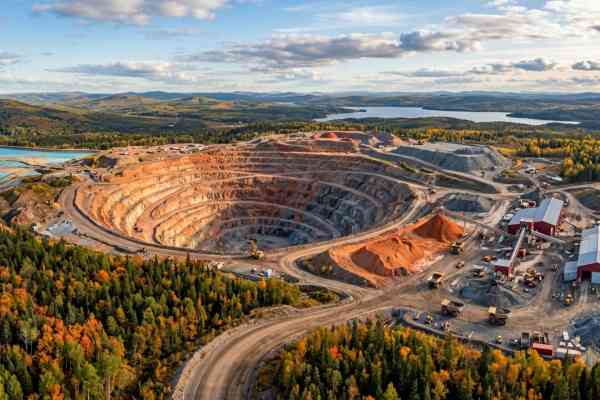
They all hold shares in Power Metallic Mine, which owns one of the most exciting copper and PMG deposits in Canada with NISK. Located in the James Bay region in northern Québec, it could develop into one of the largest polymetallic mineral deposits and, in the long term, rise to the level of world-class deposits such as Voisey's Bay. The company is conducting an extensive drilling campaign with six drilling rigs currently on the property. The existing resource from 2025 is already turning heads, but the discovery of the so-called Lion Zone could be a game-changer for Power Metallic Mines. The total metal content of the existing resource estimate has been assessed at over 120 million pounds of nickel, 70 million pounds of copper, and significant quantities of platinum, palladium, and cobalt. But that should only be the beginning. The company plans to update the resource estimate within the first half of the year, which will also incorporate the discoveries made over the past 18 months. An exploration program covering a full 100,000 m is currently underway to incorporate the high-grade sections into the new resource estimate. Recent drilling highlights include 16.55 m with 15.11% copper equivalent (CuEq).
In mining, it is often a challenge to extract the valuable metals from the ore. Yet this is being achieved very successfully here. Metallurgical tests conducted by SGS yield recovery rates of 98.9% for copper, 93.9% for palladium, 96.8% for platinum, 85% for gold, and 88.9% for silver.
Financed for the Entire Year
With such results coming from the ground, management currently has little to worry about regarding financing. Most recently, Power Metallic raised CAD 50 million for exploration late last year through a flow-through financing. These tax-advantaged shares offer a major advantage: the funds must be spent on exploration and thus go directly into the ground. According to management led by CEO Terry Lynch, the funds will last through the entire year of 2026. There is therefore no immediate threat of shareholder dilution. Lynch himself appears confident in his company's success. He and his family hold 18% of the shares and, shortly before the PDAC industry trade show in March in Toronto, purchased additional shares worth CAD 106,880 at a price of CAD 1.31 each. Lynch had also purchased shares on the market in 2025.
NISK with Top-Notch Infrastructure
The Canadian province of Québec is already one of the best jurisdictions for global mining. In addition to its drilling data, NISK also impresses with top-notch infrastructure. For instance, a Hydro Québec substation is located in the immediate vicinity of the property, providing access to affordable, environmentally friendly hydroelectric power. Furthermore, the project is situated directly on the "Route du Nord," a major highway passable year-round, not far from the town of Nemaska. This environment, therefore, offers ideal conditions for building a mine, a far from standard situation in Canada.
Copper: Strong Demand, Weak Supply
Power Metallic Mines is also likely to be well-timed with regard to the copper market. At the beginning of the year, the price reached new record highs. Currently, strong demand is meeting a difficult supply situation. As early as 2025, a mudslide (Grasberg in Indonesia) and earthquakes (DR Congo) had already caused a decline in production at major mines. Structurally, however, a much larger problem is looming for the market. For over a decade, insufficient investment has been made in new copper deposits due to low prices. At the same time, old mines are running dry or struggling with declining ore grades. As a result, Goldman Sachs analysts foresee a "scarcity premium" arising from this situation and the supply shortfalls. Citigroup expects massive growth, primarily driven by strong demand from AI data centers, and sustained prices above USD 13,000 per ton. JPMorgan estimates the global deficit at approximately 330,000 tons of refined copper for this year.
Analysts are Convinced
Power Metallic Mines' stock has fallen by more than a third since its recent high in late February due to market turbulence caused by the war in the Gulf, and is currently trading around CAD 1. This presents an opportunity to buy in at a lower level. And here, too, analysts are optimistic. GBC Research recently set a price target of CAD 2.85 and recommends buying. Red Cloud considered prices of CAD 2.15 realistic in February, and Noble Capital believes CAD 2.30 is possible over a 12-month horizon.
With Power Metallic Mines, investors can bet on the long-term rise in demand for copper and invest alongside commodity legends like Robert Friedland. In the short term, a potential recession resulting from the war in the Gulf could act as a drag on the market and the stock. Investors should take this into account.
Conflict of interest
Pursuant to §85 of the German Securities Trading Act (WpHG), we point out that Apaton Finance GmbH as well as partners, authors or employees of Apaton Finance GmbH (hereinafter referred to as "Relevant Persons") may hold shares or other financial instruments of the aforementioned companies in the future or may bet on rising or falling prices and thus a conflict of interest may arise in the future. The Relevant Persons reserve the right to buy or sell shares or other financial instruments of the Company at any time (hereinafter each a "Transaction"). Transactions may, under certain circumstances, influence the respective price of the shares or other financial instruments of the Company.
In addition, Apaton Finance GmbH is active in the context of the preparation and publication of the reporting in paid contractual relationships.
For this reason, there is a concrete conflict of interest.
The above information on existing conflicts of interest applies to all types and forms of publication used by Apaton Finance GmbH for publications on companies.
Risk notice
Apaton Finance GmbH offers editors, agencies and companies the opportunity to publish commentaries, interviews, summaries, news and the like on news.financial. These contents are exclusively for the information of the readers and do not represent any call to action or recommendations, neither explicitly nor implicitly they are to be understood as an assurance of possible price developments. The contents do not replace individual expert investment advice and do not constitute an offer to sell the discussed share(s) or other financial instruments, nor an invitation to buy or sell such.
The content is expressly not a financial analysis, but a journalistic or advertising text. Readers or users who make investment decisions or carry out transactions on the basis of the information provided here do so entirely at their own risk. No contractual relationship is established between Apaton Finance GmbH and its readers or the users of its offers, as our information only refers to the company and not to the investment decision of the reader or user.
The acquisition of financial instruments involves high risks, which can lead to the total loss of the invested capital. The information published by Apaton Finance GmbH and its authors is based on careful research. Nevertheless, no liability is assumed for financial losses or a content-related guarantee for the topicality, correctness, appropriateness and completeness of the content provided here. Please also note our Terms of use.