May 7th, 2026 | 08:40 CEST
Geopolitical Winners: Kinross Gold, Standard Uranium, and Lynas Rare Earths
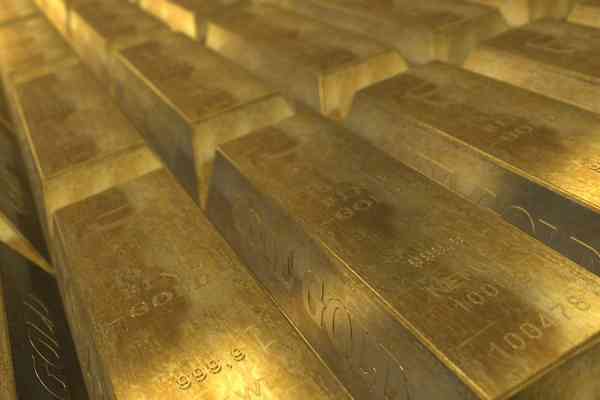
The conflict in the Persian Gulf has overshadowed many geopolitical issues, but it has also brought some problem areas to light. One thing is clear: the world is building new supply chains, especially the West. Lynas Rare Earths is in pole position in the rare earths market as the largest producer outside China. Standard Uranium, in turn, can benefit from the boom in energy demand and the shift by many countries back to nuclear energy. Not least, more and more countries and central banks are shunning the dollar. Who wants to be blackmailed by Washington? Accordingly, gold producers like Kinross Gold find themselves in a sweet spot, as the latest quarterly figures also show.
time to read: 6 minutes | Author: Tarik Dede
ISIN: KINROSS GOLD CORP. | CA4969024047 , STANDARD URANIUM LTD. | CA85422Q8487 | TSXV: STND , OTCQB: STTDF , LYNAS CORP. LTD | AU000000LYC6
Table of contents:
Author

Tarik Dede
Even as a high school student in northern Germany, he developed a strong interest in the “Neuer Markt” and the dynamics of the equity markets. Small- and mid-cap companies were at the center of his focus from the very beginning. After completing his training as a certified bank clerk, he deepened his economic expertise through formal studies in economics as well as through various positions within Frankfurt’s financial sector. Today, he has been actively involved in the capital markets for more than 25 years, both professionally and as a private investor.
Tag cloud
Shares cloud
Kinross Gold: The Cash Machine
Kinross Gold was formed in 1993 through the merger of three companies (Plexus Resources Corporation, CMP Resources Ltd., and 1021105 Ontario Corp.). The goal was to bundle undercapitalized mining projects and become more profitable together. After more than three decades, this can confidently be called a success. The company operates several gold mines in Brazil, Chile, and the US. In addition, with the Tasiast mine in Mauritania, it has a real cash cow in its portfolio. The massive deposit features a processing plant with a throughput of 24,000 tons of ore per day! In 2025, more than 600,000 ounces were mined here, and Tasiast also stands out for having the lowest costs in the group.
Kinross Gold reported strong first-quarter results at the end of April. The Toronto-based company massively increased its revenue to USD 2.41 billion, up from just USD 1.5 billion the previous year. Earnings per share more than doubled to USD 0.71. A particular highlight: the company's free cash flow rose to a record high of approximately USD 840 million. This marks the fourth consecutive quarter of strong cash flow, underscoring the company's solid financial position. Long-term debt stands at USD 738 million, while the company holds USD 2.2 billion in cash. Three years ago, debt was still about three times as high.
Kinross is in a strong financial position to expand and modernize existing mines. Additionally, with Great Bear in Canada, the company has a first-class project that is considered one of the future cornerstones of the business. With Lobo-Marte in Chile (in the permitting process) and Curlew in the US, the company also has two further projects that represent the future of the group and present growth opportunities.
Kinross's stock had increased sevenfold from its peak within three years. Currently, however, the stock is trading about 30% below its peak. Even the strong quarterly results could not counter the current difficult market environment. Therefore, we currently see this primarily as an opportunity for long-term investors to accumulate shares at lower levels. The gold price should play an important role here. In a recent study, Deutsche Bank projected a price of USD 8,000 per ounce if the world continues to move away from the dollar. Analysts' current price targets for the stock are roughly 30% to 40% above the current price. The company's strong balance sheet and management's cost discipline are being praised.
Standard Uranium: The Pioneer of the Nuclear Industry
The world wants to build more nuclear power plants again. In China alone, several dozen are under construction. Countries like the US have also rediscovered the power of nuclear energy. Here, it is primarily the AI boom that is driving the need to expand energy infrastructure. Accordingly, the situation for uranium as a raw material has also changed drastically in recent years. After a long period of lower prices, which bottomed out in May 2021 at around USD 30 per pound, a turning point came in the following years. The market entry of the Sprott Physical Uranium Trust, which bought up physical uranium from the market, is considered the starting signal. The reevaluation of nuclear power as a low-carbon baseload source and supply concerns following the start of the war in Ukraine briefly pushed the price to over USD 100. It currently stands about 15% below that level, but demand is expected to continue rising in the coming years. One advantage for North American companies is the US decision to reduce uranium imports from Russia to zero. Before the war in Ukraine, these accounted for about 16% of all imports.
Standard Uranium is one of the beneficiaries of this new boom. In recent years, the company has secured dozens of projects in the famous Athabasca Basin in the Canadian province of Saskatchewan. It sees itself as a project generator that does the groundwork and then passes promising properties on to partners who bear the exploration risk and costs. But 2026 could be a turning point for the company. That is because Standard Uranium is now investing heavily in two projects itself.
The focus is on the flagship Davidson River project. It is strategically located near world-class deposits such as NexGen's Arrow and Fission Uranium's Triple R, but remains underexplored. That is set to change with an extensive drilling program this spring/summer. The company plans to drill 8,000 to 10,000 m of diamond drilling. Two drill rigs will be deployed simultaneously. Thanks to a capital increase last year, the work is already funded. In preparation, AI-powered 3D models were developed in 2025 to identify precise target areas along the four main corridors.
Standard Uranium also recently reported positive news from the Corvo project in the eastern Athabasca Basin. This project is being developed in partnership with Aventis Energy, which has committed to investing CAD 6 million in exploration over a three-year period. Corvo has already delivered high-grade results and demonstrates the potential of Standard Uranium's business model. This is because the partner pays for exploration, while Standard Uranium benefits from the upside in the event of success.
The company currently has a market capitalization of approximately CAD 13 million. Good drill results from the flagship Davidson project, as well as partnerships like the one at Corvo, could drive the stock out of its long-standing sideways trend and into an uptrend. The 200-day moving average is at CAD 0.11. If a breakout occurs here, the stock could quickly reach the multi-year resistance level at CAD 0.15. The explorer's stock is suitable for risk-conscious investors looking to capitalize on a breakout.
Lynas Rare Earths: In Pole Position
For many years, Lynas Rare Earths was the only Western producer of rare earths. The Australian company has a deposit in its home country at Mt. Weld, though the rare earths are processed in Malaysia. China largely controls the rest of the market, both in terms of mining and processing. Since heavy rare earths in particular are indispensable for many military applications, the market situation has changed drastically. The US, in particular, wants to become independent of Beijing. Accordingly, Lynas is benefiting the most from this.
The March quarter that just ended (Q3 of fiscal year 2026) was one of the strongest in Lynas Rare Earths' corporate history. High demand and rising prices were particularly evident in the financial results. Lynas generated gross revenue of AUD 265 million, more than double the figure from the same quarter last year. The average selling price for all products was AUD 84.60/kg. Of particular importance: The price of NdPr (neodymium-praseodymium) rose by 25% compared to the previous quarter. At the end of the quarter, Lynas had cash and cash equivalents of approximately AUD 1.07 billion, which provides the financial foundation for future growth. The company successfully produced samarium oxide for the first time as early as March. However, important strategic steps were also taken. For instance, the operating license for the processing plant in Malaysia was extended by 10 years. Additionally, the agreement with the Japanese partner Jarre was extended by 12 years. It guarantees Lynas an off-take of 5,000 tons of NdPr per year at a minimum price of USD 110/kg. Furthermore, letters of intent were signed with the US. The US industry is particularly suffering from China's dominance in the market. Currently, no one knows whether the Chinese will continue to supply at all in light of the war in the Persian Gulf.
As the largest Western producer of rare earths, Lynas Rare Earths is the biggest beneficiary of the US push to establish its own Western supply chains. The stock has more than quadrupled since the beginning of 2024 and is currently trading just below its ten-year high. The business model is well-protected by the agreement on minimum prices. Competition is also low, as many new projects are not expected to come online until the coming years—if at all. Anyone anticipating a prolonged geopolitical conflict between the US and China should consider Lynas stock.
With Kinross Gold, investors are betting on a strong producer. The gold price should continue to benefit from global de-dollarization in the coming years. Standard Uranium is a promising explorer and project generator in Canada. With the new drilling program at its flagship project, the stock could end its years-long sideways trend and break out. Lynas Rare Earths is well positioned to benefit from the development of Western supply chains for rare earths. Agreements with minimum prices secure profits here for many years to come.
Conflict of interest
Pursuant to §85 of the German Securities Trading Act (WpHG), we point out that Apaton Finance GmbH as well as partners, authors or employees of Apaton Finance GmbH (hereinafter referred to as "Relevant Persons") may hold shares or other financial instruments of the aforementioned companies in the future or may bet on rising or falling prices and thus a conflict of interest may arise in the future. The Relevant Persons reserve the right to buy or sell shares or other financial instruments of the Company at any time (hereinafter each a "Transaction"). Transactions may, under certain circumstances, influence the respective price of the shares or other financial instruments of the Company.
In addition, Apaton Finance GmbH is active in the context of the preparation and publication of the reporting in paid contractual relationships.
For this reason, there is a concrete conflict of interest.
The above information on existing conflicts of interest applies to all types and forms of publication used by Apaton Finance GmbH for publications on companies.
Risk notice
Apaton Finance GmbH offers editors, agencies and companies the opportunity to publish commentaries, interviews, summaries, news and the like on news.financial. These contents are exclusively for the information of the readers and do not represent any call to action or recommendations, neither explicitly nor implicitly they are to be understood as an assurance of possible price developments. The contents do not replace individual expert investment advice and do not constitute an offer to sell the discussed share(s) or other financial instruments, nor an invitation to buy or sell such.
The content is expressly not a financial analysis, but a journalistic or advertising text. Readers or users who make investment decisions or carry out transactions on the basis of the information provided here do so entirely at their own risk. No contractual relationship is established between Apaton Finance GmbH and its readers or the users of its offers, as our information only refers to the company and not to the investment decision of the reader or user.
The acquisition of financial instruments involves high risks, which can lead to the total loss of the invested capital. The information published by Apaton Finance GmbH and its authors is based on careful research. Nevertheless, no liability is assumed for financial losses or a content-related guarantee for the topicality, correctness, appropriateness and completeness of the content provided here. Please also note our Terms of use.