
iron
Commented by Armin Schulz on May 28th, 2026 | 07:20 CEST
TKMS, Strategic Resources, and Lockheed Martin: The Largest Post-War Rearmament Program Is Stalling!
For the first time since the Cold War, NATO is pouring record sums into defence—EUR 108 billion for Germany alone. But modern frigates, battle tanks, and jets consume critical metals such as vanadium, germanium, and rare earth elements. Without these raw materials, even high-tech weapons become useless. China dominates the supply chains, creating a dangerous bottleneck. Yet although the outlook for companies in this sector could hardly be better, few stocks are trading at their all-time highs. Today, with TKMS, Strategic Resources, and Lockheed Martin, we have three interesting companies that have the potential to reach new highs.
Read

Commented by Tarik Dede on May 26th, 2026 | 07:05 CEST
Space Hype, Raw Material Shortages, and the Chip Boom: A Look at OHB, Strategic Resources, and Infineon
On June 12, Elon Musk aims to make history. With SpaceX, the largest IPO of all time is imminent. Other space stocks are already benefiting from the hype surrounding the Falcon rockets and Dragon spacecraft from California. This is one reason why OHB is currently the top performer on the German stock market. War, expensive energy, and raw materials at the center of geopolitics make Strategic Resources an interesting play. The Canadians are on the verge of their next major step. And last but not least, it is worth taking a look at Infineon's stock. The German chip king has achieved something almost historic in recent weeks! And thanks to AI, operations are going brilliantly too!
Read

Commented by André Will-Laudien on May 25th, 2026 | 07:55 CEST
Defence Stocks in a Race Against Time: Are Rheinmetall, Strategic Resources, CSG, and RENK Still a Buy?
The bull run in defence and military stocks lasted nearly four years. At their peak, some stocks were valued at 10 times revenue, with P/E ratios reaching 100. Currently, however, a shift in thinking is taking place, as the contracting nations are heavily indebted and cannot simply keep increasing their defence budgets after the generous adjustments they have already made. This partly explains the recent dip in the sector's stock prices. Yet the stock market is playing out this theme across multiple channels. Defence stocks benefit in the long term from higher government spending, while commodity markets—particularly for steel, copper, aluminum, nickel, titanium, tungsten, and specialty chemicals—must respond to the higher underlying demand. At the same time, fiscal burdens are rising, so capital markets as a whole must distinguish between security-related demand and growing budget risks. The underlying trend is that inflation is rising due to money supply expansion, with necessary interest rate hikes as a further consequence. How should investors reconcile these trends?
Read
Commented by Nico Popp on May 22nd, 2026 | 07:00 CEST
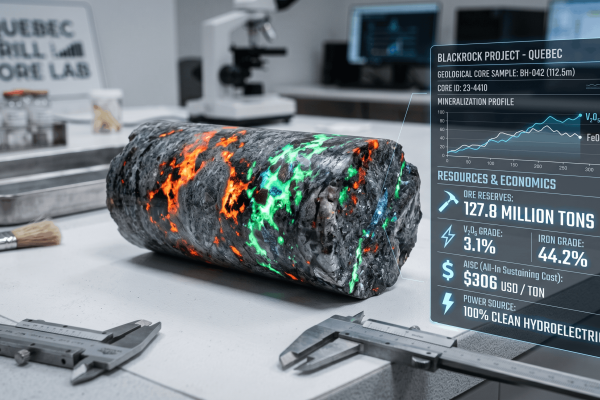
Panic in the Steel Sector - Geopolitical Dependencies Threaten Production: Strategic Resources, ArcelorMittal, and thyssenkrupp in Focus
Enormous regulatory pressure to decarbonize, escalating punitive tariffs, and a looming supply shortage of critical alloy metals are driving profound changes in the steel industry. The conversion of traditional blast furnaces to electric arc furnaces powered by electricity poses a challenge for corporations. The recycling of simple steel scrap can cause disruptive copper impurities to accumulate in the melt. The industry urgently requires massive quantities of high-purity pig iron for dilution to continue producing high-quality steel. However, since the supply chains for vanadium, a critical metal for the energy transition and alloys, are almost entirely controlled by autocratic states, Western companies are under pressure to act. Fortunately, the Canadian commodities company Strategic Resources is positioning itself as a supplier from multiple secure jurisdictions.
Read

Commented by André Will-Laudien on May 11th, 2026 | 07:10 CEST
Critical metals will shape the future: BYD, NIO, Strategic Resources, and VW in the e-mobility race
While Europe is pumping billions into new charging infrastructure and power grids, a brutal, cutthroat competition is beginning to unfold in the global auto market. Volkswagen is fighting to maintain its industrial dominance, while BYD is pushing ever harder into Europe with aggressive pricing and massive vertical integration, and NIO is targeting the premium segment. At the same time, with every additional electric vehicle, the demand for strategic metals is exploding, and their supply chains are coming under increasing geopolitical pressure. This is precisely where Strategic Resources could suddenly come into focus, as Western industries are desperately seeking secure sources of raw materials outside China. The Middle East conflict and oil prices nearing the USD 100 mark are acting as a catalyst for alternative powertrains while simultaneously heightening nervousness in the commodities markets. For investors, this marks the beginning of a phase in which automakers are no longer likely to be the sole winners of the mobility transition, but rather, above all, those companies that have access to the critical metals of the next industrial revolution.
Read
Commented by Nico Popp on May 8th, 2026 | 07:10 CEST
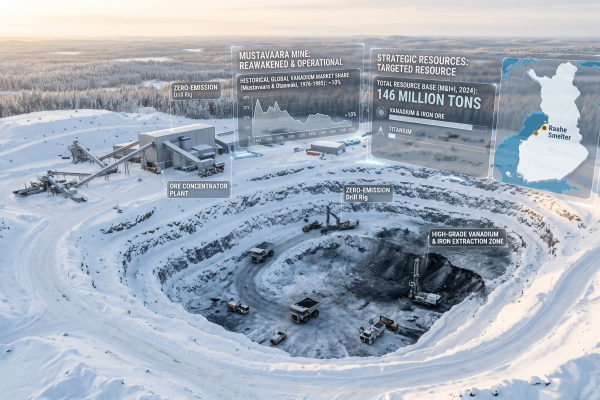
The Future of the Steel Industry: What Strategic Resources Can Do for ArcelorMittal, Salzgitter, and Others
The steel industry has been under significant pressure to transform for years, particularly in Europe. Following the full-scale invasion of Ukraine in 2022, the war in Iran is now causing yet another shock. As a result, the decarbonization of the industry is no longer just a green vision but an economic necessity. While the transition to hydrogen requires billions in investment, competition for the strategic raw materials needed for this is intensifying at the same time. Steel producers are struggling with retrofitting their existing facilities and volatile margins, while problem solvers like Strategic Resources are increasingly coming into focus. The company offers intermediate products for the steel industry that make the sector's transformation possible in the first place. The key figures are promising, yet this potential has not yet gained traction in the market. Reason enough to shed light on the situation and highlight opportunities.
Read

Commented by Juliane Zielonka on August 4th, 2022 | 12:52 CEST
Manuka, BYD, AMD - These companies stand for sustainable, strategically planned growth
With a share of 4.7%, iron is the tenth most common element in our universe and one of the most common on our planet. In industry, the raw material is in hot demand. The Australian Company Manuka has recognized this and acquired a strategically valuable project, which can profitably supply the explorer for the next 20 years. One customer for iron is the automotive industry. BYD will start selling its cars in Germany and Sweden this year. In contrast to the competition from VW and Volvo, the Chinese carmaker has installed enough semiconductors in its mobiles. AMD is also benefiting from this. The chipmaker saw sales growth in its embedded division, which includes semiconductors for cars. AMD's earnings call for the quarter showed a clear trend of where the growth is happening...
Read

Commented by Carsten Mainitz on February 10th, 2021 | 08:30 CET
Encavis, dynaCERT, Verbio - continue to outperform with green stocks!
The awareness of protecting the environment and therefore reducing emissions is becoming more and more prevalent in society. Numerous industries are growing in the wake of socially, politically and fiscally motivated changes and demand sustainable products or solutions. "Green" investment has many facets. In the following, we present three companies that are dedicated to the topics of emission reduction and renewable energies. In the past, these stocks have been able to outperform the broad market enormously. Where is this trend continuing unabated?
Read
Commented by André Will-Laudien on December 15th, 2020 | 15:27 CET
dynaCERT, NEL, Plug Power - Who is working for climate targets?
The goal of reducing CO2 emissions by 55% by 2030 is Germany's contribution to the Paris Climate Agreement. The aim is to limit global warming to well below 2 degrees Celsius by the end of this century - if possible, even to 1.5 degrees Celsius. To achieve this, emissions of greenhouse gases, i.e., primarily carbon dioxide (CO2), must fall significantly. So far, Germany is among the pioneers, having reduced emissions by around 31% between 1990 and 2018. A good start, but it is still far from enough. With Brazil, Australia and the USA, the leaders of significant countries, unfortunately, gave the rest of the world the cold shoulder. But the engineers of future technology do not care about the pronouncements from politics. They continue to research, for example, in Canada, Scandinavia and the USA - because the essential course settings happen now or never!
Read

Commented by André Will-Laudien on November 18th, 2020 | 10:40 CET
NIO, Tesla, dynaCERT - Mobilizing the future!
The good news for automotive suppliers is that electric vehicles still only make up a small percentage of the car market - at least for now. The bad news is that the increasing spread of electric cars is a significant challenge for automotive suppliers. Since these cars have far fewer parts than those with conventional combustion engines, manufacturers of exhaust and fuel systems as well as traditional transmissions are facing significant disruptions as e-mobility takes unexpected steps forward. The crux of the matter for electricians is still the availability of charging stations and the limited mobility radius. But this will soon change rapidly once the Corona aid pots are flowing into the green infrastructure.
Nevertheless, the e-vehicle is being fueled by government emission standards and incentives, especially in the USA, England, France, Germany and China. But the battery-powered vehicles will not pose a significant threat to the combustion engines until operating costs are about the same. In especially more impoverished areas of the planet and inaccessible zones, there is no alternative to the internal combustion engine; this is completely ignored in the public discussion. While the cost of e-cars continues to fall as technology improves, they are still far from being competitive. Nevertheless, if you look at the signs of the times, car companies have already invested billions in electro-related technology, so the course for the future is set.
Read